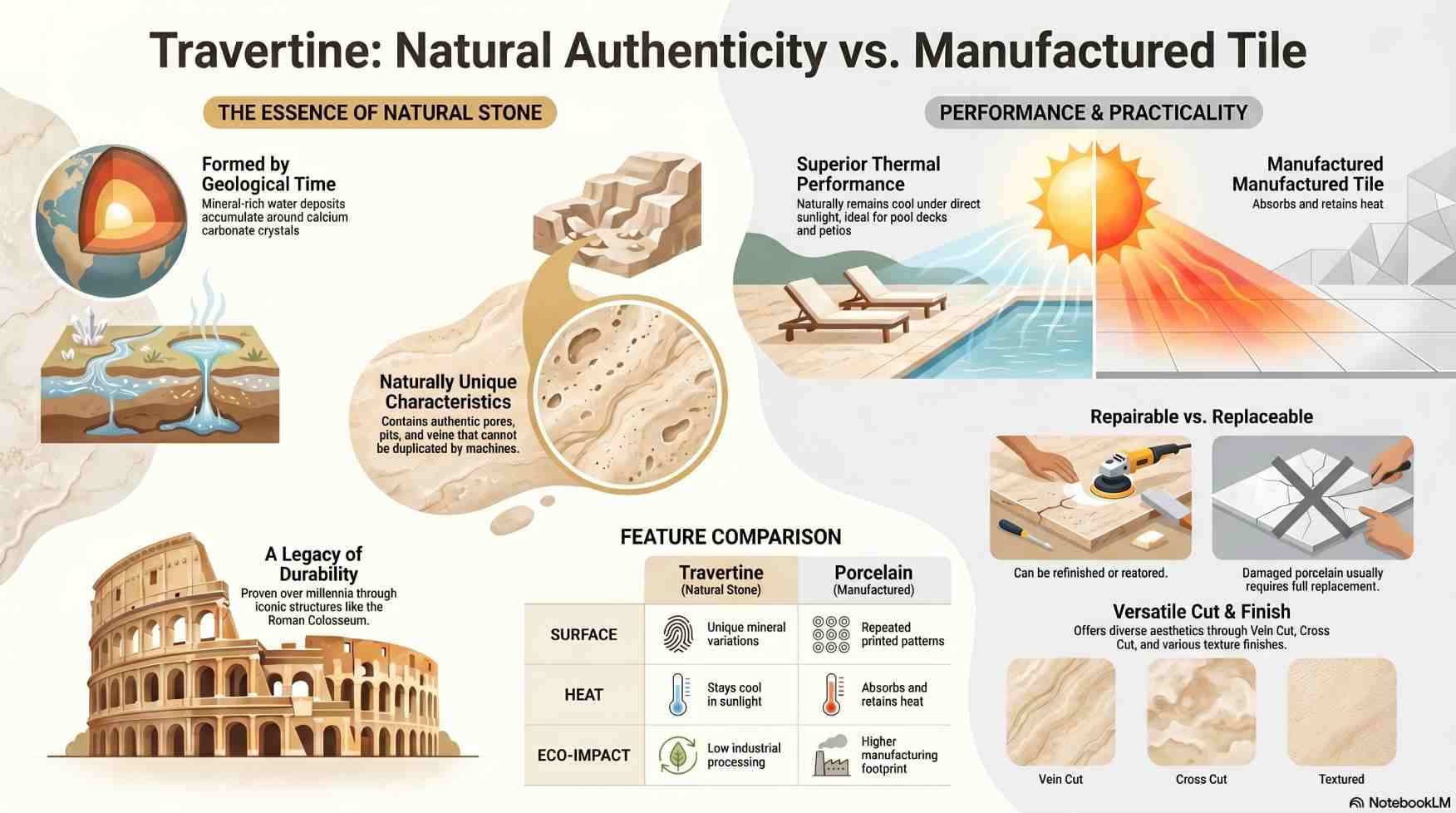
travertine stone and what is travertine stone

HunterPavers offers a range of high-quality travertine stone in various colors. Known for its natural texture and durability, travertine is a versatile material often used in both indoor and outdoor projects. Whether you’re working on a traditional or modern design, you’ll find that travertine can add a timeless, understated elegance to your space. Hunter provides this stone in different shades to suit a variety of design preferences.

Table of Contents

what is travertine stone?

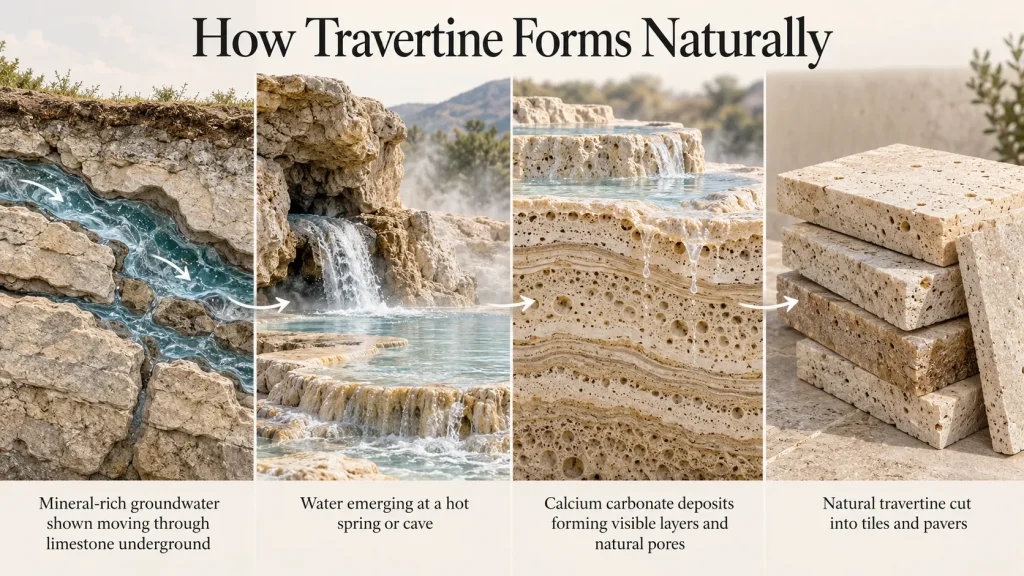
Travertine is a natural material that forms from mineral deposits left behind by flowing water, usually around hot springs or limestone caves. It is a type of limestone, which means it’s made primarily of calcium carbonate. Over time, the water evaporates, leaving behind layers of this mineral, which eventually hardens into stone.

Travertine is available in a range of colors, from light beige and ivory to darker shades like red and gold, depending on the minerals present during its formation. It’s commonly used for flooring, walls, countertops, and outdoor applications like patios or pool decks.

what is travertine stone

Key Characteristics of Travertine Stone

Travertine is valued because it combines the character of natural stone with practical options for indoor and outdoor projects. Before choosing a travertine tile or paver, these are the main characteristics to understand:

  • Natural stone: Travertine is a sedimentary limestone formed mainly from calcium carbonate deposits.
  • Natural variation: Colour, veining, pores and movement vary from piece to piece, so no two installations look exactly the same.
  • Porous surface: Its natural pores contribute to its distinctive texture, but they also mean appropriate sealing and care are important.
  • Multiple finishes: Travertine can be honed, tumbled, brushed or polished, and the finish affects appearance, texture and suitable applications.
  • Indoor and outdoor versatility: Depending on the product specification and finish, travertine can be used for flooring, patios, pathways, wall features and other architectural applications.

If you are comparing products for a current project, explore the Hunter Pavers travertine range to see available colours, sizes and finishes.

Travertine: Expert Insight and Technical Data

“Travertine is a chemically precipitated rock composed chiefly of calcium carbonate.”

— U.S. Geological Survey,
view the USGS source

Laboratory testing also shows why travertine should be assessed by the characteristics of the specific stone rather than by appearance alone. In a published study of Greek dimension-stone travertines, the tested samples recorded the following average values:

5.5%
Average open porosity
1.6%
Average water absorption by weight
72 MPa
Average compressive strength
2,478 kg/m³
Average apparent density

 travertine stone usage

Travertine flooring is a multifaceted stone that serves a variety of purposes, both in interior and exterior design. Its unique composition and natural beauty make it ideal for various applications in modern architecture, landscaping, and design.

Travertine as a Sedimentary Limestone

Travertine is classified as a sedimentary limestone, formed through a process where calcium carbonate precipitates out of mineral-rich water. This formation occurs in natural hot springs or limestone caves, where mineral-rich waters seep through the ground, slowly depositing calcium carbonate over time. The result is a dense, durable stone that is as striking in appearance as it is functional. Unlike marble, which is also made from calcium carbonate, travertine’s porous nature makes it distinct, providing both aesthetic appeal and unique textural qualities.

Why Travertine’s Porosity Matters

One of the key characteristics of travertine is its porosity—a result of the tiny holes and voids created during its formation. While this porosity contributes to the stone’s light weight and attractive texture, it also means that travertine requires special care. The stone’s porous nature can make it more prone to staining if not sealed properly. However, this trait also gives travertine a distinct rustic charm that makes it desirable in both contemporary and traditional designs. Understanding how to seal and care for the stone is crucial in ensuring its longevity and aesthetic appeal.

Origins and Geological Formation of Travertine

Travertine has a fascinating geological history, formed over thousands of years in natural springs, caves, and riverbeds. Its geological origins are what make it a unique and highly valued material in the construction and design world.

Types and Colors of Travertine Stone

Travertine stone is not a one-size-fits-all material. Its colors and finishes vary depending on the mineral content and the conditions under which it is formed. From classic beige tones to exotic reds, each type of travertine offers a different aesthetic that suits a wide range of design preferences.

Types and Colors of Travertine Stone

 Travertine Stone different colors

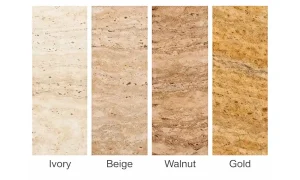
Travertine stone comes in a variety of natural colors, which are influenced by the minerals present during its formation. The most common color for travertine is a soft beige or ivory, but it can also be found in a range of other shades, depending on the specific location where it forms.

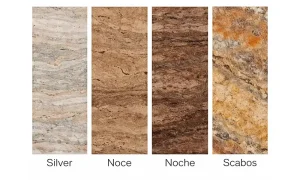
For instance, travertine can appear in light to dark browns when iron or other minerals like manganese are present. Red tones are often the result of iron oxide, which gives the stone a warm, earthy hue. In addition, you may find travertine with golden or yellowish shades, caused by the presence of different minerals or varying levels of heat during its formation.

Another popular variation is Silver Travertine, which has a sleek, modern appearance with cool gray tones, ideal for contemporary spaces.

The stone’s natural variations in color and texture make it a versatile option for a range of design styles. From classic light tones to richer, deeper hues, the range of colors allows for flexibility in both interior and exterior spaces. Whether used for flooring, countertops, or outdoor areas like patios, the color of the travertine can set the tone of a space and complement other materials and finishes.

Classic Beige and Neutral Travertine Varieties

The most common and sought-after colors in travertine are beige and neutral tones. These natural shades work well in both contemporary and classic design schemes, offering a calming and elegant backdrop for any space. Beige travertine often features subtle veins or specks that add texture and depth to floors, walls, or countertops. These neutral tones are ideal for creating a cohesive design, as they pair well with almost any décor style, whether modern or traditional.

Exotic Colors: Red, Walnut and Golden Travertine

For those looking to make a statement, exotic travertine colors such as red, walnut, and golden varieties offer a rich, bold aesthetic. These vibrant hues are often found in higher-quality travertine and are perfect for creating focal points in a room or outdoor area. Red and walnut travertine, often formed in environments rich in iron oxide, add warmth and sophistication to spaces, while golden travertine brings a luxurious and opulent touch.

Vein Cut vs Cross Cut Travertine Explained

When selecting travertine, it’s important to understand the cut of the stone, as it can significantly impact the appearance of your project. Vein cut travertine follows the natural layers of the stone, creating linear, often more pronounced veining. This style is commonly used for more contemporary and streamlined designs. On the other hand, cross cut travertine is cut perpendicular to the veins, creating a more uniform, cloudlike appearance. This cut is often preferred for a softer, more timeless look in traditional spaces.

Travertine Finishes: Honed, Tumbled, Brushed and Polished

The finish changes how travertine looks and feels, so it should be selected according to the application rather than appearance alone.

Honed Travertine

Honed travertine has a smooth, matte or low-sheen surface. It provides a refined appearance and is commonly considered for flooring and architectural spaces where a clean, understated finish is preferred.

Tumbled Travertine

Tumbled travertine has a more textured, weathered appearance with softened edges. Its natural character makes it popular in outdoor and traditional-style designs.

Brushed Travertine

A brushed finish creates additional surface texture and a more tactile appearance. It can suit projects where a rustic or naturally aged look is preferred.

Polished Travertine

Polished travertine has a smoother, more reflective surface that highlights colour and veining. Because finish selection affects surface performance as well as appearance, polished products should be assessed carefully for the intended location, particularly where the surface may become wet.

For product-specific finish and size options, check the current Travertine Tiles & Pavers collection.

Travertine Stone vs. Other Natural Stones (Marble, Limestone, Granite)

Travertine Stone vs. Other Natural Stones (Marble, Limestone, Granite)

Travertine is often compared to other natural stones like marble, limestone, and granite, all of which are widely used in construction and design. Understanding the differences between these stones will help you choose the right one for your project.

Marble vs. Travertine: While both stones are made from calcium carbonate, marble is a metamorphic stone formed under heat and pressure, giving it a denser, smoother texture. Travertine, in contrast, is lighter and more travertine porous, giving it a rustic, natural feel.

Limestone vs. Travertine: Limestone and travertine are both sedimentary stones, but travertine’s formation in hot springs gives it a more distinctive texture with air pockets and veining. Limestone is typically more consistent and subtle in appearance.

Granite vs. Travertine: Unlike granite, which is an igneous rock known for its extreme durability and dense surface, travertine is softer and easier to cut, but it does require maintenance due to its porous nature. Granite is better for high-traffic areas, while travertine excels in interior design and lighter-use areas.

Compare Travertine with Other Materials

If you are choosing between materials for a specific project, these dedicated Hunter Pavers comparisons provide more detail:

  • Travertine vs Limestone – compare two natural sedimentary stones by appearance, use and maintenance considerations.
  • Travertine vs Granite – compare travertine with a denser natural stone for different project requirements.
  • Travertine vs Porcelain – compare natural stone character with a lower-maintenance manufactured alternative.

Travertine Uses: Interior and Exterior Applications

Travertine is a versatile material that can be used both indoors and outdoors, offering a natural beauty that suits any project. It’s often chosen for both residential and commercial spaces due to its durability and timeless aesthetic.

Common Indoor Uses

  • Interior flooring and feature areas
  • Bathrooms and selected wet-area applications when the correct finish, sealing and installation system are used
  • Wall cladding and feature walls
  • Decorative architectural details

Common Outdoor Uses

  • Patios and outdoor entertaining areas
  • Courtyards and terraces
  • Garden paths and walkways
  • Pool surrounds where the selected product and finish are suitable for wet outdoor conditions
  • Landscape and architectural features

For flooring-specific considerations, see the Hunter Pavers guide to travertine flooring.

How to Choose Travertine Stone for Your Project

Travertine should be selected according to where it will be installed and how the space will be used. Before ordering, compare the following factors.

1. Choose the Right Finish

Honed, tumbled, brushed and polished finishes differ in texture and appearance. For outdoor or wet environments, assess the actual product specification and surface finish rather than assuming every travertine product performs the same way.

2. Check Thickness and Format

Tiles and pavers may be supplied in different thicknesses and sizes. The appropriate specification depends on the installation method, substrate and expected traffic. Always confirm the selected product is suitable for the intended application.

3. Decide Between Filled and Unfilled Travertine

Some travertine is supplied with natural cavities visible, while other products have pores filled during processing. This choice influences the stone’s appearance, texture and maintenance requirements.

4. Expect Natural Colour Variation

Travertine is a natural material, so colour and movement vary between pieces and batches. Viewing samples can help you understand the expected range before making a final selection.

5. Plan for Sealing and Maintenance

Because travertine is calcium-carbonate based and naturally porous, appropriate sealing can help reduce moisture and stain absorption. For routine care, use cleaning products suitable for natural stone and avoid acidic cleaners that may etch the surface.

Ready to compare options? Browse travertine tiles and pavers to review Hunter Pavers’ current range, colours, sizes and finish options.

How Much Does Travertine Stone Cost?

The price of travertine varies according to the stone grade, colour, finish, size, thickness, source, quantity and installation requirements. Standard colours and formats may be priced differently from rarer colours, specialised finishes or thicker pavers.

Because Hunter Pavers has a dedicated guide covering this topic, this page should not duplicate a full price article. For a deeper breakdown of the factors that influence price, see Is Travertine Expensive? A Complete Guide to Costs, Benefits, and Alternatives.

You can also view the current Travertine collection for available Hunter Pavers products and current product information.

Benefits and Limitations of Travertine Stone

Like any material, travertine has both advantages and disadvantages that should be considered before making a purchase.

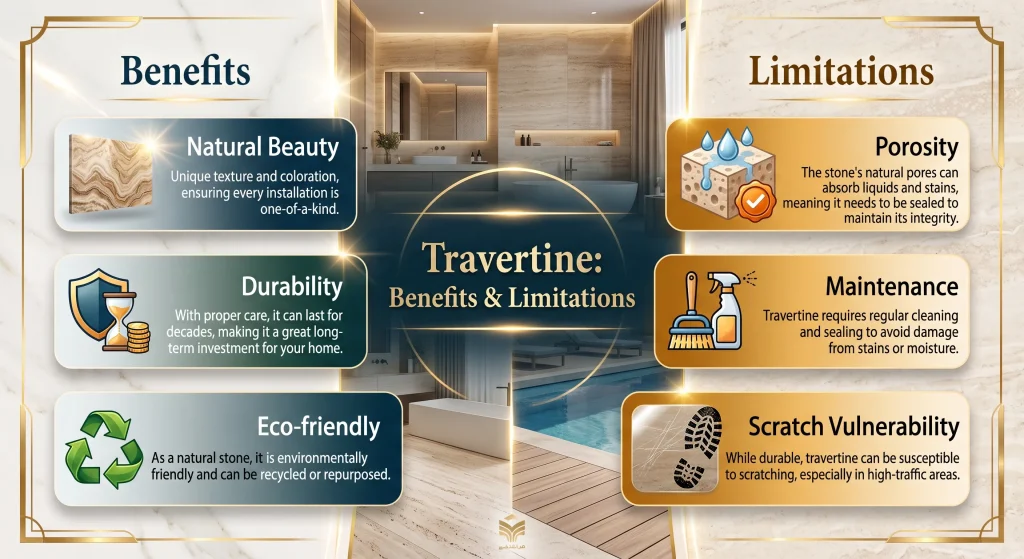
An educational infographic comparing the benefits (Natural Beauty, Durability, Eco-friendly) and limitations (Porosity, Maintenance, Scratch Vulnerability) of using Travertine stone, set in a luxurious design with central bathroom and pool images.

Benefits:

  • Natural beauty: The texture and coloration of travertine are unique to each stone, ensuring that every installation is one-of-a-kind.
  • Durability: With proper care, travertine can last for decades, making it a great long-term investment for your home or business.
  • Eco-friendly: As a natural stone, travertine is environmentally friendly and can be recycled or repurposed.

Limitations:

  • Porosity: The stone’s natural pores can absorb liquids and stains, meaning it needs to be sealed to maintain its integrity.
  • Maintenance: Travertine requires regular cleaning and sealing to avoid damage from stains or moisture.
  • Scratch vulnerability: While durable, travertine can be susceptible to scratching, especially in high-traffic areas.

Travertine Care and Maintenance

Regular care helps preserve the appearance of travertine and reduces the risk of staining or surface damage.

  • Use suitable natural-stone cleaners: Choose pH-neutral products designed for natural stone.
  • Avoid acidic cleaners: Vinegar, lemon-based cleaners and other acidic products can react with calcium carbonate and etch travertine.
  • Clean spills promptly: Removing spills before they penetrate the surface can reduce staining.
  • Seal when appropriate: Sealing requirements vary by product, finish and application, so follow the recommendations for the selected stone and installation.
  • Use appropriate cleaning methods: Aggressive cleaning methods can damage softer or weathered stone surfaces.

For more detailed maintenance guidance, read Can You Pressure Wash Travertine? and Does Travertine Stain Easily?.

Explore Travertine Tiles and Pavers

If travertine suits your project, the next step is to compare the actual colour, finish, size and specification of available products. Hunter Pavers offers a range of travertine options for different architectural and landscaping applications.


Shop Travertine Tiles & Pavers

Contact Hunter Pavers

Frequently Asked Questions About Travertine Stone

What is travertine stone made of?

Travertine is a natural sedimentary limestone composed primarily of calcium carbonate. Small amounts of other minerals can influence its colour, veining and overall appearance.

Is travertine a natural stone?

Yes. Travertine forms naturally through mineral deposition, commonly around mineral-rich springs and limestone environments. Its pores, veins and colour variation are natural characteristics of the stone.

Can travertine be used outdoors?

Travertine is widely used in outdoor projects such as patios, courtyards, pathways and selected wet-area applications. The correct product, thickness, finish, installation method and maintenance plan should be chosen for the specific location.

Does travertine need to be sealed?

Travertine is naturally porous, so sealing is commonly used to help reduce moisture and stain absorption. The appropriate sealing schedule depends on the product, finish, installation environment and sealer used.

What is the difference between honed and tumbled travertine?

Honed travertine generally has a smoother, matte appearance, while tumbled travertine has a more textured, weathered look with softened edges. The best option depends on the desired appearance and application.

Is travertine expensive?

Travertine pricing varies by grade, colour, finish, size, thickness, source and quantity. It is best to compare current product pricing and project requirements rather than relying on one fixed price.

How do you clean travertine?

Use cleaning products suitable for natural stone, preferably pH-neutral cleaners. Avoid acidic products such as vinegar or lemon-based cleaners because they can etch calcium-carbonate stone.

Special offer

Price range: $26.00 through $95.00

Unika is a stone industry specialist based in Australia, with over 10 years of experience in sourcing, designing, and delivering premium natural stone solutions for residential and commercial projects.

Frequently Asked Questions

Travertine typically comes in beige, ivory, brown, red, gold, and even silver shades.
Yes, travertine is durable enough for outdoor use, including patios, pool decks, and walkways.
Travertine is generally affordable, though the price can vary based on quality and finish.

other articels

Leave a Reply

Your email address will not be published. Required fields are marked *