


When comparing travertine vs granite, many homeowners initially focus only on appearance. At first glance, both stones look luxurious, natural, and expensive. However, once you begin evaluating durability, maintenance, water resistance, installation costs, and long-term performance, the differences become much more important. Choosing the wrong stone for the wrong environment can lead to staining, cracking, expensive repairs, or constant maintenance issues later.
The reality is that travertine vs granite is not a battle between a “good” stone and a “bad” stone. Both are premium natural materials, but each one performs better in specific situations. Granite is usually selected for strength, practicality, and resistance to heavy daily use. Travertine, on the other hand, is often chosen for its warm textures, natural elegance, and luxurious Mediterranean-style appearance. Understanding how these materials behave in real-life conditions is the key to making the right investment for your home or commercial project.
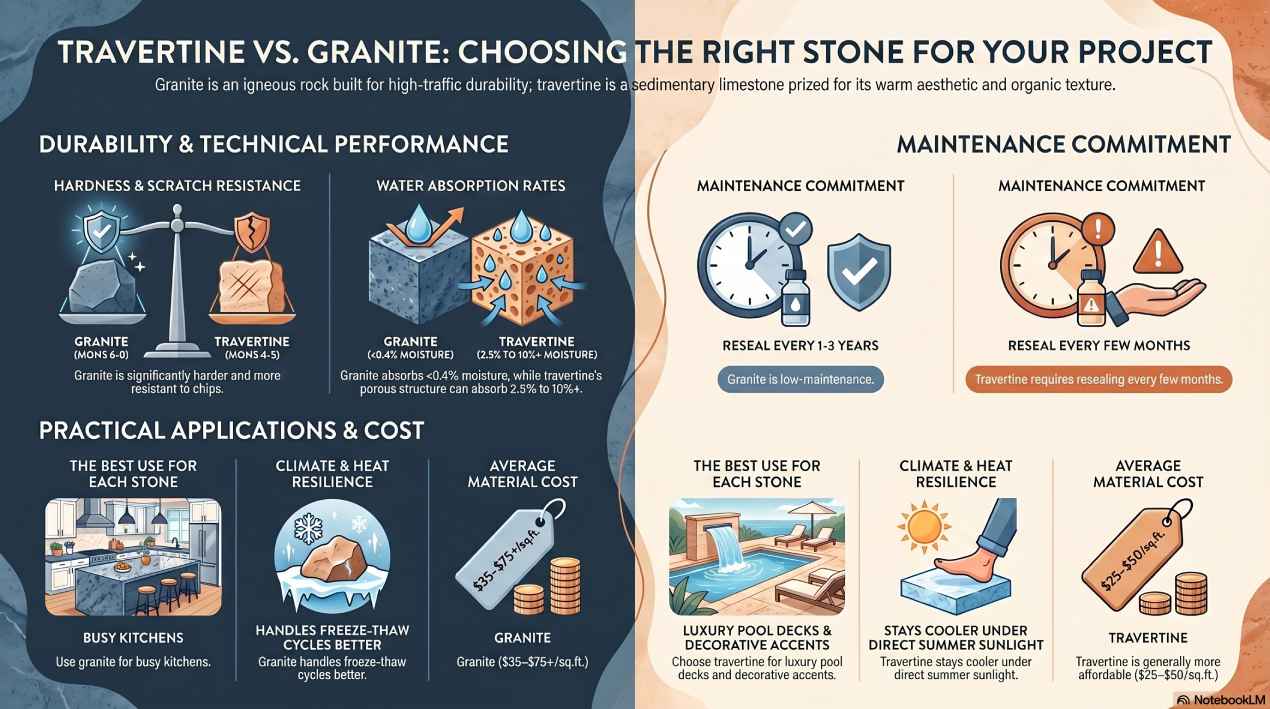
| Feature | Granite | Travertine |
|---|---|---|
| Geological Type | Igneous Stone | Sedimentary Limestone |
| Surface Hardness | Very High | Medium |
| Water Absorption | Extremely Low | High |
| Maintenance Level | Low Maintenance | High Maintenance |
| Best Use Areas | Kitchens & High-Traffic Areas | Decorative & Outdoor Luxury Spaces |
| Climate Resistance | Excellent | Moderate |
| Scratch Resistance | Excellent | More Vulnerable |
| Average Price | $35–$75+ per sq.ft. | $25–$50 per sq.ft. |
Understanding the Geological Difference Between Travertine vs Granite
One of the biggest reasons these stones perform differently comes from how they are naturally formed.
How Granite Is Formed
Granite is an igneous rock created deep underground when molten magma slowly cools and crystallizes over thousands of years. Because the cooling process happens under high pressure and over long periods, granite develops an extremely dense internal structure.
This dense composition is one of the reasons granite is widely considered the best stone for kitchen countertops, and is frequently used in commercial flooring, hotel lobbies, and exterior paving.
Granite is essentially engineered by nature to survive extreme conditions. That is why it performs so well against pressure, moisture, heat, and physical impact.
How Travertine Is Formed
Travertine forms in a completely different way. It is a sedimentary limestone created by mineral deposits left behind by hot springs and geothermal water. Over time, calcium carbonate accumulates and creates the layered stone structure associated with travertine.
This process creates the characteristic pores, veins, cavities, and textured movement that make travertine visually unique. Unlike granite’s dense crystalline structure, travertine develops a softer and more porous composition.
These natural voids are responsible for travertine’s warm and organic appearance, but they also make the stone more vulnerable to moisture penetration, staining, and wear.
Visual Appearance in Travertine vs Granite
The aesthetic difference between these stones is often the main reason homeowners struggle to choose between them.
Granite Creates a Bold and Modern Look
Granite tiles are famous for their dramatic colors and crystal-rich patterns. Depending on the specific batch, these tiles can feature deep blacks, bright whites, metallic grays, blues, greens, reds, or gold mineral movement.
Many luxury kitchens use polished granite because the reflective surface enhances lighting and creates a sleek, premium appearance. The stone works especially well in modern homes, contemporary interiors, and spaces designed around sharp contrasts.
Granite surfaces usually feel visually stronger and more structured. Even lighter granite colors often maintain a crisp and bold appearance that complements modern cabinetry and stainless steel appliances.
Travertine Creates a Warm and Organic Atmosphere
Travertine tiles offer a completely different visual experience. Instead of dramatic contrast, these tiles focus on warmth, softness, and natural texture.
Common travertine colors include:
- Cream
- Beige
- Walnut
- Ivory
- Silver
- Soft brown earth tones
The stone’s porous veins and layered movement create a relaxed and timeless atmosphere that many designers associate with Mediterranean villas, luxury spas, and resort-style architecture.
Travertine often feels more natural and less “manufactured” than polished granite. For homeowners who prefer softer interiors with earthy elegance, travertine can create a more inviting environment.
Surface Finishes in Travertine vs Granite
Both stones are available in multiple finishes, and the finish itself can completely change how the material looks and performs.
Honed Finish
A honed finish produces a smooth matte surface without excessive reflection. This finish is popular for interior floors because it reduces slipperiness compared to polished stone.
In the travertine vs granite comparison, honed travertine is especially popular for luxury bathrooms and hallways because it creates a softer and more natural appearance.
Polished Finish
Polished stone creates maximum shine and color depth. Granite performs exceptionally well with polished finishes because its crystalline minerals reflect light beautifully.
Polished granite countertops remain one of the most popular luxury kitchen surfaces worldwide because they combine elegance with durability.
Travertine can also be polished, but highly polished travertine requires more careful maintenance because the softer surface can show wear more easily over time.
Tumbled Finish
Tumbled travertine is one of the most recognizable outdoor natural stone finishes. The process softens the edges and creates a weathered texture that improves traction.
This finish is especially common around swimming pools and patios because travertine stays cooler under direct sunlight compared to many darker stones.
Durability Comparison in Travertine vs Granite
Durability is one of the most important categories when choosing between these two materials.
Granite Is Significantly Harder
On the Mohs hardness scale, granite typically ranks between:
6≤H≤8
This high hardness rating means granite resists:
- Scratches
- Chipping
- Cracking
- Heavy impact
- Daily wear
Granite can handle heavy cookware, dropped utensils, furniture movement, and high foot traffic without significant damage.
For busy households, large families, restaurants, or commercial spaces, granite offers long-term reliability that requires minimal concern.
Travertine Is Softer and More Delicate
Travertine usually ranks between:
4≤H≤5
Because of this softer structure, travertine is more vulnerable to scratches and surface wear.
Heavy furniture movement, pet claws, high heels, or dropped objects can damage travertine more easily than granite. Over time, heavily trafficked travertine flooring may develop visible wear patterns if not maintained properly.
This does not mean travertine is weak, but it does mean the stone requires smarter placement and more careful use.
Water Resistance in Travertine vs Granite
Water absorption is one of the biggest practical differences between these materials.
Granite Has Extremely Low Porosity
Granite absorbs very little moisture. Typical water absorption rates remain under:
A<0.4%
When sealed properly, granite becomes highly resistant to water penetration and staining. This is one reason granite works so well in kitchens, showers, bathroom vanities, and outdoor installations.
Spills generally remain on the surface longer before penetrating the stone, giving homeowners more time to clean them safely.
Travertine Absorbs Much More Water
Travertine is naturally porous and can absorb significant moisture if not sealed correctly. Water absorption rates often range between:
2.5%≤A≤10%+
Because of this porous structure, travertine behaves almost like a sponge internally. Water can enter small cavities and eventually lead to staining, mold growth, or freeze-related cracking in colder climates.
For this reason, travertine installations require consistent sealing and moisture management.
Maintenance Requirements in Travertine vs Granite
Maintenance is where many homeowners underestimate the real difference between these stones.
Granite Is Easier to Maintain
Granite is widely considered a low-maintenance natural stone. Most granite surfaces only require resealing every one to three years depending on usage.
Routine care usually involves:
- pH-neutral cleaners
- Soft cloth cleaning
- Avoiding harsh chemicals
- Occasional resealing
Because granite is denser, it resists stains much more effectively than travertine.
Travertine Requires More Attention
Travertine demands significantly more ongoing care. The stone typically needs resealing every few months to maintain proper protection against moisture and stains.
Acidic substances such as vinegar, lemon juice, bleach, or harsh bathroom cleaners can permanently etch the surface very quickly.
Travertine owners often need to clean spills immediately and avoid using aggressive cleaning products entirely. While the stone can remain beautiful for decades, maintaining that appearance requires commitment.
Kitchen Performance in Travertine vs Granite
Kitchens place enormous stress on natural stone surfaces.
Why Granite Dominates Kitchens
Granite remains one of the most trusted kitchen countertop materials because it handles:
- Heat
- Sharp objects
- Heavy cookware
- Oil spills
- Moisture
- Daily impact
The stone performs exceptionally well in busy family homes and professional-style kitchens.
Why Travertine Is Less Common in Kitchens
Travertine can absolutely be used in kitchens, but it requires more caution. Oils, acidic foods, wine, sauces, and frequent moisture exposure increase the risk of staining and etching.
Some homeowners still choose travertine because they prioritize aesthetics over practicality, especially in luxury or decorative kitchens with lighter usage.
Outdoor Performance in Travertine vs Granite
Outdoor conditions expose natural stone to constant environmental stress.
Granite Performs Better in Harsh Climates
Granite handles snow, freezing temperatures, heavy rain, and extreme temperature shifts very well. Because the stone absorbs little water, it resists freeze-thaw cracking far more effectively.
This makes granite ideal for outdoor stairs, walkways, exterior walls, and cold-climate landscaping projects.
Travertine Excels Around Pools
Travertine remains one of the most popular pool deck materials because it stays relatively cool under direct sunlight and offers strong slip resistance when finished properly.
The softer earth-tone appearance also creates a luxurious resort-style atmosphere around outdoor entertainment spaces.
However, in colder climates with repeated freeze-thaw cycles, travertine requires more careful maintenance and sealing to prevent cracking.
Cost Comparison in Travertine vs Granite
Budget is another major factor in the travertine vs granite decision.
Granite Pricing
Standard granite typically costs between:
35≤P≤75
Rare exotic slabs can exceed:
P>175
Installation complexity, slab rarity, edge profiles, and thickness all influence final pricing.
Travertine Pricing
Travertine is generally more affordable, with average prices ranging between:
25≤P≤50
This lower price point makes travertine attractive for large flooring projects, patios, and decorative luxury spaces.
However, lower upfront material costs should be balanced against potentially higher long-term maintenance expenses.
Which Stone Is Better for Resale Value?
Both stones can improve property value, but they attract different buyer preferences.
Granite is often associated with durability, modern kitchens, and practical luxury. Many buyers specifically look for granite countertops because of their reputation for long-term performance.
Travertine appeals more strongly to buyers who prioritize architecture, design atmosphere, and luxury outdoor living spaces.
In general, granite usually provides broader mainstream resale appeal, while travertine offers more specialized aesthetic value.
Final Thoughts on Travertine vs Granite
The decision between travertine vs granite ultimately depends on your priorities, lifestyle, climate, and maintenance expectations. Granite is the stronger and more practical option for kitchens, commercial spaces, high-traffic areas, and homeowners who want maximum durability with minimal maintenance.
Travertine, however, delivers a softer and more natural type of luxury that many engineered materials simply cannot replicate. Its warm textures, earthy tones, and timeless Mediterranean character make it one of the most visually appealing natural stones available for bathrooms, patios, decorative walls, and resort-style outdoor spaces.
If durability and practicality are your top priorities, granite is usually the safer long-term investment. If creating warmth, texture, and organic elegance matters more, travertine can transform a space into something far more unique and inviting.