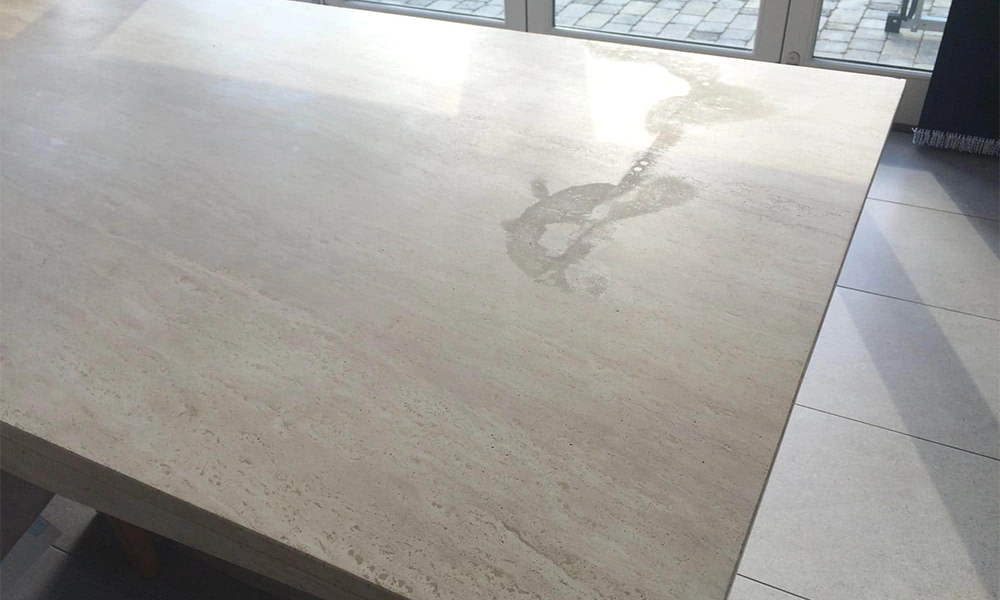
Travertine is a beautiful natural stone that adds timeless elegance to both indoor and outdoor spaces. Its warm tones, unique veining, and natural texture make it a favorite choice for flooring, countertops, and pool surrounds. However, one common concern homeowners have is the possibility of a travertine stain. Because travertine is a porous material, it can absorb liquids and become stained if not properly sealed and maintained.
Understanding why stains happen and how to prevent them is essential for keeping your stone looking beautiful for years. In this guide, we’ll explore what makes travertine prone to staining, how to clean and protect it, and the best ways to preserve its natural beauty over time.
Table of Contents
Travertine can stain if spills are allowed to absorb into its natural pores, particularly when the stone is unsealed or its protective treatment has worn down. It is not naturally stain-proof, but prompt spill removal, pH-neutral cleaning and an appropriate penetrating sealer can greatly reduce the risk. Acidic liquids deserve special care: they may leave a dull etched mark rather than a conventional stain.
Travertine is porous, so oils, coloured drinks, food and mineral-rich water can penetrate more readily than on a dense, fully manufactured surface. The likelihood of staining depends on the finish, whether pores are filled, the stone’s location and how well the surface has been protected and maintained. A quality stone sealer helps slow absorption; it does not make travertine permanently stain resistant.
For a closer look at absorption, filled and unfilled surfaces, see Is Travertine Porous?. Travertine forms from mineral-rich water, which is why its texture and colour can vary from tile to tile; our travertine formation guide explains this natural process.
Why Travertine Can Develop Stains or Marks
Small cavities and pores are a defining part of travertine’s appearance. When a liquid sits on the surface, it can move into those openings and leave a darker patch or colour change. Kitchens, dining areas, bathrooms, patios and pool surrounds need practical habits because they experience frequent moisture, food, oils or outdoor debris.
Open pores and finish: More open or unfilled surfaces can absorb spills faster than a filled, well-protected surface.
Protection condition: An existing sealer may gradually lose effectiveness through weather, traffic and cleaning; inspect it and follow the sealer manufacturer’s guidance.
Spill type and dwell time: Cooking oil, wine, coffee, sauces, cosmetics and leaf tannins can discolour stone if left in place.
Location: Exterior paving may collect soil, organic debris, pool splash or hard-water residue, while indoor floors often encounter food and beverage spills.
Cleaning method: Harsh, acidic or abrasive products can harm the stone or its finish.
Stain vs Etching: Know the Difference Before Cleaning
Not every mark is a stain. Travertine contains calcium carbonate, so acidic substances such as vinegar, lemon juice and some bathroom cleaners can react with the surface. This is called etching: it may look lighter, duller or less reflective than the surrounding stone. Because etching changes the finish rather than simply adding colour, it can require professional honing or restoration rather than stain removal.
Type of mark
Common causes
What it can look like
First response
Absorbed stain
Oil, coffee, wine, sauces, cosmetics
Darkened or coloured patch
Blot promptly and use a natural-stone cleaner suited to the stain.
Water or mineral mark
Standing water, hard water, pool splash
Ring, pale residue or uneven tone
Clean gently with a pH-neutral stone product; avoid acidic descalers.
Etching
Vinegar, citrus, wine or acidic cleaners
Dull, lighter or rough-feeling area
Do not use more acid; seek stone-restoration advice if the finish is affected.
Outdoor surface soiling
Soil, leaves, algae or general traffic
Dirty or darkened surface layer
Use gentle exterior cleaning appropriate to the stone and drainage conditions.
How to Prevent Stains on Travertine
Prevention is simpler than treating a stain that has had time to settle. Build the following habits into the way the space is used and maintained.
Blot spills immediately: Lift liquids with a soft absorbent cloth instead of rubbing them further into the stone.
Use pH-neutral products: Choose cleaners labelled for natural stone and avoid vinegar, lemon-based cleaners, bleach and abrasive powders.
Protect high-risk areas: Use coasters, trays, mats and outdoor furniture feet where practical.
Maintain the protective treatment: Check the surface periodically and reseal only when the product guidance and the stone’s condition call for it.
Keep outdoor paving clear: Remove leaves, soil and standing water, and make sure drainage is working as intended.
Start with the gentlest suitable method. Before using any product, test it in a small inconspicuous area and follow the manufacturer’s directions. Avoid household acids and improvised harsh chemicals: they can etch the stone, damage the finish or make a local problem more noticeable.
Step
What to do
Why it matters
1. Identify the mark
Consider what caused it and whether it is a stain, mineral residue or acid etching.
The correct treatment depends on the cause; an etched surface is not cleaned in the same way as an absorbed spill.
2. Blot and clean gently
Remove loose material, then clean with a soft cloth or mop and a pH-neutral natural-stone cleaner.
This limits further absorption without scratching or chemically attacking the stone.
3. Use a stain-specific stone treatment
For a set-in stain, use a product or poultice system specifically approved for natural stone and the stain type.
Oil, organic colour and rust-related marks require different approaches.
4. Rinse and dry
Remove cleaner residue as directed and allow the area to dry fully before judging the result.
Moisture can temporarily darken porous stone and hide its true appearance.
5. Restore protection when appropriate
Once the surface is clean and dry, assess whether resealing is needed according to the selected sealer’s instructions.
Good protection gives you more time to deal with future spills.
A controlled wash can help with surface dirt on exterior paving, but pressure is not a universal stain-removal solution. Read How to Pressure Wash Travertine before using a pressure washer, especially on older, filled or damaged stone.
When to Call a Stone Professional
Seek specialist advice for unknown dark stains, rust marks, widespread discolouration, a visibly etched finish, loose fill or cracking. A professional can identify the mark and recommend a restoration method that suits the stone instead of risking more damage with trial-and-error cleaning.
Is Travertine Stain Resistant Compared with Other Materials?
Travertine should be treated as a natural material that benefits from ongoing care, not as a stain-proof surface. Its performance varies by finish, installation and maintenance. Porcelain is generally less absorbent, while other natural stones also have their own sealing and cleaning needs. The right choice depends on the look you want, the level of exposure and how much routine care is suitable for the space.
Find a natural stone finish for your floor, patio, pool surround or landscape project. Our team can help you compare available travertine options and choose a format suited to the intended application.
Travertine can stain because it is naturally porous, especially if liquids are left on an unsealed or poorly protected surface. Prompt cleaning and suitable sealing reduce the risk.
Is travertine stain resistant?
Travertine is not naturally stain-proof. A compatible penetrating sealer can improve resistance by slowing absorption, but spills should still be cleaned promptly.
Can vinegar be used to clean travertine?
No. Vinegar and other acidic cleaners can etch calcium-based natural stone, leaving a dull or rough mark. Use a pH-neutral cleaner made for natural stone instead.
How do you remove a stained travertine tile?
First identify the cause, clean gently with a pH-neutral stone cleaner and use a stain-specific natural-stone treatment if needed. Test any product in an inconspicuous area first and seek professional help for deep, unknown or etched marks.
How often should travertine be sealed?
There is no single schedule for every surface. The right timing depends on the stone, finish, location, traffic and sealer used. Check the product instructions and assess the surface periodically.
Unika is a stone industry specialist based in Australia, with over 10 years of experience in sourcing, designing, and delivering premium natural stone solutions for residential and commercial projects.
Yes, travertine can stain easily because it’s a porous natural stone. Without proper sealing, liquids like wine, coffee, or oil can penetrate the surface and cause discoloration.
The best way to prevent staining is by sealing the stone regularly, cleaning spills immediately, and using pH-neutral stone cleaners instead of harsh chemicals.
No, travertine is not difficult to maintain. With regular cleaning, occasional resealing, and careful handling, you can easily keep the stone stain-free and looking beautiful for years.