

Choosing between limestone vs porcelain pavers can make a significant difference to the appearance, comfort and maintenance of your outdoor space. Both materials are popular for Australian patios, pool surrounds, pathways and alfresco areas, but they offer different benefits in terms of durability, heat, cost and long-term performance.
Limestone provides natural beauty, organic texture and a timeless appearance, while porcelain offers consistent finishes, low maintenance and excellent resistance to moisture and stains. The better choice depends on your climate, budget, preferred style and how you plan to use the area.
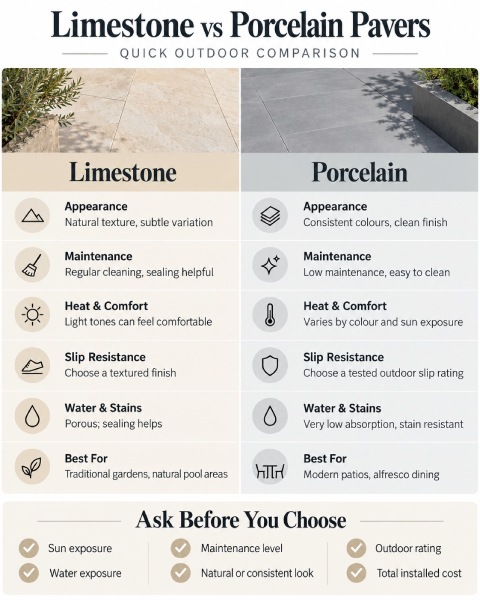
Before comparing the materials in detail, here’s a quick overview of how limestone and porcelain perform in common outdoor applications.
| Feature | Limestone Pavers | Porcelain Pavers |
| Material | Natural sedimentary stone | Manufactured ceramic |
| Appearance | Organic variations and natural texture | Consistent colours and designs |
| Durability | Strong, but varies by stone quality | Highly resistant to wear and scratches |
| Maintenance | Regular cleaning and periodic sealing | Generally low maintenance |
| Heat resistance | Light colours can remain comfortable | Depends on colour and solar exposure |
| Slip resistance | Depends on texture and finish | Depends on tested outdoor surface |
| Water absorption | Porous to varying degrees | Very low water absorption |
| Stain resistance | Benefits from suitable sealing | Generally highly stain-resistant |
| Installation | Requires suitable base and drainage | Depends on thickness and installation system |
| Cost | Varies by grade, finish and source | Varies by quality, format and thickness |
| Best suited for | Natural-looking landscapes and pool areas | Contemporary, low-maintenance spaces |
Quick verdict: Limestone is often ideal for homeowners who value natural character and a softer landscape aesthetic. Porcelain generally suits those prioritising convenience, consistent design and reduced ongoing maintenance.
What Are Limestone Pavers?
Limestone pavers are made from natural sedimentary rock, typically formed from calcium carbonate deposits over millions of years. Each paver has subtle variations in color, texture and pattern, creating a distinctive appearance that manufactured products cannot reproduce exactly.
Outdoor limestone commonly comes in cream, beige, grey and warm neutral shades. Depending on its density and surface treatment, it can work beautifully in patios, pathways, courtyards and pool surrounds.
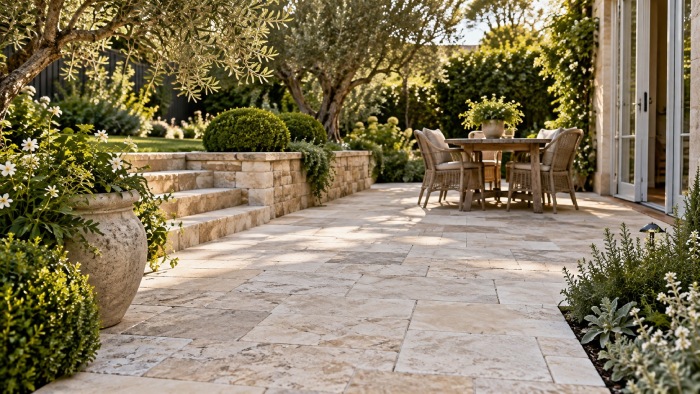
However, not all limestone is identical. Some varieties are denser and more suitable for high-traffic outdoor areas, while softer limestone requires greater protection. Choosing an appropriate grade and finish is essential for lasting performance.
What Are Porcelain Pavers?
Porcelain pavers are manufactured using refined clay and other minerals fired at high temperatures. This process creates a dense, hard-wearing material with very low water absorption.
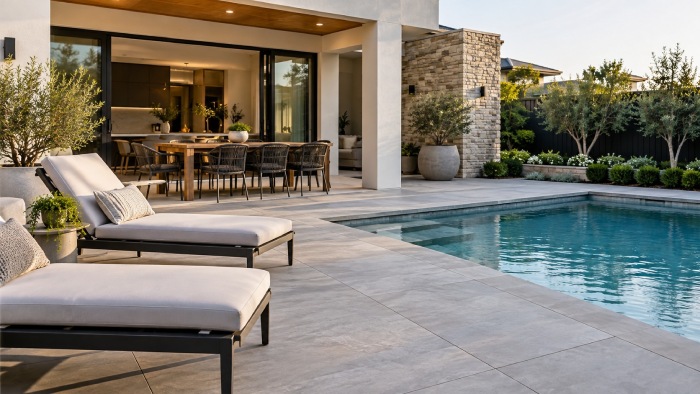
Outdoor porcelain is available in numerous colors, sizes and finishes, including designs that resemble limestone, concrete, timber and other natural materials. This makes it a versatile choice for modern Australian outdoor spaces.
Unlike ordinary indoor tiles, outdoor porcelain paving should be specifically designed and rated for external conditions. Thickness, slip resistance and the recommended installation method are particularly important when selecting porcelain for patios, pathways and pool areas.
Limestone vs Porcelain Pavers: Key Differences
When comparing limestone vs porcelain paving, the most important differences involve appearance, durability, maintenance and performance under everyday outdoor conditions.
Appearance
Limestone offers natural tonal variation, subtle fossil markings and organic textures. Its appearance complements traditional homes, Mediterranean-inspired gardens and relaxed Australian landscapes.
Porcelain provides a more controlled finish with consistent color and pattern. It is particularly useful for contemporary designs or projects requiring a coordinated appearance across large areas.
Best choice: Limestone for authentic natural character; porcelain for design consistency.
Durability
Both materials can perform well outdoors when correctly selected and installed.
Porcelain generally has excellent resistance to surface wear, scratches and everyday weather exposure. However, individual pavers can still chip or crack under concentrated impacts or inadequate substrate support.
Limestone durability depends on the stone’s density, composition and finish. Suitable outdoor-grade limestone can last for decades, although some varieties are more vulnerable to surface wear and chemical damage.
Best choice: Porcelain for predictable surface hardness; suitable high-quality limestone remains a durable alternative.
Maintenance
Porcelain is generally easier to maintain because its low porosity reduces moisture penetration and staining. Routine sweeping and washing with a suitable cleaner are usually sufficient.
Limestone requires more attention. Its porous surface can absorb oils, spills and moisture, making appropriate sealing beneficial for many outdoor applications.
Regular cleaning also helps maintain its appearance. For practical maintenance advice, see our guide on how to clean limestone pavers.
Best choice: Porcelain for lower ongoing maintenance.
Heat & Comfort
Surface temperature matters in Australia’s sunny climate, especially around swimming pools and barefoot entertaining spaces.
Light-coloured limestone can feel relatively comfortable underfoot because of its colour and thermal properties. However, darker or denser limestone may become noticeably warmer.
Porcelain also varies considerably. Pale porcelain can perform well in exposed areas, while darker designs may absorb more solar radiation and become hot.
Neither material is automatically cooler. Colour, surface finish, exposure and local weather conditions all influence comfort.
Best choice: Compare actual samples in direct sunlight rather than relying solely on material type.
Slip Resistance
Both limestone and porcelain can provide suitable slip resistance when selected with the appropriate surface finish.
Textured limestone may offer useful grip, although polished or excessively smooth finishes may become slippery when wet.
Outdoor porcelain is available with tested slip-resistant surfaces. In Australia, AS 4586 provides classifications for new pedestrian surface materials, including wet-pendulum P ratings.
For wet outdoor areas, request the specific product’s slip-test documentation and confirm the rating is appropriate for the intended application. Do not assume all textured products are equally slip-resistant.
Best choice: Either material, provided its tested finish suits the location.
Water & Stain Resistance
Porcelain has an advantage in moisture resistance because its dense structure absorbs very little water. It is also generally resistant to common outdoor stains.
Limestone is naturally porous, although absorption varies between varieties. Sealing can reduce the penetration of water, food spills and oils, but it does not make the stone completely stain-proof.
Limestone is also sensitive to acidic substances, which can etch its calcium carbonate surface. Acidic cleaning products should therefore be avoided.
Best choice: Porcelain for moisture and stain resistance.
Installation
Both paving materials require professional attention to substrate preparation, drainage, movement and suitable installation products.
Limestone may be installed using an appropriate mortar bed or other engineered paving system, depending on paver dimensions and intended loads.
Porcelain installation depends heavily on product thickness. Thin outdoor porcelain tiles generally require a suitable bonded substrate, while some thicker paving products support other manufacturer-approved systems.
Incorrect installation can result in movement, cracking or drainage problems regardless of material quality.
Best choice: Neither has a universal installation advantage; choose a system suited to the specific product and site.
Explore your options:
Compare Hunter Pavers’ limestone pavers and porcelain pavers to find colors, finishes and formats that suit your project.
Limestone vs Porcelain Pavers Pros and Cons
Understanding the advantages and limitations of each material makes the selection process easier.
| Material | Advantages | Limitations |
| Limestone | Authentic natural texture; individual colour variation; timeless appearance; attractive light-toned options | Can require sealing; susceptible to acidic damage; performance varies by stone type |
| Porcelain | Low maintenance; excellent stain resistance; consistent designs; low water absorption | Some finishes become hot; edges may chip under impact; installation requirements vary |
For homeowners who enjoy natural materials and are comfortable with periodic maintenance, limestone offers considerable appeal.
For busy households seeking a durable surface with minimal upkeep, porcelain is often the more practical option.
Limestone vs Porcelain Pavers Cost
The cost of limestone pavers vs porcelain depends on much more than the material itself.
Limestone pricing varies according to stone origin, grade, thickness, dimensions and surface finish. Premium natural limestone may cost more than entry-level outdoor porcelain, although economical limestone options are also available.
Porcelain prices depend on manufacturing quality, thickness, size, design and slip-resistance specifications. Large-format or specialist outdoor products may command higher prices.
Installation costs also matter. Substrate preparation, excavation, drainage, cutting, adhesives and labour can significantly affect the final project budget.
Limestone may require additional spending on sealing and maintenance over time, while porcelain typically involves fewer recurring treatments.
Cost recommendation: Compare complete installed quotes, including site preparation and long-term care, rather than the supply price per square metre alone.
Which Is Better for Different Outdoor Areas?
The ideal material depends on the location, exposure and intended use of your paving.
| Outdoor Area | Recommended Option | Main Reason |
| Pool surrounds | Both | Choose verified slip resistance and comfortable surface temperatures |
| Modern patios | Porcelain | Consistent finishes and easy cleaning |
| Traditional gardens | Limestone | Natural character and organic texture |
| Alfresco dining | Porcelain | Better resistance to everyday food and drink stains |
| Garden pathways | Both | Appearance, drainage and surface grip matter |
| Coastal properties | Both | Product suitability, drainage and maintenance determine performance |
Pool Surrounds
Both materials can work around swimming pools. Light-toned limestone provides an attractive natural finish, while slip-rated porcelain combines contemporary styling with low water absorption.
For matching edge treatments, explore porcelain pool coping options.
Patios and Alfresco Areas
Porcelain is particularly convenient for outdoor dining spaces because spills are generally easier to remove. Limestone creates a warmer, organic aesthetic that works well with natural landscaping.
If you’re considering other materials, our guide to the best tile for outdoor flooring can help narrow your choices.
Garden Paths and Courtyards
Limestone complements planting, timber and traditional landscape designs. Porcelain is well suited to structured modern courtyards and geometric paving layouts.
Whichever material you prefer, correct drainage, stable installation and suitable slip resistance remain essential.
Which Should You Choose: Limestone or Porcelain?
Choose limestone pavers if you prefer natural textures, subtle colour variations and a timeless outdoor appearance. They are particularly appealing for traditional homes, garden pathways and naturally styled pool areas.
Choose porcelain pavers if your priorities include low maintenance, consistent finishes, strong stain resistance and contemporary design flexibility. They are especially practical for alfresco dining areas and busy family spaces.
Consider these questions before making your final decision:
- Will the paving receive strong direct sunlight?
- Is the surface regularly exposed to water?
- How much maintenance are you comfortable performing?
- Do you prefer natural variation or a consistent appearance?
- Does the product have suitable outdoor specifications?
- What is the total installed cost?
If you appreciate limestone’s appearance but want to compare other natural materials, read our limestone vs travertine pavers guide.
Conclusion
The decision between limestone vs porcelain pavers comes down to appearance, maintenance expectations, environmental conditions and project requirements.
Limestone offers authentic natural beauty and a welcoming outdoor aesthetic, while porcelain delivers excellent stain resistance, design consistency and generally easier maintenance. Neither is universally better, and the right choice depends on selecting a suitable product and finish.
Explore Porcelain for Pool Edges
For your next paving project, explore Hunter Pavers’ porcelain collection. Contact the Hunter Pavers team for guidance on choosing the right material, thickness and finish for your outdoor space.
Frequently Asked Questions
Is limestone better than porcelain for outdoor paving?
Limestone is ideal for natural-looking spaces, while porcelain generally offers easier maintenance and greater stain resistance. The better material depends on your preferred appearance and practical requirements.
Are limestone pavers cooler than porcelain?
Light-colored limestone can remain comfortable in sunny conditions, but it is not always cooler than porcelain. Color, density, finish and sun exposure determine surface temperature.
Are porcelain pavers more durable than limestone?
Porcelain generally provides consistent resistance to scratches, moisture and surface wear. However, properly selected limestone is also durable and can perform well outdoors for many years.