

Choosing between honed vs tumbled travertine can make a significant difference to how your outdoor space looks, feels and performs. Although both finishes come from the same natural stone, honed travertine typically offers a smooth, refined appearance, while tumbled travertine creates a softer, weathered look with more rounded edges. The better option depends on your design preferences, intended application, surface requirements and maintenance expectations.
Whether you’re planning a pool surround, patio, courtyard or outdoor entertaining area, understanding these differences will help you select a finish that suits your home and lifestyle.
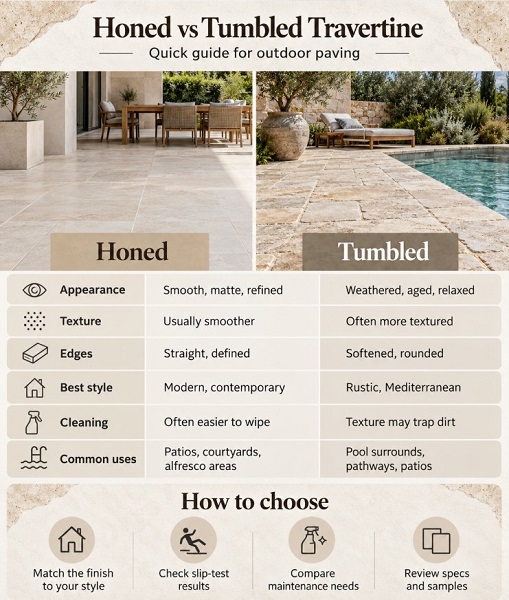
Honed vs Tumbled Travertine: At a Glance
| Feature | Honed Travertine | Tumbled Travertine |
| Appearance | Smooth, matte and refined | Weathered and naturally aged |
| Surface texture | Generally smoother | Often more textured |
| Edges | Usually straight and defined | Softened and rounded |
| Slip resistance | Depends on tested product | Depends on tested product |
| Maintenance | Smooth surfaces may be easier to wipe | Voids and texture may retain dirt |
| Sealing | Product-specific | Product-specific |
| Cost | Varies by grade and size | Varies by grade and processing |
| Applications | Selected patios, courtyards and alfresco areas | Selected pool surrounds, pathways and patios |
| Overall style | Modern and contemporary | Rustic and Mediterranean |
Both finishes can work beautifully outdoors when the specific product is suitable for the intended conditions.
What Is Honed Travertine?
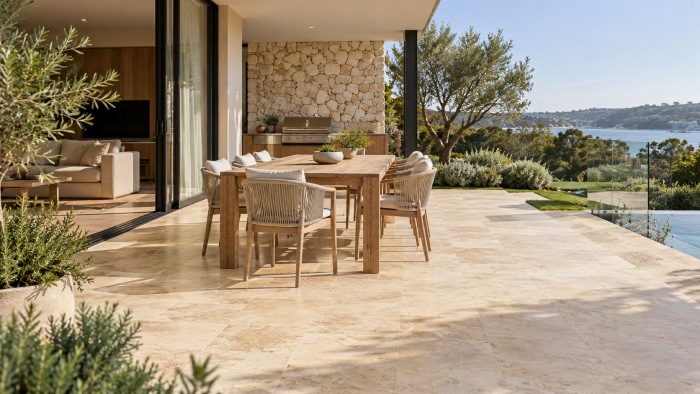
Honed travertine is natural travertine stone that has been mechanically ground using abrasives to create a relatively even, matte surface. Unlike polished travertine, it does not have a high-gloss finish.
Honed travertine pavers and tiles are commonly chosen for contemporary spaces where homeowners want natural stone character without an overly rustic appearance.
Appearance and Texture
Honed travertine typically feels smoother underfoot and highlights the stone’s natural colours, veining and subtle variations. Its understated finish works particularly well alongside modern architecture, neutral outdoor furniture and minimalist landscaping.
However, honed does not necessarily mean completely flat or free of pores. Honed travertine can be filled or unfilled, and its texture varies between products.
Benefits and Limitations
The main advantage of honed travertine is its clean, sophisticated appearance. Relatively even surfaces can also be straightforward to sweep and maintain.
However, a smoother finish should not automatically be considered suitable for wet outdoor areas. Some honed products are designed primarily for interiors, so homeowners should confirm outdoor suitability and slip-test results before purchasing.
What Is Tumbled Travertine?
Tumbled travertine is natural stone that undergoes a mechanical ageing process, typically involving agitation with abrasive materials. This softens its edges and corners, producing a weathered appearance.
Tumbled travertine pavers are popular for garden pathways, Mediterranean-style courtyards, patios and selected pool surrounds.
Appearance and Texture
Tumbled travertine has a relaxed, organic appearance. Its softened edges, subtle surface irregularities and natural colour variations create a sense of character that works particularly well in traditional and landscape-focused designs.
Not every tumbled product has the same texture. Some are noticeably rustic, while others have relatively smooth faces and only lightly softened edges.
Benefits and Limitations
Tumbled travertine works well where homeowners want natural character and a less formal finish. The aged appearance can also make minor visual imperfections less noticeable.
On the other hand, deeper pores and textured surfaces may collect dirt, leaves and debris. Some installations also require greater attention to grout joints and cleaning methods.
Honed vs Tumbled Travertine: Key Differences
The main differences between honed and tumbled travertine involve surface treatment, visual style, maintenance and installation. Neither finish is universally better.
Surface Texture and Appearance
Honed travertine typically provides a more uniform, matte surface with defined edges. It suits contemporary homes, streamlined outdoor kitchens and minimalist courtyards.
Tumbled travertine has softened edges and a more naturally aged appearance, making it attractive for garden pathways and traditional outdoor entertaining areas.
It’s also possible to find products described as honed and tumbled travertine. These combine a honed surface treatment with tumbled edges or additional ageing, demonstrating that the finishes are not always mutually exclusive.
Slip Resistance
Slip resistance is particularly important when comparing honed vs tumbled stone for outdoor applications.
Although tumbled travertine often has a more textured appearance, texture alone does not establish a particular slip rating. A honed product with an appropriate tested finish may perform differently from another honed product.
In Australia, AS 4586 provides methods for testing and classifying new pedestrian surface materials, including wet pendulum testing. Wet barefoot testing may also be relevant to particular pool environments.
Before selecting outdoor paving, ask for the product’s applicable slip-test results and confirm that the tested finish matches the product being supplied. Water, algae, contaminants, wear and surface treatments can also influence performance.
Maintenance and Cleaning
Both travertine finishes need suitable cleaning and ongoing care.
Honed surfaces with fewer exposed cavities may be easier to sweep or wipe clean. Tumbled surfaces with deeper texture can require additional attention to remove trapped dirt.
For routine maintenance:
- Sweep away leaves, dust and abrasive grit.
- Use a pH-neutral cleaner suitable for natural stone.
- Rinse away cleaning residue.
- Remove spills promptly.
- Check joints, drainage and surface condition periodically.
Avoid vinegar, acidic cleaning products and aggressive abrasives, which may damage calcium-based travertine.
For detailed care instructions, read Hunter Pavers’ guide on how to clean travertine tiles.
Sealing Requirements
Travertine is naturally porous, so sealing is commonly considered to help limit staining and moisture absorption.
Both honed and tumbled travertine may benefit from a compatible penetrating sealer, depending on the stone, application and manufacturer’s recommendations.
Sealing does not make natural stone completely waterproof or stain-proof. Reapplication requirements depend on exposure, traffic, cleaning practices and the product used.
Learn more about how to seal travertine tiles before starting your project.
Honed vs Tumbled Travertine Cost
When comparing honed vs tumbled travertine cost, there is no universal rule that one finish is always more expensive.
Prices depend on stone quality, colour, thickness, dimensions, manufacturing processes and availability. Additional processing may affect pricing, but a premium honed product can cost more than a standard tumbled alternative.
For an accurate comparison, request quotations for equivalent specifications and consider the complete project cost, including installation, cutting, sealing, delivery and wastage.
Installation and Grout Considerations
Honed travertine often has more defined edges, which can create a clean, structured paving layout. Tumbled travertine has softer edges that create a more relaxed visual effect.
Joint widths should follow the actual product’s dimensional tolerances and the installation specification rather than appearance alone.
Substrate preparation, drainage, bedding materials, adhesives, grout and movement joints also matter. Your installer should confirm the appropriate system for the stone’s thickness, format and intended outdoor use.
Explore your options: Browse Hunter Pavers’ travertine pavers to compare available colours, sizes and finishes before deciding.
Is Honed or Tumbled Travertine Better Around a Pool?
Tumbled travertine is often selected for pool surrounds because its softened edges and natural-looking finish complement relaxed outdoor environments. Certain tumbled or honed-and-tumbled products may be suitable for wet areas when supported by the relevant technical specifications.
However, tumbled travertine is not automatically safer or more slip-resistant than honed travertine. Pool surrounds are regularly exposed to water, sunscreen residue, cleaning products and changing weather conditions. The exact surface treatment and verified slip performance are more important than the finish name.
Honed travertine pool coping may also be appropriate where a suitable product has been specified for the location. Check the wet-area performance, coping profile, edge comfort, dimensions and installation requirements.
For available options and selection advice, explore travertine pool coping.
Which Finish Is Better for Patios and Outdoor Areas?
The ideal finish depends on how you plan to use the space and the appearance you want to achieve.
For contemporary patios and alfresco dining areas, honed travertine can create a clean, elegant foundation that complements modern outdoor kitchens and furniture. Where the area is exposed to rain, select a product with appropriate documented wet slip performance.
For traditional courtyards, garden paths and Mediterranean-inspired entertaining areas, tumbled travertine offers a softer, more established appearance. Its rounded edges also work well with informal paving patterns.
For pathways, steps and sloping areas, appearance should be secondary to appropriate product specifications, traction, drainage and installation design.
Colour and layout are important, too. Light cream travertine can create an open, airy atmosphere, while walnut and silver tones introduce greater contrast. Both finishes can be paired with different paving patterns when the selected product supports them.
How to Choose the Right Travertine Finish
If you’re still deciding between honed or tumbled travertine, use these practical considerations to narrow your options.
- Define your preferred style. Choose honed for a more refined appearance or tumbled for a relaxed, weathered look.
- Consider exposure to water. For pool surrounds, outdoor steps and exposed paving, review the relevant slip-test results rather than relying on finish descriptions.
- Assess maintenance expectations. If easy sweeping and cleaning are priorities, compare the actual surface texture and exposed cavities of each product.
- Check product specifications. Confirm thickness, dimensions, edge profile, filling, suitability for outdoor installation and sealing recommendations.
- Compare physical samples. Examine honed and tumbled finishes in natural daylight. Feel the texture and compare how each complements your existing materials.
- Calculate the complete cost. Include materials, installation, sealing, delivery and future maintenance instead of comparing purchase prices alone.
You can also review Hunter Pavers’ Classic Travertine and Premium Travertine ranges, which list honed tile and honed-tumbled paver options. Confirm the available combinations of finish, thickness and size before ordering.
The best choice is the product that meets your practical requirements while delivering the appearance you want.
Conclusion
When comparing honed vs tumbled travertine, the choice comes down to appearance, intended use, maintenance expectations and verified product performance.
Honed travertine offers a refined, matte finish that complements contemporary outdoor spaces. Tumbled travertine provides softened edges and a weathered appearance suited to relaxed patios, pathways and traditional landscapes.
For pool surrounds and other wet areas, neither finish should be selected on appearance alone. Always verify the specific product’s slip resistance and installation suitability.
Ready to choose your travertine finish? Explore Hunter Pavers’ natural stone collection or contact the team to discuss available finishes, request samples and find suitable paving or pool coping for your Australian outdoor project.
Frequently Asked Questions
What Is the Difference Between Honed and Tumbled Travertine?
Honed travertine is mechanically ground to create a relatively smooth, matte surface. Tumbled travertine undergoes an ageing process that softens its edges and produces a more weathered appearance. Both are natural travertine, but their visual characteristics and textures differ.
Is Honed Travertine Slippery When Wet?
Some honed travertine surfaces may become slippery when wet, but performance varies by product. Check the relevant wet slip-test results and the manufacturer’s intended-use recommendations before using honed travertine outdoors.
Is Tumbled Travertine Better Around a Pool?
Tumbled travertine is a popular aesthetic choice for pool surrounds, but it is not automatically more slip-resistant. Select a product with suitable documented wet-area performance and appropriate installation specifications.