


Choosing between marble and tiles is not only about appearance. It affects your budget, daily cleaning routine, long-term maintenance, safety, durability, and even the overall style of your home. That is why understanding the difference between marble and tiles is important before selecting flooring, wall cladding, bathroom surfaces, kitchen floors, or outdoor areas.
The main difference between marble and tiles is that marble is a natural stone with unique veining, while ceramic and porcelain tiles are manufactured for consistent appearance and practical performance. Marble is often the better choice for a premium, one-of-a-kind finish. Tiles are usually easier to maintain and can be more practical for busy, wet and high-traffic areas.
This guide compares marble vs tiles by appearance, durability, water resistance, maintenance, cost and room suitability. It also explains whether marble tiles are a good choice for bathrooms and when porcelain tiles may be more suitable.
| Factor | Marble | Tiles |
|---|---|---|
| Material Type | Natural metamorphic stone | Man-made surface material |
| Best For | Luxury interiors, living rooms, feature areas | Kitchens, bathrooms, hallways, outdoor floors |
| Maintenance | Needs suitable sealing and pH-neutral cleaning | Generally low maintenance and easy to clean |
| Water Resistance | Porous and dependent on the stone, finish and sealing | Porcelain is highly water-resistant; ceramic performance varies |
| Bathroom Suitability | Best for feature walls, vanity surrounds and carefully specified floors | Practical for shower walls, floors and other frequently wet areas |
| Cost | Usually higher material, installation and care costs | Available across a wider range of budgets |
What Is the Main Difference Between Marble and Tiles?
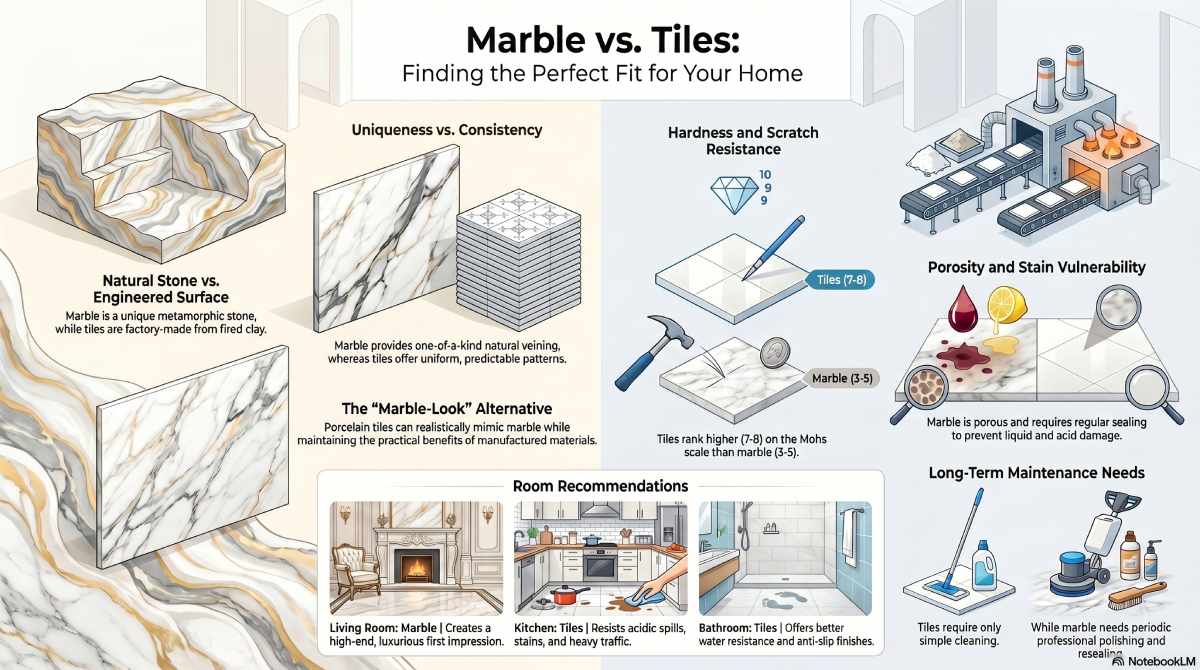
The main difference between marble and tiles starts with how they are made. Marble is a natural stone formed when limestone is exposed to heat and pressure deep inside the earth over millions of years. This process creates a dense stone with natural veins, soft colour movement, and a unique appearance in every slab.
Tiles, on the other hand, are manufactured products. Ceramic and porcelain tiles are made from clay and other mineral materials, then shaped and fired at high temperatures. Porcelain is generally denser and less absorbent than standard ceramic tile.
This difference in origin affects everything else: appearance, strength, water resistance, maintenance, cost, and suitability for different rooms. Marble feels more natural and luxurious, while tiles are more controlled, predictable, and practical.
Material Composition and Origin
Marble is mainly composed of calcium carbonate. Because it is a natural stone, its structure is not completely uniform. Each slab has its own veins, colour variations, mineral patterns, and natural imperfections. These details are part of marble’s beauty, but they also make it more sensitive to scratches, stains, and acidic substances.
Tiles are more controlled in composition. Ceramic tiles are usually made from natural clay and fired at high temperatures. Porcelain tiles are denser, harder, and less porous than standard ceramic tiles. Vitrified tiles go one step further by creating a highly compact surface that absorbs very little water.
This makes tiles more suitable for modern homes where easy cleaning, moisture resistance, and durability are important. Marble is more suitable when visual impact and natural elegance matter more than everyday convenience.
Aesthetic Difference Between Marble and Tiles
One of the biggest reasons people choose marble tiles is their natural beauty. Marble tiles have a soft, elegant appearance that is difficult to fully copy. The veins are organic, the colour transitions are subtle, and the surface can reflect light beautifully. White, beige, black, green, and grey marble tiles all bring a rich and premium feeling to interiors.
Tiles offer a different kind of design advantage: variety. Modern digital printing technology allows tiles to imitate marble, wood, concrete, limestone, travertine, granite, and many other materials. You can find tiles in almost any colour, size, texture, and finish. This gives homeowners and designers more freedom when creating a specific style.
The main visual difference between marble and tiles is uniqueness versus consistency. Marble is unique and naturally varied. Tiles are more uniform and predictable. If you want a natural one-of-a-kind surface, marble is stronger. If you want a consistent pattern across a large area, tiles are usually better.
Durability and Strength
Marble is durable, but it is softer than many tile options. On the Mohs hardness scale, marble usually ranks between 3 and 5. This means it can be scratched by harder objects and may show wear in high-traffic areas if not maintained properly. Heavy furniture, shoes, sand, grit, and dragged objects can damage the surface over time.
Porcelain and vitrified tiles are generally harder. Many quality tiles rank around 7 to 8 on the Mohs scale, making them more resistant to scratches, chips, and surface wear. This is why tiles are commonly used in commercial spaces, kitchens, bathrooms, corridors, and busy family homes.
However, marble can still last for decades when installed and maintained correctly. Many historic buildings use marble because it has long-term value and timeless appeal. The difference is that marble needs more professional care, while tiles can usually handle everyday use with less attention.
Water Resistance and Porosity
Water resistance is one of the clearest differences between marble and tiles. Marble is naturally porous. This means it can absorb liquids if it is not sealed properly. Water, oil, coffee, wine, cleaning chemicals, and coloured liquids can enter the stone and create stains.
Porcelain and vitrified tiles are much less porous. Many porcelain tiles have a water absorption rate below 0.5%, which makes them highly suitable for wet areas such as bathrooms, showers, kitchens, laundry rooms, and outdoor spaces. Vitrified tiles also perform well in moisture-prone environments because of their dense, glass-like surface.
For this reason, tiles are generally the better choice for wet areas. Marble can be used in bathrooms, but it requires proper sealing, careful cleaning, and regular maintenance.
Stain Resistance and Etching
Marble is vulnerable to both staining and etching. Staining happens when liquids penetrate the stone. Etching happens when acidic substances react with the calcium carbonate in marble and leave dull marks on the surface. Lemon juice, vinegar, wine, soda, tomato sauce, and harsh bathroom cleaners can all damage marble.
Tiles do not have this problem in the same way. Glazed ceramic tiles, porcelain tiles, and vitrified tiles are highly resistant to stains and do not react with acidic foods or drinks. This makes them much easier to live with, especially in kitchens and bathrooms.
If your household includes children, pets, frequent cooking, or heavy daily use, tiles are usually more practical. Marble can still be beautiful, but it needs faster cleaning and more careful handling.
Maintenance Requirements
Maintenance is another major part of the difference between marble and tiles. Many marble installations benefit from sealing, but the resealing schedule depends on the marble, finish, location, exposure and sealer used. Follow the stone supplier and sealer manufacturer’s guidance rather than relying on a fixed annual schedule. Marble may also need professional refinishing over time, and it should be cleaned with pH-neutral products rather than acidic or abrasive cleaners.
Tiles are much easier to maintain. Most tiles only need regular sweeping, mopping, and occasional grout cleaning. The tile surface itself usually does not need sealing. However, grout lines can absorb dirt and moisture, so sealing grout can be helpful, especially in wet areas.
Basic marble care includes:
- Using only pH-neutral cleaning products
- Wiping spills quickly, especially acidic liquids
- Sealing the surface regularly
- Avoiding harsh scrubbers and acidic cleaners
Basic tile care is simpler. In most cases, warm water, mild detergent, and regular cleaning are enough to keep tiles looking good.
Cost Comparison
Marble is usually more expensive than tiles. The cost of marble depends on the type, origin, colour, rarity, thickness, finish, cutting, transport, and installation complexity. Premium marble can be very costly because it is extracted from quarries, cut into slabs, polished, transported, and installed by skilled professionals.
Tiles are generally more budget-friendly. Ceramic tiles are often the most affordable option. Porcelain tiles cost more than standard ceramic tiles but are still usually cheaper than marble. Vitrified tiles also offer strong performance at a reasonable price in many markets.
Installed marble costs are usually higher because marble installation requires more skill, careful handling, surface preparation, sealing, and finishing. Tile installation is often easier and faster, although large-format porcelain tiles may also require experienced installers.
When comparing cost, you should not only consider the purchase price. Marble may require future sealing, polishing, stain treatment, and professional care. Tiles usually have lower long-term maintenance costs.
Safety and Slip Resistance
Safety is especially important for kitchens, bathrooms, showers, pool areas, and outdoor floors. Polished marble can become very slippery when wet. This makes it risky for bathrooms, entryways, and other areas where water may be present.
Tiles offer more slip-resistant options. Many tiles are available in matte, textured, anti-skid, or outdoor finishes. Some tiles are manufactured to meet slip resistance standards, making them safer for wet environments.
For bathrooms and kitchens, textured porcelain tiles are usually a better choice than polished marble. If you still want marble in these areas, honed or textured finishes are safer than highly polished surfaces.
Marble Bathroom Tiles: Are They a Good Choice?
Marble bathroom tiles can be an excellent choice when natural character and a premium finish are the priority. They work particularly well on bathroom walls, feature walls, vanity surrounds and selected floor areas. However, marble is porous and acid-sensitive, so the stone, finish, installation system and maintenance plan must all suit a wet environment.
For homeowners searching for a marble tile bathroom with less day-to-day care, porcelain is often the more practical option. For a genuine natural-stone bathroom with unique colour movement and veining, properly specified marble remains difficult to replicate.
Which Is Better for a Bathroom: Marble or Tiles?
For most busy family bathrooms, textured porcelain tiles are the easier choice because they offer low water absorption, simple cleaning and a wider selection of slip-resistant finishes. Marble is better suited to bathrooms where natural beauty, individuality and a luxury appearance justify the additional care.
| Bathroom Area | Recommended Direction | What to Consider |
|---|---|---|
| Shower Floor | Textured porcelain is usually the practical choice | Slip resistance, drainage, grout and waterproofing |
| Shower Wall | Marble or porcelain can work | Correct substrate, waterproofing, sealing and compatible products |
| Bathroom Floor | Porcelain for low maintenance; honed marble for natural luxury | Wet slip performance, cleaning and ongoing care |
| Feature Wall | Marble | Natural veining creates a distinctive focal point |
| Vanity Surround | Marble or porcelain | Protect marble from acidic cleaners and personal-care products |
Best Marble Finish for Bathroom Floors and Walls
A honed marble finish is generally more appropriate than highly polished marble where wet-foot traffic is expected because it has a matte surface and is less reflective. The final selection should still be assessed for the exact application. Polished marble can create an elegant wall or vanity feature, while textured or slip-rated surfaces are the safer direction for frequently wet floors.
White and Grey Marble Tiles for Bathrooms
White and cream marble can make a bathroom feel brighter and more spacious, while grey marble creates a refined contemporary look. Natural variations should be reviewed before installation so tiles can be blended across the surface. Explore Pyramid Marble for soft white and cream tones or Pietra Grey Marble for a darker modern palette.
Planning a marble bathroom? Browse the complete marble tile collection or contact Hunter Pavers to discuss the colour, finish and format suited to your project.
Room-by-Room Suitability
The best choice depends on where the material will be used. Marble and tiles can both be excellent, but not always for the same spaces.
| Room or Area | Better Choice | Reason |
|---|---|---|
| Kitchen Floor | Tiles | Better resistance to stains, acids, spills, and heavy traffic |
| Bathroom Floor | Tiles | More water-resistant and safer with anti-slip finishes |
| Living Room | Marble | Creates a luxurious and elegant first impression |
| Outdoor Patio | Porcelain Tiles | Better resistance to weather, frost, and moisture |
| Fireplace Surround | Either | Both can work, depending on style and heat performance |
Marble for Living Rooms and Luxury Interiors
Marble is an excellent choice for living rooms, entrance halls, hotel lobbies, luxury apartments, and feature walls. It creates a strong visual statement and gives the space a premium identity. In areas where water exposure and heavy staining are less common, marble can perform well and look beautiful for many years.
It also works well in decorative applications such as fireplace surrounds, staircase cladding, bathroom vanity tops, and accent walls. When used thoughtfully, marble can increase the perceived value of an interior.
However, marble may not be ideal for every lifestyle. If you want a surface that needs almost no special care, tiles may be a better option.
Tiles for Kitchens, Bathrooms, and High-Traffic Areas
Tiles are ideal for kitchens because they resist spills, stains, dropped objects, and frequent cleaning. In a kitchen, acidic ingredients like lemon, vinegar, tomato, and coffee are common. These can damage marble, but they usually do not harm quality tiles.
Bathrooms are another area where tiles perform better. Their low water absorption, easy cleaning, and slip-resistant finishes make them more practical for daily use. Porcelain and vitrified tiles are especially useful for shower floors, bathroom walls, and wet rooms.
In high-traffic areas such as hallways, offices, shops, and family spaces, tiles are also a strong choice because they resist scratches and wear better than marble.
Marble-Look Tiles: A Practical Alternative
For many homeowners, marble-look porcelain tiles offer a balanced solution. They create the visual impression of marble but provide the practical benefits of tiles. These tiles are more resistant to water, stains, scratches, and acids. They are also easier to clean and usually more affordable than real marble.
However, marble-look tiles are not the same as natural marble. They may look elegant, but they do not have the same depth, natural variation, or premium authenticity. If your priority is real natural stone, marble is still the better choice. If your priority is practicality with a luxury-inspired look, marble-look tiles are a smart option.
If you are specifically comparing manufactured ceramic with natural marble, read our detailed ceramic tile vs marble tile comparison.
Resale Value and Long-Term Value
Marble can add a luxurious feeling to a property, especially when used in premium areas. Buyers often associate marble with quality, elegance, and high-end design. However, the resale value depends on condition. Poorly maintained marble can look dull, stained, or outdated.
Tiles may not always feel as luxurious as marble, but high-quality porcelain or vitrified tiles can offer better long-term practicality. They are easier to maintain and often appeal to buyers who want a clean, modern, low-maintenance home.
In terms of long-term value, tiles are often more cost-effective. Marble offers stronger visual prestige, while tiles offer stronger functional value.
Pros and Cons of Marble
Marble is best for people who value natural beauty and do not mind extra maintenance. Its biggest strength is its elegant appearance.
Main advantages of marble:
- Natural, unique, and luxurious appearance
- Timeless design appeal
- Good for living rooms, lobbies, and feature areas
- Can last for decades with proper care
The disadvantages are important too. Marble is expensive, porous, prone to etching, and more delicate than many tiles. It needs sealing, careful cleaning, and occasional professional maintenance.
Pros and Cons of Tiles
Tiles are best for people who want practical, durable, and low-maintenance surfaces. They are available in many styles and can suit both modern and classic interiors.
Main advantages of tiles:
- More affordable than marble
- Highly water-resistant
- Easy to clean and maintain
- Available in many colours, sizes, and textures
- Better for kitchens, bathrooms, and high-traffic areas
The main disadvantage is that tiles may not have the same natural richness as real marble. Grout lines can also collect dirt if not maintained properly.
Which One Should You Choose?
Choose marble if you want a premium natural material, unique veining, and a high-end look. It is especially suitable for living rooms, formal areas, luxury interiors, decorative walls, and spaces where visual impact matters most.
Choose tiles if you want a practical, durable, affordable, and easy-to-maintain surface. Tiles are better for kitchens, bathrooms, laundry rooms, hallways, outdoor patios, and busy family spaces.
The best decision depends on your lifestyle. If you enjoy natural stone and are ready to maintain it, marble can be a beautiful investment. If you want everyday convenience and long-term durability with less effort, tiles are usually the safer choice.
Explore Marble Tiles for Your Project
The right marble depends on the atmosphere you want to create and where it will be installed. Consider these Hunter Pavers options:
- Pietra Grey Marble — deep grey tones and fine natural veining for contemporary bathrooms, floors and feature walls.
- Pyramid Marble — soft white and cream tones for bright, elegant interiors.
- Galala Marble — creamy beige colouring for warm and timeless spaces.
- Sunny Marble — warm beige and golden tones for an inviting natural-stone finish.
View all marble tiles and pavers, compare available formats and finishes, or contact our team for product guidance.
Conclusion: Understanding the difference between marble and tiles
The difference between marble and tiles comes down to natural beauty versus practical performance. Marble is a natural stone with unique veining, luxury appeal, and timeless elegance. Tiles are engineered surfaces that offer better water resistance, easier maintenance, stronger scratch resistance, and more budget-friendly options.
For living rooms, feature areas, and luxury interiors, marble can create a stunning result. For kitchens, bathrooms, outdoor areas, and high-traffic spaces, tiles are usually more practical. The right choice is not about which material is always better; it is about which material fits your space, budget, design style, and maintenance expectations.
Frequently Asked Questions
What is the main difference between marble and tiles?
Marble is a natural stone, so every tile has unique veining and colour variation. Ceramic and porcelain tiles are manufactured, giving them a more consistent appearance and generally simpler maintenance.
Which is better for a bathroom: marble or tiles?
Textured porcelain tiles are generally more practical for busy bathrooms because they are highly water-resistant and easy to maintain. Marble is ideal when natural variation and a premium appearance are the main priorities and the owner is prepared for appropriate sealing and care.
Are marble tiles suitable for bathroom floors?
Yes, suitable marble can be installed on bathroom floors when the finish, waterproofing, installation and maintenance are appropriate. Avoid choosing a highly polished surface without considering wet slip performance.
Can marble tiles be used in a shower?
Marble can be used on shower walls and in some shower-floor applications, but the stone and finish must be suitable. Correct waterproofing, drainage, adhesives, grout, sealing and pH-neutral cleaning are essential.
Do marble bathroom tiles need sealing?
Many marble installations benefit from a suitable penetrating sealer. The need for sealing and the resealing interval depend on the marble, finish, exposure and product used, so follow professional and manufacturer guidance.
Are marble bathroom tiles slippery?
Highly polished marble may become slippery when wet. Honed or textured finishes can be more appropriate, but the selected product should always be assessed for the specific wet-area application.
Are white marble tiles practical for bathrooms?
White marble tiles can create a bright, timeless bathroom, but they require suitable sealing, gentle pH-neutral cleaning and attention to natural colour variation. Porcelain may be more practical if very low maintenance is the priority.
Are marble-look porcelain tiles better than real marble?
Marble-look porcelain is better for buyers prioritising water resistance, consistency and easy care. Real marble is better for those who value authentic natural variation, depth and a genuinely unique surface.