

When the weather is getting cold and you want to choose a material for your fireplace either building one from scratch or just renovating what you have; there is no doubt that you will hear about many benefits of various natural stones.
When the weather is getting cold and you want to choose a material for your fireplace either building one from scratch or just renovating what you have; there is no doubt that you will hear about many benefits of various natural stones.
In general, Natural stones fireplaces have interesting characteristics and can add warmth to the place where they are installed in. there are many different styles of natural stone fireplaces that you can choose to have them based on your taste, style and space. There are number of natural stones that are recommended to use for a building or decorating fireplaces; such as Granite, Limestone, Slate, Flag Stone, Marble and etc.
Among the names that we mentioned above, travertine wasn’t directly named, but travertine is a specific type of limestone so it is one of the recommended types of natural stones when it comes to fireplaces. So one of the most common applications of this natural stone is for travertine fireplaces. In below we will discuss more about it.
| Key Point | Details |
|---|---|
| Recommended Material | Travertine is a type of limestone and is considered a suitable natural stone for building or decorating fireplaces. |
| Durability | Travertine can stand the test of time and maintain its natural beauty, making it a reliable option for indoor and outdoor fireplaces. |
| Heat Retention | Travertine slabs and tiles can absorb, store, and radiate heat, helping improve warmth around the fireplace area. |
| Maintenance | maintaining Travertine fireplaces are easy and can usually be cleaned by wiping the surface with a soft cloth. |
| Longevity | Travertine is a long-lasting natural stone, and some finishes can develop a more attractive aged appearance over time. |
| Price | Travertine is not always the cheapest material, but it offers long-term value due to its quality, durability, and natural appeal. |
| Property Value | A travertine fireplace can add elegance, warmth, and visual value to a property. |
| Appearance | Travertine is available in various shades such as beige, brown, cream, tan, greenish, taupe, and silver grey. |
| Design Flexibility | Travertine can suit different styles, including minimal, rustic, classic, and bold interior designs. |
Why to use Travertine Fireplaces
A travertine fireplace can be a focal point of the room. There are various characteristics to this natural stone that has made it to be a perfect choice for travertine fireplaces. Here we will name and discus about reasons and benefits of having a travertine fireplace:
Durability of Travertine fireplaces
Travertine is one of those natural stones that can pass the test of time and keep its beauty which makes it hard to match for many other materials. If you look back in time, you can see many historic and monumental structures that have been built with travertine and have survived through difficulties. This feature can be one of the key factors that helps you make your mind about travertine fireplaces for either indoor or open areas of the outdoor. Fireplaces are frequently used during cold weathers, so you do not want to use a material that can easily get harmed.
Travertine fireplaces and heat retention
Most of the travertine slabs and tiles can absorb, store, and radiate heat, which means they are safe near fire; some people even say that travertine slabs and tiles are fire-resistant. This feature means that travertine fireplaces can improve the efficiency of the space when the warmth of a fire radiates throughout the room or outdoor areas. Travertine can also be used around a fire pit on travertine, making it a suitable option for creating a warm and attractive outdoor setting. In comparison, there are other natural stones like marble and limestone that are also good at absorbing heat. An interesting fact is that granite won’t absorb heat; it will only conduct heat. As for basalt, it is only good at storing heat and releasing it slowly over time. So, among natural stones, travertine is still a suitable choice for building a fireplace or simply decorating its surroundings.
Maintenance of travertine fireplaces
In comparison to some natural stones such as marble, which has a porous texture and needs careful maintenance through sealing, travertine fireplaces are very easy to maintain. While travertine porosity can make sealing beneficial for protecting the stone, the day-to-day maintenance is quite simple. Every now and then, you just need to simply wipe the tiles with a cloth—not necessary, but preferably a soft cloth. In this way, your travertine fireplace will keep its perfect appearance. Having a travertine fireplace can mean that you will need less time to maintain or care for it and can simply spend your time enjoying its companionship!
more: travertine tile cleaning
Longevity of travertine fireplaces
Like many other natural materials that are made through difficult situation to be made, they can last long under various environmental challenges; so travertine can also be an extraordinarily long-lasting natural stone. Some of the travertine types like travertine splitface slab and tiles can weather and get more beautiful over time which makes them a perfect option for outdoor travertine fireplaces.

Price of travertine fireplaces
Finding the best travertine fireplace tile that its budget friendly for you shouldn’t be that hard. Travertine has number of quarries all over the world which can mean that it has a flexible price due to its quality. Generally, the price of natural stones such as travertine is not cheap compare to other materials, but you should remember that at least you are paying for quality over time and your money is not wasted for nothing. Also sometimes the leftovers of travertine can be used to produce small size travertine tiles with a very low price.
Value of travertine fireplace
Just like any other natural stone by using travertine slab and tiles, they will instantly add value to the project. For example, having a travertine fireplace adds value as well as elegance and warmth to the property as its installed. The beauty of travertine fireplace, will make it the eye catching element in the room. In conclusion, travertine fireplaces can deliver both beauty and appeal to the eye and your wallet as well!
more: travertine flooring
Appearance of travertine fireplace
Travertine is a natural stone which means that each slab and tile of it has its uniqueness and beauty. It is also available in various shades and color pallets, which can make it hard to choose from. The colors that travertine is available are beige, brown cream, tan, greenish, taupe and shiny silver grey.
- Natural stone will create a focal point in your place so you should take a time to choose wisely. when it comes to travertine fireplaces, there are no limits to its design possibilities. In order to make the best decision and choose the suitable color for your travertine fireplace there are some notes you should know about:
- One of the best ways to choose your travertine fireplace color is to consider the color pallet of furniture, the sofa, the walls or other elements that shape the room. Then you can decide based on the important element to you, in your home decoration.
- Another way is by knowing the style that you want to use for your travertine fireplace. For instance, when you want to have a minimal fireplace, white is the first color that comes to mind. Or if you want to have a rustic fireplace, the suitable option can be brown and cream color tiles that have added finishes in their surface like brushed finished tiles – they can be perfect for rustic design styles-.
If you are one of those people who can make bold decisions and like uniqueness, you can have more options for color of your travertine fireplace such as black, brown, golden, cream, green and etc.
For what is worth, the decision is yours and the travertine fireplace should be designed in your taste. Take your time and make up your mind and just when the travertine fireplace is done you will enjoy it.
To summarize what we discussed above, travertine fireplaces are made out of durable materials, so they can stand the test of time and even if they get worn out through time they will present an amazing aged appearance. Another key factor to have travertine fireplaces is that they have great heat resistance, the can handle wear and tear breaking; this means that when the fireplace is frequently used in winter there won’t be any damages done to them.
Hunters Pavers have been a paver, blocks and retaining wall supplier in Australia for a long time. Here we always try to provide the information and content that you need to know about various types of natural stone, or as in this article “travertine fireplaces”. If you have any more question regarding to travertine fireplaces, contact us. our professional experts will help you in any way they can.
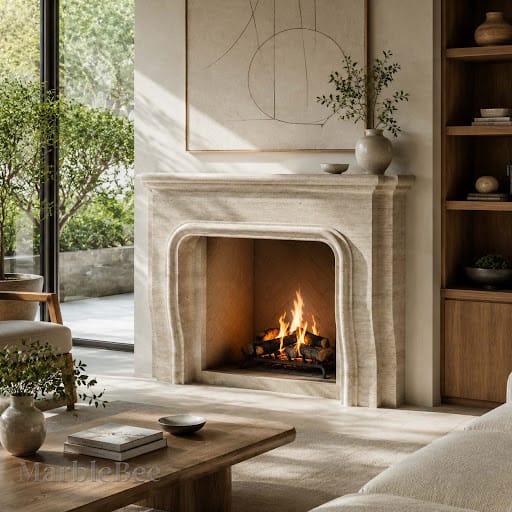
How to Choose Travertine for a Fireplace
Choosing travertine for your fireplace is not only about picking a colour that looks good. The type, finish, size and overall style of the stone can all affect how the finished fireplace looks and how easy it is to maintain. Before making your decision, consider the following factors.
Choose the Right Colour
Travertine is available in a wide range of natural colours, including cream, beige, brown, tan and silver-grey. The best choice depends on the existing colours in your room or outdoor space. Lighter shades can create a clean and bright appearance, while darker and warmer tones can give the fireplace a more rustic and traditional feel.
Consider the Finish
The finish of travertine can significantly change the appearance of a fireplace. A smooth finish can work well in modern and minimalist interiors, while textured or more naturally finished travertine can complement rustic or traditional designs.
Think About the Fireplace Style
Consider the overall design of the space before choosing your travertine. Large-format pieces can create a cleaner and more contemporary appearance, while smaller tiles can provide more visual detail. Travertine can also be combined with materials such as timber, brick or other natural stones to create a distinctive fireplace design.
Consider Indoor or Outdoor Use
The location of the fireplace is another important factor. An indoor fireplace and an outdoor fireplace can have different exposure to moisture, weather and temperature changes. Make sure the selected travertine and installation system are appropriate for the intended application.
Consider Maintenance Requirements
Travertine is a porous natural stone, so its finish and level of exposure should be considered when planning maintenance. Sealing may be recommended to help protect the surface from staining and moisture. Choosing a suitable finish and following the correct cleaning and maintenance practices can help your fireplace retain its natural appearance over time.
Check the Heat Exposure
Not every part of a fireplace experiences the same level of heat. Before selecting and installing travertine, consider whether the stone will be used as a fireplace surround, hearth or in an area that is directly exposed to high temperatures. Always follow the fireplace manufacturer’s requirements and use an appropriate installation method for the specific application.
Ultimately, the best travertine for your fireplace should balance appearance, durability, maintenance and suitability for the location. Taking these factors into account before installation can help you create a fireplace that complements your space while remaining practical for long-term use.
Travertine vs Other Fireplace Materials
Travertine is not the only natural stone that can be considered for a fireplace. Marble, granite and limestone are also popular choices, but each material has different characteristics. The right option depends on the appearance you want, maintenance requirements, budget and the specific application. read the below chart for more information about travertine vs granite or limestone for your fireplace
| Material | Appearance | Heat & Durability | Maintenance | Best For |
|---|---|---|---|---|
| Travertine | Natural, warm and available in various earthy shades | Durable and suitable for many fireplace applications when properly selected and installed | Requires regular care and may benefit from sealing | Rustic, traditional, modern and natural-looking fireplaces |
| Marble | Elegant, luxurious and highly decorative | Durable but can be more sensitive to staining and scratching | Requires careful maintenance | Luxury and classic fireplace designs |
| Granite | Dense, durable and available in various colours and patterns | Highly durable and resistant to wear | Generally low maintenance | High-use areas and contemporary fireplaces |
| Limestone | Soft, natural and understated | Durable but generally more porous and softer than granite | May require sealing and careful cleaning | Traditional and natural-style fireplaces |
While each material has its own advantages, travertine is particularly appealing if you want a fireplace with a natural appearance, warm colours and the distinctive character of natural stone. The final choice should also take into account the type of fireplace, heat exposure and installation requirements.
more: marble vs travertine
faqs
1.Can you paint a travertine fireplace?
It is possible to paint some travertine surfaces, but painting covers the natural character of the stone and may not be the best option if you want to preserve its original appearance. Proper surface preparation is essential if painting is chosen.
2.How do you remove soot from a travertine fireplace?
Soot should be removed carefully using a suitable stone-safe cleaning method. Avoid acidic or abrasive cleaners, as they can damage the surface of natural stone.
3.Can you install travertine over an existing fireplace?
In some renovation projects, travertine can be installed over an existing fireplace surround, but the existing surface must be structurally sound, clean and suitable for the chosen installation system.
4.Does travertine discolor around a fireplace?
Travertine can develop stains or changes in appearance if exposed to soot, smoke, spills or unsuitable cleaning products. Regular cleaning and, where appropriate, sealing can help protect the surface.