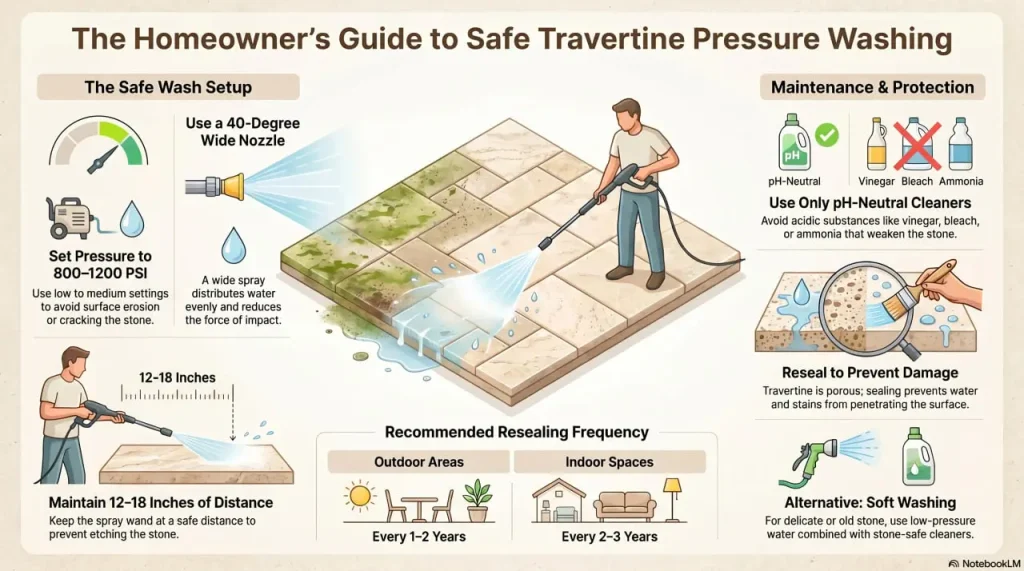
Travertine is a stunning natural stone often used for patios, pool surrounds, and indoor flooring due to its elegant appearance and durability. However, like all natural materials, it requires proper maintenance to preserve its beauty and strength over time. One common question homeowners ask is whether it’s safe to pressure wash travertine to remove dirt, stains, and algae buildup.
Table of Contents
Is It Safe to Pressure Wash Travertine?
Many homeowners wonder whether it’s safe to use a pressure washer on travertine surfaces. The short answer is yes — but only if done correctly. Travertine is a porous and relatively soft natural stone, meaning that while it’s durable, it can also be sensitive to excessive pressure. Applying too much force or holding the nozzle too close can cause surface erosion, remove the protective sealant, and even make travertine crack easily over time.
When cleaning travertine, use a low to medium pressure setting (around 800–1200 PSI). This level is strong enough to remove dirt and grime without damaging the stone. Always keep the spray nozzle at least 12–18 inches away from the surface to distribute water evenly and reduce impact.
It’s also important to note that unsealed travertine is more vulnerable to damage. Before pressure washing, ensure the surface is properly sealed to prevent water from penetrating the stone’s pores. This helps preserve its strength and appearance, reducing the risk of cracks or discoloration.
In summary, pressure washing travertine is safe when done with proper technique and caution. Avoid excessive pressure, use the correct nozzle, and maintain a safe distance to protect your stone from damage and ensure a long-lasting, beautiful finish.
Key Point
Important Details
Pressure Washing Is Possible
Travertine can be pressure washed safely, but only when the correct technique and gentle pressure settings are used.
Use Low to Medium Pressure
A pressure setting of around 800–1200 PSI is recommended to remove dirt and grime without damaging the stone surface.
Keep the Nozzle at a Safe Distance
The spray nozzle should be kept at least 12–18 inches away from the travertine to prevent etching, erosion, or cracks.
Choose a Wide Spray Nozzle
A 40-degree wide spray nozzle helps distribute water evenly and reduces the risk of concentrated pressure damaging the stone.
Avoid Harsh Chemicals
Acidic cleaners, vinegar, bleach, and ammonia-based products can discolor, weaken, or dull travertine surfaces.
Use pH-Neutral Cleaners
For stains or algae buildup, a pH-neutral stone cleaner is safer and more suitable for travertine maintenance.
Seal Travertine After Cleaning
Because travertine is porous, sealing helps protect it from moisture, stains, discoloration, and long-term wear.
Test a Small Area First
Before pressure washing the full surface, testing a small section helps ensure the pressure and cleaner are safe for the stone.
Consider Alternative Cleaning Methods
Soft washing, manual cleaning, steam cleaning, or professional stone cleaning may be better for delicate or older travertine.
Regular Maintenance Extends Lifespan
Gentle cleaning, proper drying, and periodic resealing help travertine stay beautiful, durable, and easy to maintain for years.
How to Pressure Wash Travertine Safely
Before you start cleaning, it’s important to understand what is travertine stone and why it requires a gentle approach. Travertine is a type of natural limestone formed from mineral deposits in hot springs, making it porous and slightly softer than stones like granite. This natural composition means that while travertine is durable, it can be damaged if exposed to harsh cleaning methods — including high-pressure washing.
To pressure wash travertine safely, follow these key steps:
Use Low Pressure: Set your pressure washer between 800–1200 PSI to avoid surface damage or cracking.
Select the Right Nozzle: Choose a 40-degree wide spray nozzle to evenly distribute water and reduce pressure impact.
Maintain Distance: Keep the spray wand 12–18 inches from the surface to prevent etching or erosion.
Clean in Sections: Work in small areas and move the spray in a consistent sweeping motion.
Use Clean Water Only: Avoid adding harsh chemicals or acidic cleaners, as these can damage the stone.
If you notice stains or algae buildup that don’t come off with water alone, use a pH-neutral stone cleaner specifically formulated for travertine. After cleaning, allow the surface to dry completely before sealing it again to protect against future stains and moisture damage.
By following these safe cleaning practices, you can pressure wash travertine effectively without harming its surface — keeping your stone floors, patios, or pool areas looking as stunning as the day they were installed. For homeowners who appreciate timeless design, Classic Travertine is an excellent choice, combining durability with a naturally elegant appearance that enhances any outdoor or indoor space.
Best Cleaning Practices for Travertine
Proper care is essential to preserve the natural look and longevity of travertine surfaces. This stone’s porous structure means it can easily absorb dirt, moisture, and cleaning chemicals if not handled correctly. Using harsh or acidic products can dull the finish or damage the stone over time, so gentle, consistent maintenance is key.
To clean travertine effectively, follow these simple steps:
Use pH-neutral cleaners: Avoid vinegar, bleach, or ammonia-based products.
Mop or rinse regularly: Use warm water and a soft mop or low-pressure rinse outdoors.
Address stains immediately: Clean spills quickly to prevent permanent marks.
Dry surfaces thoroughly: Prevent mold or mineral buildup by wiping the area after washing.
With the right cleaning approach, travertine tile cleaning becomes easy and effective. These simple habits help maintain the stone’s natural shine, prevent staining, and keep your floors, patios, or walls looking beautiful for years.
Common Mistakes to Avoid When You Pressure Wash Travertine
While pressure washing can help restore the natural beauty of travertine, using the wrong techniques can do more harm than good. Travertine is strong but also porous, which means it can be damaged if cleaned too aggressively or with improper tools.
Here are some of the most common mistakes to avoid when cleaning travertine surfaces:
Using too much pressure: High pressure can chip or erode the surface of the stone.
Holding the nozzle too close: Keep the spray at least 12–18 inches away to prevent etching.
Using acidic cleaners: Products containing vinegar, bleach, or ammonia can discolor or weaken the stone.
Skipping sealing: Not sealing the stone after cleaning can leave it vulnerable to water and stains.
Ignoring test patches: Always test a small area before cleaning the entire surface.
By avoiding these mistakes, you can safely pressure wash travertine without compromising its texture, color, or structural integrity. Proper technique ensures your stone remains strong, smooth, and naturally elegant for many years.
Aftercare and Sealing Tips
After pressure washing, sealing is one of the most important steps to protect your travertine surfaces from stains, moisture, and long-term wear. Because the stone is porous, it can easily absorb liquids and dirt if left unsealed. Proper sealing not only preserves the stone’s beauty but also extends its lifespan.
Clean thoroughly first: Make sure the surface is free of dust, debris, and moisture before sealing.
Choose the right sealer: Use a high-quality, penetrating stone sealer designed for natural stone surfaces.
Apply evenly: Use a soft cloth, roller, or sprayer to apply the sealer in thin, even layers. Avoid over-saturating the stone.
Let it dry properly: Allow the sealer to absorb and dry according to the manufacturer’s instructions—usually 24 hours.
Reapply periodically: Depending on traffic and exposure, reseal your travertine every 1–3 years.
Proper aftercare and sealing protect the surface from water damage, stains, and discoloration. By following these simple maintenance steps, you’ll keep your travertine tiles looking elegant, durable, and easy to clean for years to come.
Alternative Cleaning Methods
If you’re hesitant to use a pressure washer or your travertine is delicate, there are safer alternative cleaning methods that can keep the stone looking pristine without the risk of damage. These approaches are especially useful for older installations or finely finished tiles that might be more sensitive to high water pressure.
Here are some effective alternatives:
Soft Washing: Uses low-pressure water combined with a gentle stone-safe cleaner. It’s ideal for removing mold, algae, or surface grime without harming the stone.
Manual Cleaning: For small areas, use a soft-bristle brush and a pH-neutral cleaner. This gives you more control and prevents overexposure to moisture.
Steam Cleaning: A professional-grade steam cleaner can loosen dirt and sanitize the surface using only heat and water — no chemicals required.
Professional Stone Cleaning Services: For large or heavily stained areas, hiring experts ensures proper cleaning without risk to the travertine.
These methods protect the natural structure of travertine while effectively removing dirt and buildup. Choosing a gentle cleaning technique not only extends the stone’s lifespan but also maintains its natural beauty and texture.
Conclusion
Travertine remains one of the most elegant and timeless natural stones used in both residential and commercial spaces. Its natural beauty, soft color variations, and durability make it a top choice for everything from patios and pool surrounds to kitchen floors and bathrooms. But keeping it clean requires care — especially when deciding whether to pressure wash travertine or use alternative cleaning methods.
What makes travertine so popular is its unique combination of strength and charm. It’s durable enough to withstand years of use, yet refined enough to add warmth and sophistication to any design style. When maintained correctly — through gentle cleaning, proper sealing, and occasional deep washing — travertine can last for decades without losing its beauty.
At Hunter Pavers, we provide premium-quality travertine and expert advice to help you care for it the right way. You can pressure wash travertine safely as long as you use the right settings, seal regularly, and avoid harsh chemicals. With the right maintenance approach and high-quality stone from Hunter Pavers, your travertine will continue to enhance your home’s look — offering the perfect blend of natural elegance and long-term durability.
Yes, you can, but only with low pressure (around 800–1200 PSI) and a wide spray nozzle. High pressure can damage the surface or remove the protective sealant.
For outdoor areas, reseal every 1–2 years. For indoor spaces, every 2–3 years is usually enough to protect the stone from stains and moisture.
Travertine is naturally non-slip, stays cool under the sun, and has a timeless, elegant appearance — making it one of the most practical and beautiful choices for patios, walkways, and pool areas.