


Travertine is a popular natural stone used in outdoor areas such as patios, pool decks, and walkways because of its elegance and durability. However, one common question people often ask is whether travertine get hot in the sun. While all natural stones can absorb some heat when exposed to direct sunlight, travertine is known for staying relatively cooler compared to many other paving materials.
Does travertine get hot in the sun? Yes. Travertine absorbs heat during prolonged direct sunlight and can feel hot on a very warm day. A light-coloured travertine paver can be a comfortable option for a sunny patio or pool surround, but no outdoor stone stays cool in every condition. Colour, shade, finish, air temperature and the installation all affect how it feels under bare feet.
If you are choosing pavers for an Australian outdoor space, compare physical samples in the same midday sun where they will be installed. This gives you a more useful answer than assuming that one stone type will always be cooler than another.
Why Does Travertine Get Hot in the Sun?
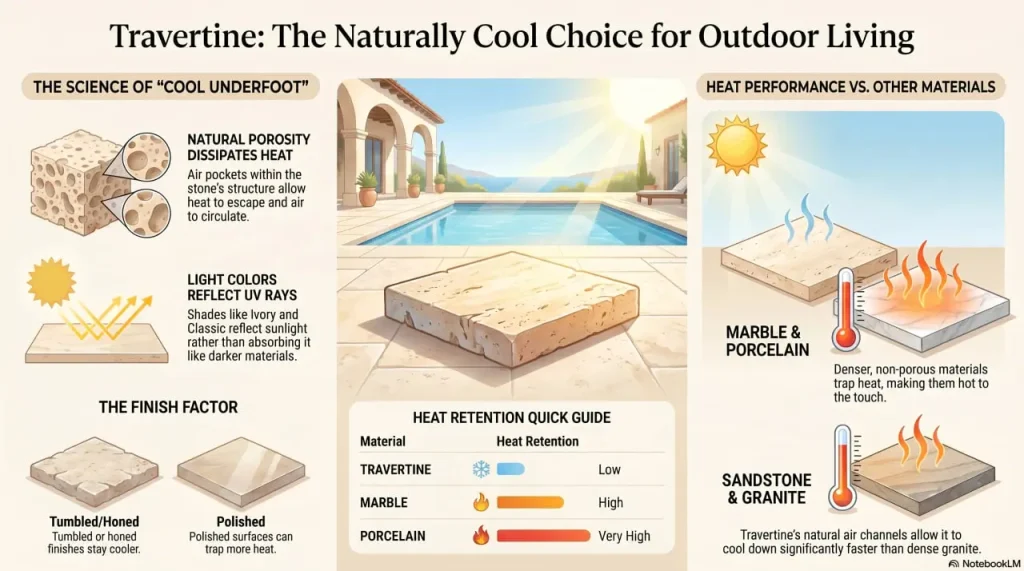
Sunlight warms every exposed paving surface. Some of that solar energy is reflected and some is absorbed by the stone. Travertine is a calcium carbonate stone with a naturally variable texture and pores, but porosity alone does not guarantee a cool surface. The colour and reflectance of a particular paver, its thickness and finish, and the conditions around it all matter.
Light ivory and cream stone generally reflect more sunlight than a darker brown or charcoal surface. Shade, cloud cover and time of day can change the result quickly. A light paver exposed all afternoon may still become uncomfortable for bare feet during a heatwave.
| Factor | Effect on barefoot comfort | What to check |
|---|---|---|
| Colour | Paler surfaces often absorb less solar energy than darker ones. | Compare actual samples in direct sun. |
| Sun exposure | Longer exposure generally means more warming. | Check the area at the hottest time you expect to use it. |
| Finish | Texture changes grip and underfoot feel; it does not give a guaranteed temperature rating. | Ask about an outdoor finish and suitability for wet areas. |
| Surroundings | Shade, reflected sunlight, wind and nearby dark surfaces can alter comfort. | Test the sample in the intended location. |
| Sealer | A colour-enhancing treatment may change appearance and heat absorption. | Test the proposed sealer on an offcut before installation. |
Is Travertine Heat Resistant?
Heat resistance and surface temperature are different questions. Travertine can be specified for outdoor paving exposed to ordinary summer sunlight, provided the product and installation are suitable. That does not mean the surface cannot get hot to touch. Heat from a fire pit or fireplace is a separate situation that calls for product-specific advice; this guide concerns sun-exposed paving.
Outdoor pavers also need appropriate foundations, drainage and movement allowances. If your concern is damage rather than barefoot comfort, read our guide to whether travertine cracks. To understand moisture absorption and sealing, see whether travertine is porous.
Which Travertine Colours Are Better for Sunny Areas?
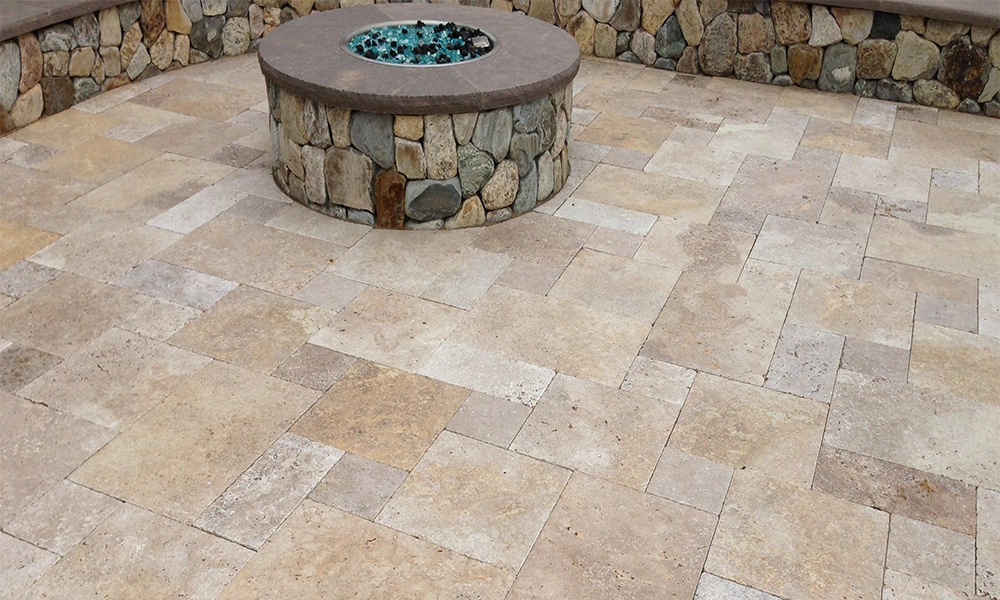
Start with lighter options such as Ivory Travertine and Classic Travertine if a pool surround, path or patio will receive strong afternoon sun. Their pale tones make them sensible candidates for a side-by-side sample test. A darker product may fit the design better, but it is especially important to check its midday temperature before ordering for a barefoot area.
Choose the outdoor paver and appropriate finish from the product range rather than assuming an indoor tile will suit a pool deck. For edges, thickness, finish and care around a swimming pool, see our travertine pool coping guide.
Travertine vs Other Paving: Which Stays Cooler?
There is no reliable universal ranking for travertine, limestone, sandstone, marble, concrete and porcelain. A pale sample of one material can feel cooler than a dark sample of another. Even two travertine products may behave differently. Compare stones of similar colour and finish under the same sunlight before drawing a conclusion.
One published experiment on Katsuren travertine found that the particular paving material performed better thermally than the concrete blocks tested. That result applies to those tested materials and conditions; it does not prove that every travertine product is cooler than every concrete paver. Research on carbonate stones also identifies surface colour and solar reflectance as important variables.
When comparing products, assess surface temperature, wet-area traction, maintenance and appearance together. Our pool coping material comparison covers the wider selection, while the travertine vs porcelain guide explains those two options in more detail.
How to Keep Travertine Comfortable in Hot Weather
- Select a pale sample: Compare ivory, cream and beige pavers with your preferred darker alternative in direct afternoon sun.
- Add practical shade: A pergola, umbrella or shade sail can reduce sun exposure over seating and barefoot walking routes.
- Choose the right outdoor finish: Evaluate texture and wet-area suitability separately from temperature. Ask for product-specific slip information where needed.
- Check sealing products: Follow the manufacturer’s instructions and test any colour-enhancing or specialty coating on a small piece. Do not assume a standard sealer will cool the stone.
- Keep the surface clean: Sweep and wash with a stone-appropriate cleaner so built-up grime does not obscure the intended light colour. See our travertine maintenance guide.
A brief rinse can temporarily cool paving, but the effect does not last once it dries in strong sun. Avoid making a permanent design decision based on a freshly wet sample.
Is Travertine a Good Choice for a Sunny Pool Surround?
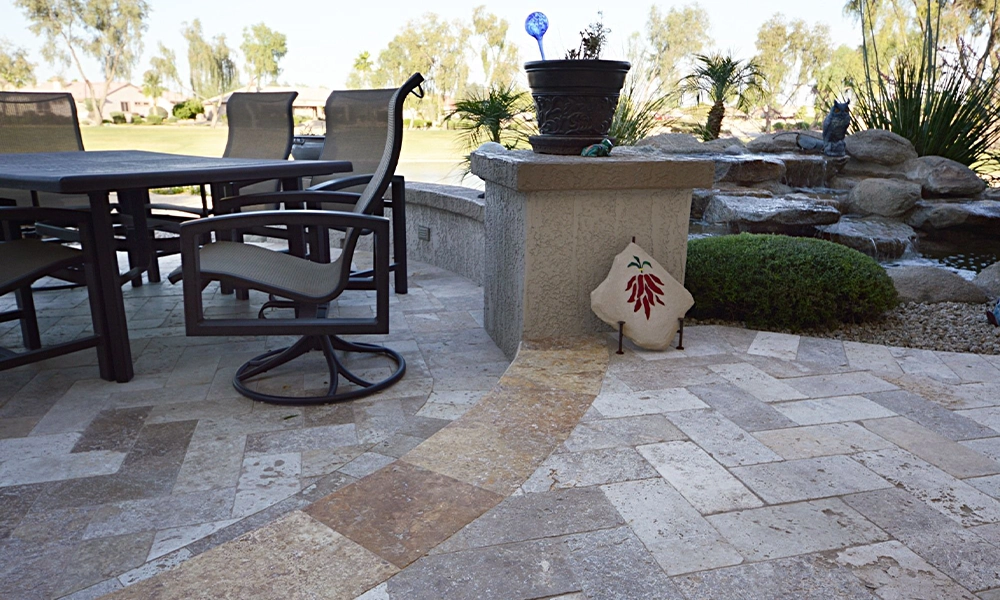
It can be, particularly when you like natural stone and can select a light-coloured outdoor paver with an appropriate surface finish. Ask about the specific product’s pool suitability, edge profile, slip performance, sealing and maintenance. A sample left beside the pool through the hottest part of the day will help you judge barefoot comfort for your household.
Browse the travertine pavers and tiles range or contact Hunter Pavers with your location, application and preferred colour to compare suitable products and request samples.
Frequently Asked Questions
Does travertine get hot in direct sunlight?
Yes. It can become hot after hours of direct sun, especially in very warm weather. Lighter travertine is often a better starting point for barefoot areas, but test a sample on site.
Is travertine heat resistant?
Suitable travertine pavers can be used in ordinary sunny outdoor applications when properly specified and installed. This does not mean the surface stays cool to touch or that it is automatically suitable beside an open flame.
Do travertine pavers get hot around a pool?
They can. Pool surrounds are often exposed to strong sun, so check the selected colour and finish in the sun and confirm the product is suitable for a wet area.
What colour travertine stays cooler in the sun?
Pale ivory, cream and light beige options generally reflect more sunlight than darker tones. Actual temperatures vary, so compare product samples in the same conditions.
Is travertine cooler than concrete or porcelain?
It depends on the products and conditions. A light travertine paver may feel more comfortable than a dark alternative, but there is no guarantee across every colour, finish and installation.
Does sealing travertine keep it cool?
Ordinary sealing is primarily for stain and moisture management, not a guaranteed cooling treatment. Test the exact sealer on a sample because it may alter the stone’s colour and appearance.
How can I tell whether travertine will be comfortable under bare feet?
Place dry samples of your shortlisted pavers in the intended area during a hot, sunny afternoon. Check them at the time you normally use the space, and include shade in the final layout where necessary.