


AppearanceControlled and repeatableNaturally varied and uniqueWater absorptionVery low for compliant porcelainVaries substantially by stoneSealingUsually unnecessary for the porcelain bodyOften considered, depending on the stoneSlip resistanceDepends on tested finishDepends on stone and finishHeatDepends strongly on colour and exposureDepends on stone, colour and finishEdge optionsPurpose-made or fabricated profilesCan often be profiled by a stone fabricatorVisual ageingDesigned to remain consistentMay weather and develop patina
For two material-specific alternatives, compare the natural appearance and thermal comfort of travertine with the strength and finish options discussed in our granite pool coping guide.
Porcelain Pool Coping Profiles and Design Options
The edge profile influences appearance, comfort, fabrication and installation cost. Availability varies by collection, so choose the profile before finalising quantities. A standard paver may not automatically be available as a matching coping piece.
Square Edge
A square or lightly eased edge creates clean architectural lines and works well with rectangular pools and large-format paving. The exposed edge must still be finished appropriately so it is comfortable for swimmers.
Bullnose Edge
A bullnose has a rounded visible edge that feels softer under the hand. Purpose-made availability should be confirmed because not every porcelain range can be fabricated into the same rounded profile.
Drop-Face Edge
Drop-face coping extends down the pool wall and creates the appearance of a thicker, more substantial slab. With porcelain, this effect may involve a manufactured piece or carefully fabricated mitred assembly. Corners, joints and workmanship become especially visible, so experienced installation is valuable.
Matching Porcelain Coping With Pool Pavers
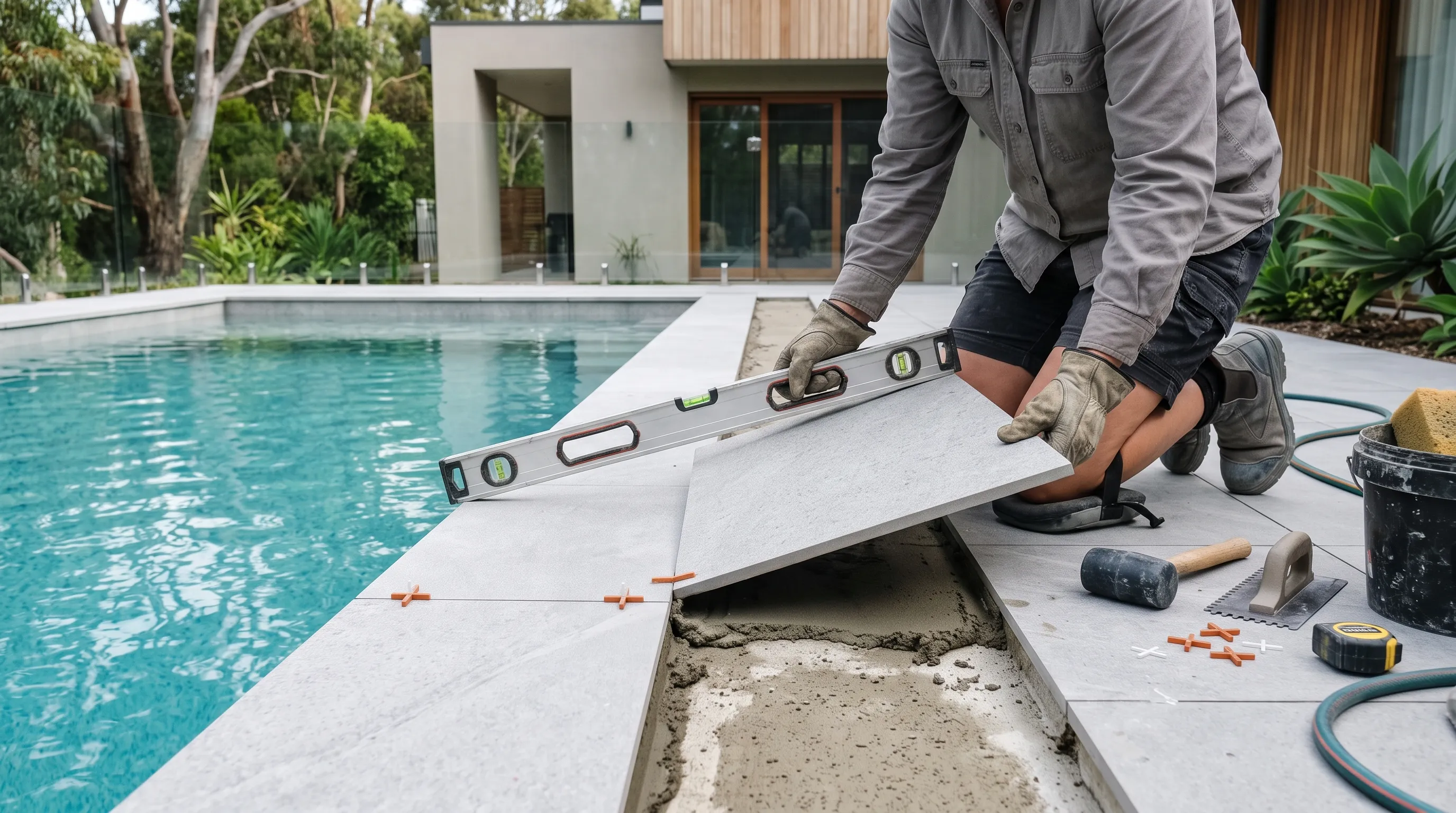
One of porcelain’s strongest design advantages is the ability to coordinate the coping and surrounding deck. Using a matching collection can create a continuous visual field, while a contrasting edge can define the pool more clearly. Before ordering, compare colour in outdoor light, face variation, calibre, thickness, joint width and the way the coping profile meets the paving.
Large-format pavers may create fewer joints and a more minimal appearance, but they can be heavier and less forgiving around curves. Complex pool shapes may require additional cutting, smaller formats or a custom set-out. Products such as Crest porcelain and Petra Mix porcelain show different visual directions; request current specifications and samples before selecting a range for a pool project.
Porcelain Pool Coping Installation
Porcelain is dense and hard, so accurate cutting requires appropriate equipment. Installation also sits at a movement-sensitive junction between the pool shell and surrounding deck. A high-quality product can still fail if the substrate, adhesive coverage, falls, joints or drainage are unsuitable.
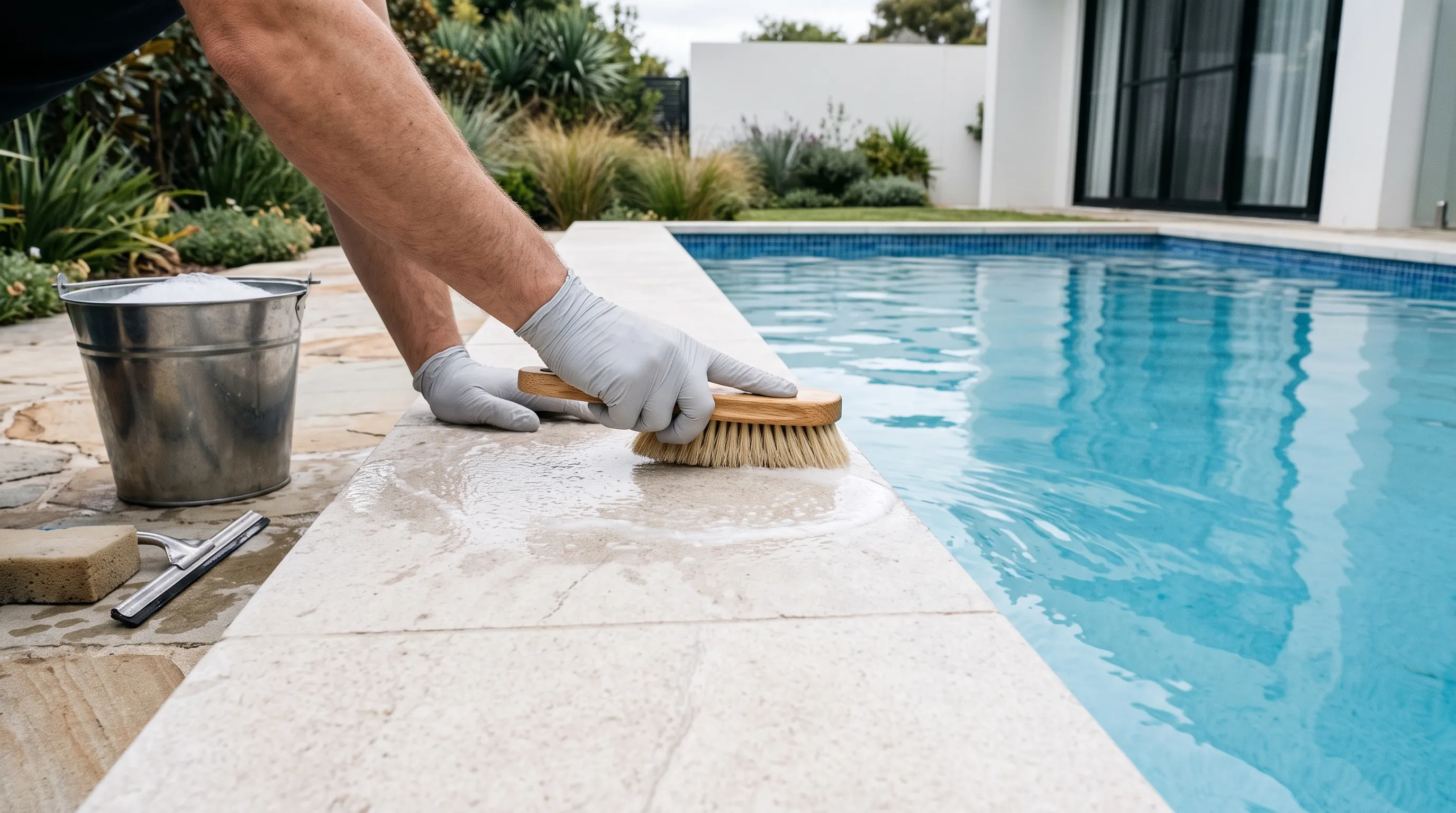
- Confirm the specification: verify exterior use, pool suitability, finish, thickness, edge format and test information.
- Inspect the substrate: identify cracks, contamination, movement and level problems before laying begins.
- Plan the set-out: coordinate joints, corners, curves, overhangs and the transition to surrounding paving.
- Use a compatible installation system: follow the porcelain, adhesive and project requirements rather than relying on a generic method.
- Provide appropriate falls: manage splash water and avoid unnecessary ponding at the pool edge.
- Respect movement joints: do not rigidly bridge areas designed to accommodate movement.
- Clean correctly: remove installation residue using methods compatible with the surface and joint materials.
Professional advice is particularly valuable for curved pools, drop-face details, renovation work and projects where the pool shell and deck may move independently.
How Much Does Porcelain Pool Coping Cost?
Porcelain pool coping cost depends on more than the unit price of the surface. Product range, thickness, purpose-made pieces, custom fabrication, edge profile, pool perimeter, corners, curves, freight and labour can all change the final figure. A premium porcelain system can cost more than an entry-level natural stone option, while complex fabrication may represent a significant part of the budget.
| Cost Factor | Why It Matters |
|---|---|
| Product and thickness | Exterior pavers and coping formats differ from standard indoor tiles |
| Edge profile | Square, bullnose and drop-face pieces involve different production |
| Pool shape | Curves and unusual corners increase cutting and wastage |
| Existing coping removal | Renovations may require demolition and substrate repair |
| Installation access | Difficult access can increase handling and labour |
| Matching paving | Coordinating a full pool deck changes total material quantities |
Use the detailed pool coping cost guide to calculate the perimeter and compare complete quotes on the same scope.
Planning a Porcelain Pool Edge in Sydney?
Send Hunter Pavers your approximate pool perimeter, preferred colour, edge profile and project photos. The team can help you compare current porcelain options, formats and product availability.
How to Maintain Porcelain Pool Coping
Porcelain requires relatively simple care, but low maintenance does not mean no maintenance. A consistent routine protects the appearance of the surface and helps identify installation issues early.
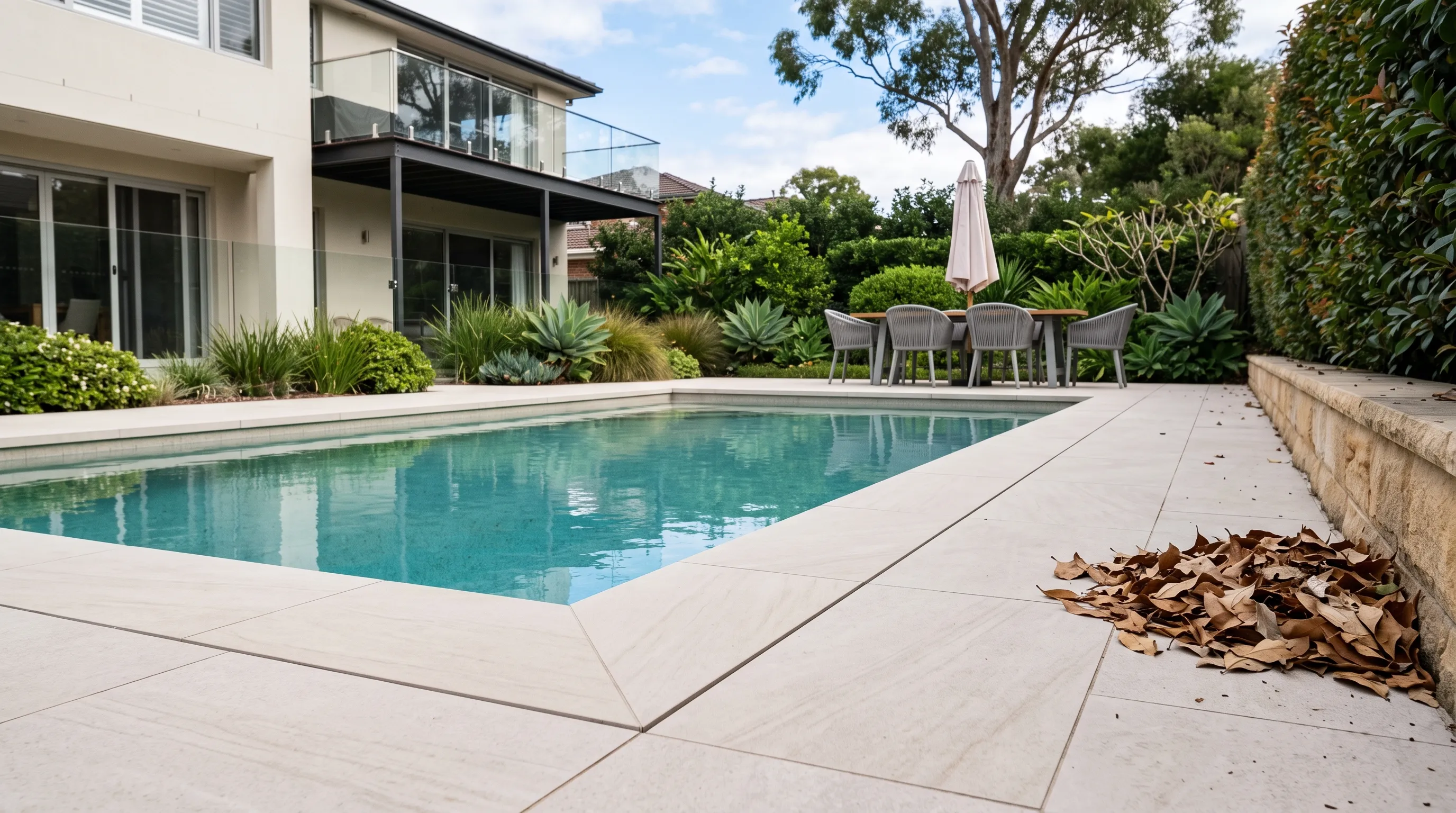
- Sweep or rinse away leaves, grit and organic debris regularly.
- Clean sunscreen, food and drink spills promptly.
- Use a product-compatible mild cleaner and follow dilution instructions.
- Avoid abrasive methods that could alter the textured finish.
- Check joints and movement areas for cracking or separation.
- Address loose pieces, lipping or persistent ponding rather than treating them as cleaning problems.
- Test any unfamiliar cleaner in a discreet area first.
Porcelain Pool Coping Buying Checklist
- Confirm the product is suitable for exterior poolside use.
- Request wet slip-test information for the exact finish.
- Compare samples outdoors in both sun and shade.
- Check coping profiles, thicknesses, corners and matching paver formats.
- Measure the full perimeter and allow for cuts, breakage and future repairs.
- Approve the set-out and joint alignment before installation.
- Use an installer familiar with porcelain and movement-sensitive pool edges.
- Compare the complete installed cost, not only the square-metre product price.
Frequently Asked Questions
Is porcelain good for pool coping?
Yes. Exterior-grade porcelain can be an excellent pool coping material when low water absorption, consistent appearance and straightforward maintenance are priorities. The exact product, finish, profile and installation system must be suitable for the pool environment.
Is porcelain pool coping slippery when wet?
Not necessarily. Slip resistance depends strongly on the surface finish and its tested performance. Select an exterior product with appropriate wet slip-test information rather than assuming every porcelain surface is safe around a pool.
Does porcelain pool coping need sealing?
The porcelain body generally does not require routine sealing because of its very low water absorption. Grout, joints or adjacent materials may have separate requirements, so follow the supplier and installation-system guidance.
Does porcelain coping get hot in the sun?
It can. Surface temperature varies with colour, texture, exposure and local conditions. Lighter samples are often worth testing for sunny barefoot areas, but physical samples should be compared at the project site.
Can porcelain coping match the pool pavers?
Often, yes. Many porcelain collections offer coordinated formats or visuals for both the coping and surrounding paving. Confirm availability, thickness, edge pieces, calibre and finish before ordering the complete area.
Can indoor porcelain tiles be used as pool coping?
They should not be assumed suitable. Indoor tiles may have an inappropriate finish, thickness or installation specification for an exposed wet pool edge. Use a product confirmed for the intended exterior application.
Is porcelain coping cheaper than natural stone?
Not always. Prices vary by porcelain range, stone type, edge profile, thickness and fabrication. Compare complete installed quotes because a premium porcelain or custom drop-face detail may cost more than a basic natural stone option.
How long does porcelain pool coping last?
Quality exterior porcelain can provide long service when the correct product is installed on a sound substrate with compatible adhesives, joints, falls and movement detailing. Installation quality and site conditions are major parts of durability.
Is Porcelain Pool Coping Right for Your Project?
Porcelain is a strong candidate for a contemporary pool that needs consistent colour, low water absorption and relatively simple upkeep. It is particularly effective when the coping and surrounding paving need to form one controlled visual scheme. Natural stone may remain the better fit when unique variation, authentic texture or a softer organic character is the main design priority.
Before ordering, compare samples in the project light, confirm the exact wet-area test information, choose the edge profile and review the complete installation system. You can then compare available porcelain products or contact Hunter Pavers for project-specific guidance.
Technical references: ISO 13006 ceramic tile classification and AS 4586 slip-resistance classification.