

Permeable pavers, also known as permeable paving systems or porous pavements, are innovative materials designed to allow water to pass through their surface, effectively reducing surface runoff. Unlike traditional pavements, which can create water pooling and flooding, permeable pavers allow rainwater to seep into the ground, replenishing local groundwater systems and preventing stormwater issues.
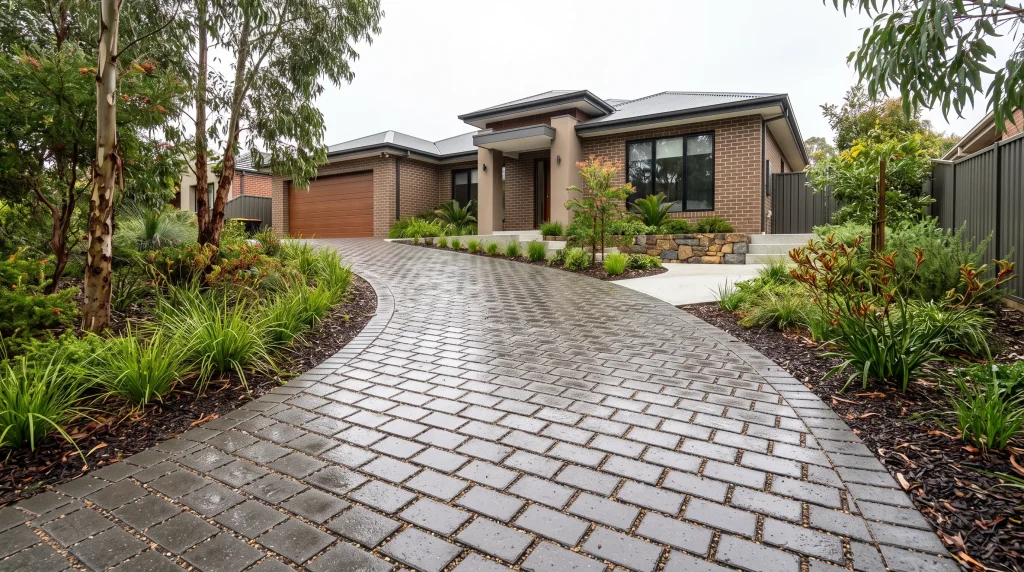
Permeable pavers are part of a paving system that lets water move through open joints or a porous surface into a specially graded base below. They are useful where reducing surface runoff and improving drainage are priorities, including driveways, paths, parking areas and selected patios.
Quick Answers About Permeable Pavers
How do permeable pavers work?
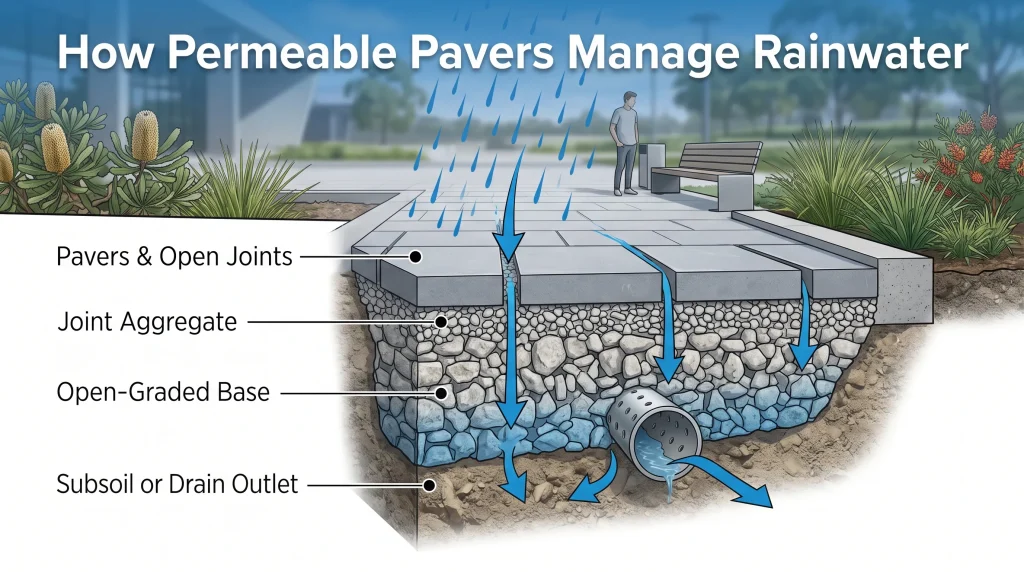
Rainwater enters through joints or openings, passes through clean aggregate layers and then infiltrates into the subsoil or drains through a designed outlet.
Are permeable pavers suitable for driveways?
They can be, provided the paver, base depth, edge restraint and drainage design are engineered for the expected vehicle load.
Do permeable pavers prevent flooding?
They can reduce local runoff and surface ponding, but they do not replace site-specific drainage or flood design where it is required.
Are natural stone pavers automatically permeable?
No. Permeability is primarily created by the paving system, open joints and drainage base—not simply by choosing a porous stone.
How are permeable pavers maintained?
Keep joints and surface openings clear of sediment and organic debris so water can continue to enter the system.
Why Permeable Paving Matters for Drainage
The Australian Government’s YourHome stormwater guidance identifies permeable paving on driveways and footpaths as one option that can slow runoff and increase percolation. Western Australia’s Water Sensitive Urban Design guidance likewise notes that pervious paving can reduce runoff because some rainfall infiltrates the soil below and can provide additional water storage.
| System element | Role | Why it matters |
|---|---|---|
| Paver surface and open joints | Allows water into the system | Must not become clogged with fine sediment |
| Joint aggregate | Supports pavers while leaving voids | Use the specified clean material |
| Open-graded base | Stores and moves water | Depth depends on load and drainage design |
| Subsoil or drain outlet | Receives or directs water | Soil, groundwater and local requirements affect the design |
Best Uses for Permeable Pavers
| Application | Why it may suit permeable paving | Key design question |
|---|---|---|
| Residential driveways | Can reduce surface ponding while providing a modular finish | Is the base designed for vehicle loads? |
| Garden paths | Helps manage runoff in landscaped areas | Where will overflow go in heavy rain? |
| Patios | Can integrate drainage into an outdoor living area | How will furniture, levels and threshold drainage work? |
| Parking and access areas | May combine trafficable paving with on-site water management | Does the project require engineering or council approval? |
Choosing Materials for a Permeable Paving System
Concrete permeable pavers, grid pavers and some modular paving systems are designed specifically around open joints or voids. Natural stone can also be used in a permeable layout when the stone, joint width, joint aggregate and base are suitable. Do not rely on the water absorption of travertine, limestone or granite alone to create a drainage solution.
For the surface look, explore granite pavers, travertine pavers and limestone pavers. A robust natural stone option is Sesame White Granite; discuss whether it suits your proposed jointing and base system before ordering.
Permeable Paver Installation: What Must Be Right
- Assess the site: Check soil infiltration, slope, groundwater, services and local drainage requirements.
- Set levels and overflow: Plan how water behaves during heavier rainfall; never direct runoff toward buildings or neighbours.
- Build the specified base: Use clean, open-graded aggregate layers at the depth required for the load and drainage design.
- Install edge restraint and pavers: Keep the selected joint width and use appropriate joint aggregate.
- Maintain the surface: Remove sediment and debris before joints clog.
For a general patio-material decision guide, see how to choose the right paving for your patio. If your main priority is affordability rather than drainage performance, review cheap patio pavers.
Important Limitations to Consider
Permeable paving is not appropriate as a one-size-fits-all solution. Heavy clay, shallow rock, a high groundwater table, steep sites, contaminated ground or heavy vehicle loads may require a different design, subsoil drainage or professional engineering. Check local council requirements before construction.
Plan a Better-Draining Outdoor Surface
Share site measurements, photos and the intended use with Hunter Pavers. We can help you explore paver materials for your project; obtain installation and drainage advice appropriate to the site before work begins.
Frequently Asked Questions
What is the difference between permeable and porous paving?
Permeable paving usually describes a system that drains through joints or openings; porous materials allow water through their structure. Both need suitable base design.
Can permeable pavers clog?
Yes. Fine sediment and organic debris can block joints, so regular inspection and cleaning are important.
Do permeable pavers need a drain?
It depends on soil, groundwater, slope and local requirements. Some sites need an underdrain or overflow connection.
Can I use sand in permeable paver joints?
Use the jointing aggregate specified for the system; fine sand can reduce void space and compromise drainage.
Are permeable pavers suitable in clay soil?
They may need supplementary drainage because clay soils infiltrate water slowly. Seek site-specific advice.