

To choose the right paving for your patio, you must weigh four essential elements: the specific function of the space (such as pool-side vs. dining), the demands of the Australian climate, your long-term maintenance budget, and the architectural flow of your home. Whether you prioritize the organic, non-slip texture of natural sandstone or the stain-resistant, modern finish of porcelain, the ideal selection serves as a safe and durable extension of your interior sanctuary. This guide provides the professional specifications and material insights needed to navigate these choices and ensure a successful, high-value installation.
The right patio paving balances how you use the space, drainage, slip resistance, maintenance and the look of your home. Start with the location and daily use, then narrow the choice to materials and finishes that suit those conditions.
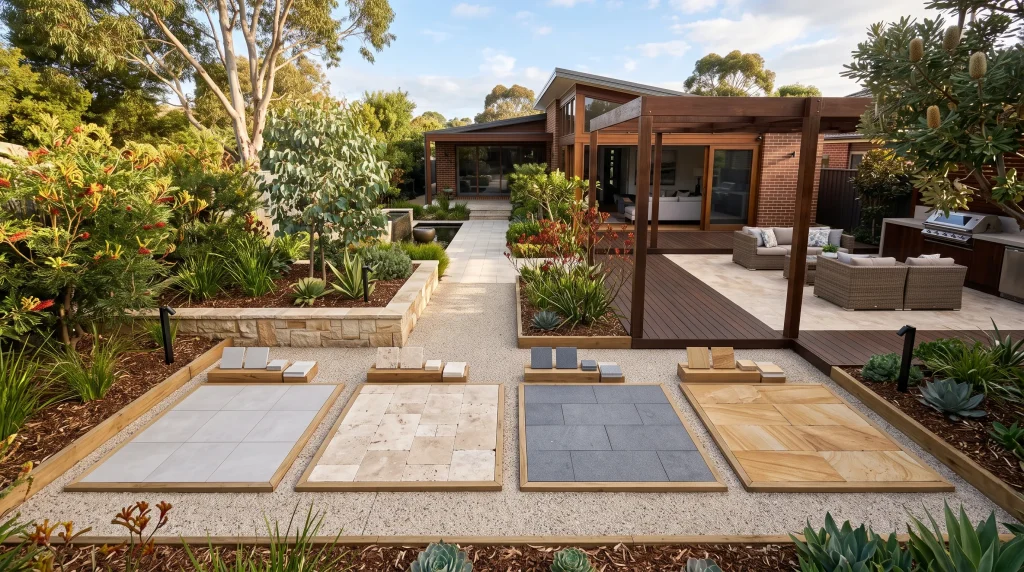
Quick Answers for Choosing Patio Paving
What is the best paving for a patio?
There is no single best option. Porcelain suits low-maintenance modern patios, while natural stone offers individual colour and character.
Which patio pavers are best around pools?
Choose a finish appropriate for wet, barefoot use and plan drainage. Check the supplier’s slip-resistance information for the exact product.
Is porcelain or natural stone better for a patio?
Porcelain is generally consistent and low-absorption; natural stone provides natural variation but may need different care depending on the stone and finish.
What thickness should patio pavers be?
The required thickness depends on the paver, base and load. A pedestrian patio and a driveway are not designed the same way.
Do I need drainage under a patio?
Yes. The surface and sub-base should be planned so water does not pool against the house or run onto neighbouring land.
Start With Patio Use and Site Conditions
Define whether the space is for dining, foot traffic, poolside use, a garden path or vehicle access. Then consider sun, shade, coastal exposure, soil conditions and where rainwater will go. The Australian Government’s YourHome guidance notes that minimising impervious surfaces and managing stormwater on site can reduce runoff and help protect downstream waterways.
| Your priority | Material options to explore | Decision check |
|---|---|---|
| Low maintenance and consistent appearance | Porcelain pavers | Confirm installation and finish suitability |
| Natural warmth and individual variation | Travertine, limestone or sandstone | Understand care and sealing needs |
| High traffic or robust outdoor use | Granite pavers | Match product thickness to the project |
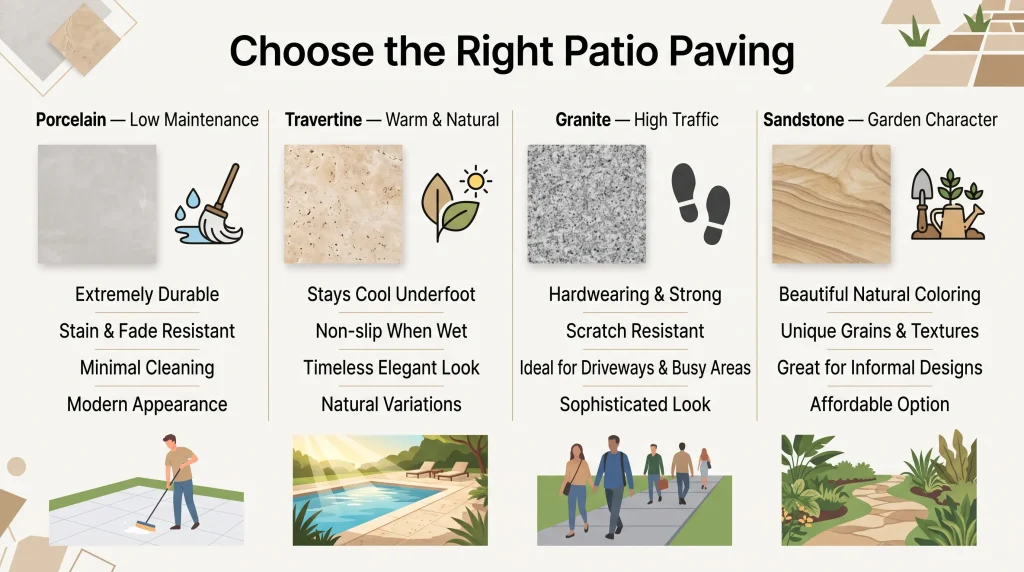
Compare Popular Patio Paving Materials
| Material | Best suited to | Strengths | Considerations |
|---|---|---|---|
| Porcelain | Modern patios and low-maintenance spaces | Low absorption and consistent size/colour | Use the correct adhesive and installation system |
| Travertine | Warm, resort-style patios and pool surrounds | Natural texture and tonal variation | Finish, sealing and care requirements vary |
| Granite | High-traffic paths and robust outdoor areas | Hard-wearing and naturally varied | Can be heavier and more demanding to cut |
| Sandstone | Garden and traditional-style patios | Natural colour range and character | Choose a suitable finish and maintenance plan |
| Limestone | Soft, neutral outdoor designs | Understated natural look | Use stone-appropriate cleaning and care |
Plan Drainage, Base and Layout Before Buying
A beautiful paver cannot compensate for poor preparation. Confirm the finished level, drainage fall, compacted sub-base, edge restraint and jointing method before ordering. For a water-management-focused surface, read our guide to permeable pavers; it explains when a permeable paving system may be appropriate.
- Keep water moving away from buildings in accordance with the site design.
- Allow enough space for furniture, circulation and doors to open.
- View samples outside, at different times of day, before selecting a colour.
- Order sufficient material for cuts and future repairs.
Patio Paving Products to Explore
For a distinctive natural look, consider Veincut Travertine. For a hard-wearing stone option, view Sesame White Granite. You can also compare the full travertine, granite and porcelain ranges.
Choose Your Patio Paving With Confidence
Bring measurements, site photos and a description of the intended use to Hunter Pavers. We can help you compare finishes and product options for your patio project.
Frequently Asked Questions
What is the best paving for a sunny patio?
Choose a product and colour that suit the exposure, then check the supplier’s finish and maintenance guidance.
Can I use patio pavers for a driveway?
Only if the product and complete installation system are designed for vehicle loads.
How do I choose patio paver colour?
View samples outdoors against the house, landscaping and furniture in changing natural light.
Do all natural stones need sealing?
Requirements vary by stone and finish. Follow the care advice supplied for the selected material.
What should I check before ordering patio pavers?
Confirm area measurements, finished levels, drainage, base preparation and intended use.