


Limestone Pool Coping
Limestone pool coping is a natural stone solution for finishing the edge of a swimming pool, offering a clean, understated appearance that works well with both modern and traditional outdoor spaces. Its soft natural colours, comfortable texture, and ability to blend with surrounding paving make limestone a popular choice for homeowners looking for an elegant alternative to concrete or manufactured pool edging.
Like any natural stone, limestone has specific maintenance and installation requirements. Understanding its strengths, limitations, and differences compared with materials such as travertine can help you decide whether it is the right option for your pool project.
| Feature | Limestone Pool Coping |
|---|---|
| Material | Natural sedimentary stone |
| Appearance | Soft, neutral and natural |
| Surface feel | Smooth and comfortable |
| Maintenance | Moderate |
| Sealing | Generally recommended |
| Best for | Modern, coastal and natural-style pools |
| Durability | Good with correct installation and maintenance |
What Is Limestone Pool Coping?
Limestone pool coping refers to limestone pieces installed around the top perimeter of a swimming pool. Coping creates a finished transition between the pool shell and the surrounding paving while also helping protect the pool structure from water entering behind the edge. For a broader understanding of coping styles, materials, and applications, see our guide to Pool Coping Materials.
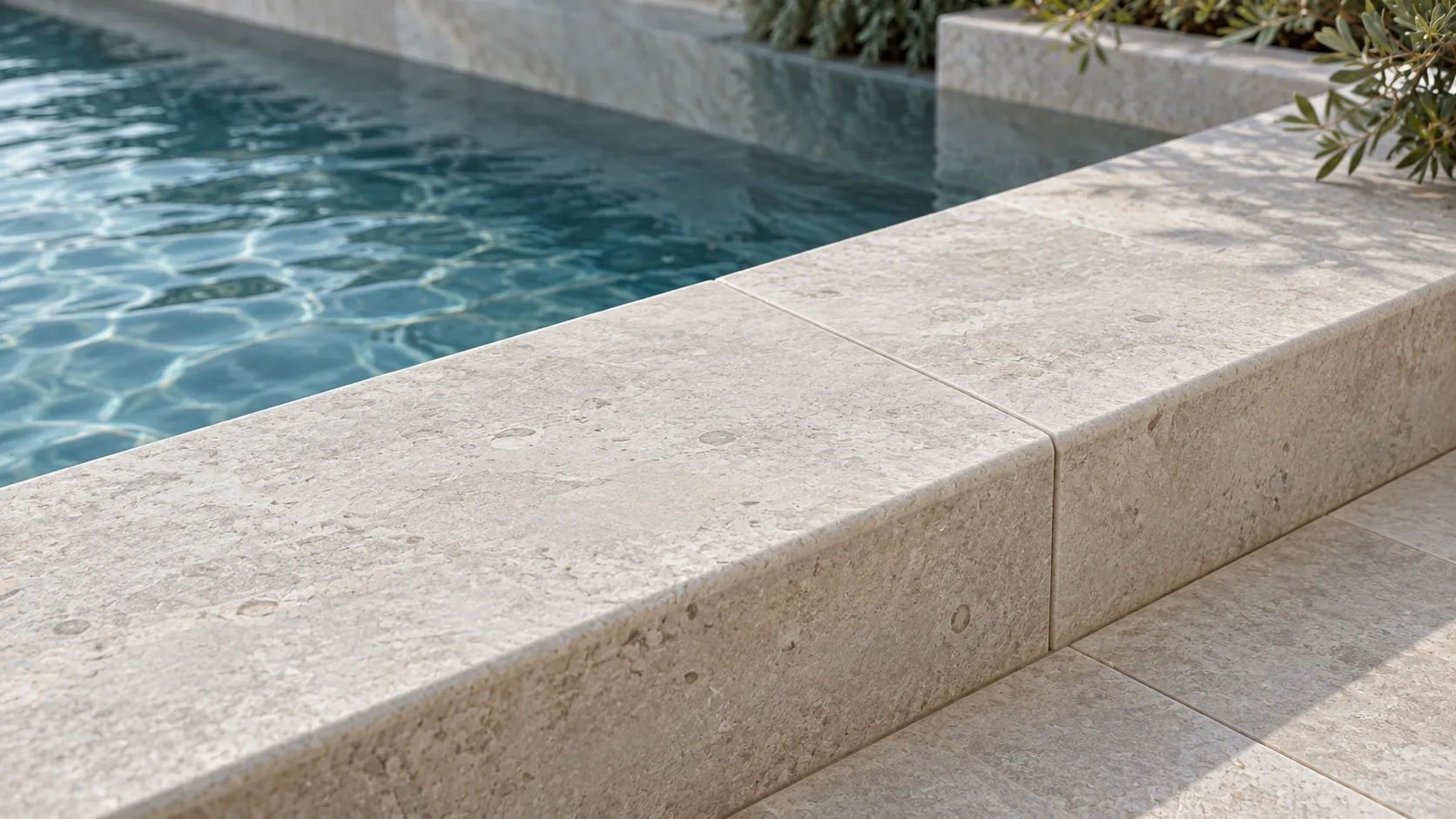
Limestone is a naturally formed sedimentary stone known for its relatively consistent texture and subtle colour variations. Depending on the stone and finish, it may be available in cream, beige, grey, off-white, or warmer earthy tones. Limestone coping can be used around residential swimming pools, spas, water features, and outdoor entertaining areas where a softer natural-stone appearance is preferred.
Benefits of Limestone Pool Coping
One of the biggest advantages of limestone pool coping is its natural appearance. Unlike highly patterned stones, limestone often has subtle variations that create a calm and consistent pool surround. Its neutral colours complement timber decking, rendered walls, landscaping, and many different paving materials, making it easy to incorporate into a wide range of outdoor designs.
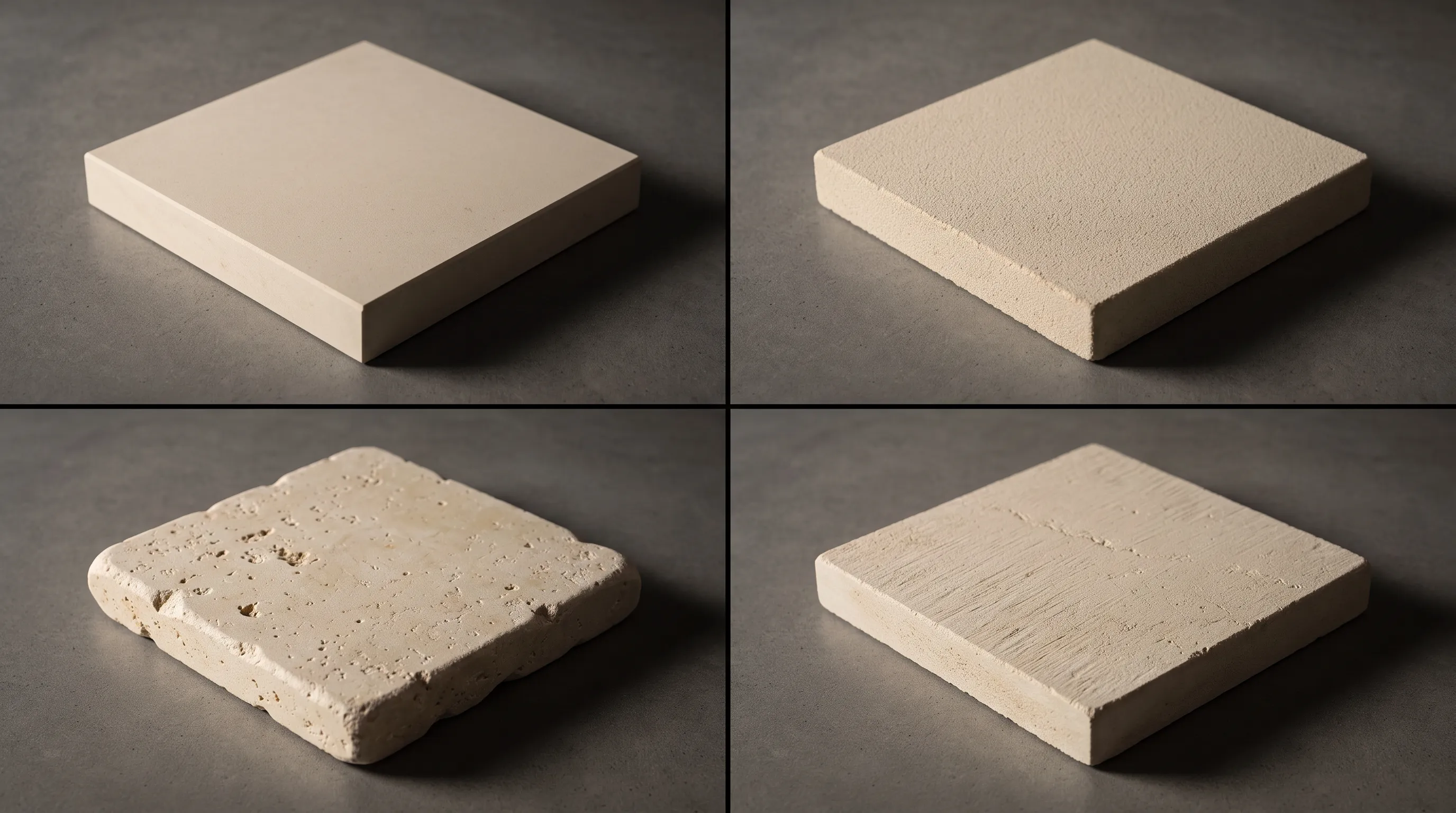
Limestone is also available in different sizes, edge profiles, and surface finishes, providing considerable design flexibility. Suitable finishes can create a comfortable surface around the pool while maintaining the texture needed for an outdoor environment. Lighter limestone colours may also feel more comfortable around pools exposed to strong sunlight than some darker paving materials.
Limitations of Limestone Pool Coping
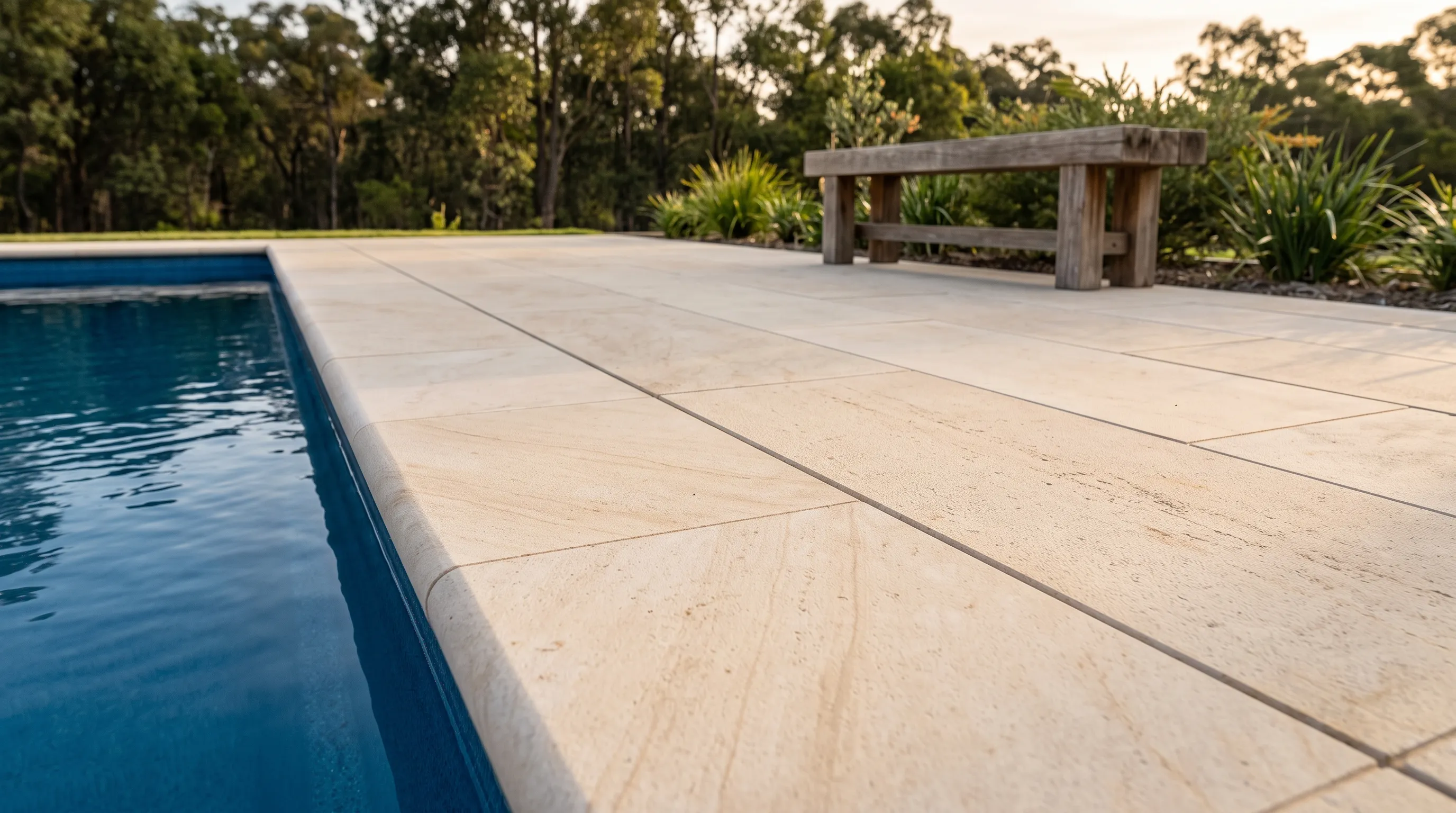
Limestone is durable enough for many pool environments, but it generally requires more attention than some harder natural stones. Because limestone is porous, moisture, pool chemicals, dirt, organic material, and other contaminants may penetrate the surface if the stone is not adequately protected. Periodic cleaning and appropriate sealing can help reduce staining and maintain the stone’s appearance.
It is also important to choose limestone specifically suited to outdoor and poolside applications. Some varieties are softer or more porous than others and may be more vulnerable to weathering or surface deterioration. If maximum hardness and low maintenance are the main priorities, another natural stone may be more appropriate. Our Best Stone for Pool Coping guide compares limestone with other common options.
Does Limestone Pool Coping Need Sealing?
Sealing limestone pool coping is generally recommended because natural limestone is porous. A suitable penetrating sealer can help reduce moisture absorption and make the surface less likely to develop stains from leaves, dirt, oils, food, or substances commonly found around swimming pools.
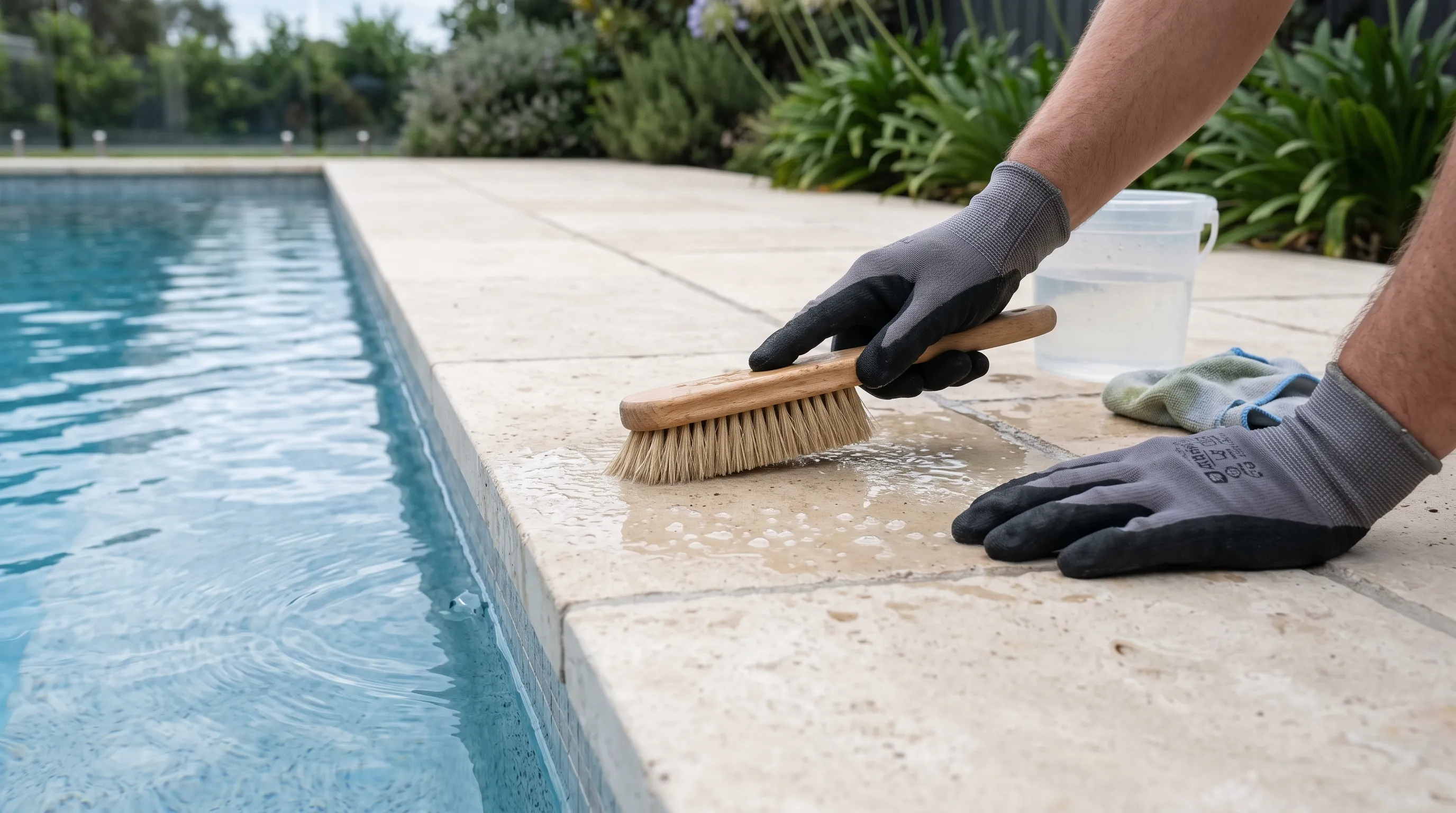
The stone should still be cleaned regularly even after sealing. Sealers do not make limestone completely maintenance-free, and they may need to be reapplied periodically depending on the product, stone type, exposure, and level of pool use. Installation and sealing products should always be selected specifically for natural stone and swimming pool environments.
Where Does Limestone Pool Coping Work Best?
Limestone is particularly suitable for pool areas where homeowners want a refined but understated natural-stone finish. Cream and beige limestone can complement Mediterranean, coastal, and resort-inspired landscapes, while grey limestone can work particularly well with contemporary homes and minimalist pool designs.
It can also be a good option when the surrounding paving uses limestone because matching the coping with the main paved area creates a continuous visual transition around the pool. Correct drainage, installation, sealing, and stone selection remain important, particularly in areas exposed to frequent water, salt, chemicals, or changing weather conditions.