


Limestone gravel is a durable, budget-friendly, and versatile natural stone perfect for high-traffic driveways and effective drainage. Known for its strength and easy accessibility, it offers a stable surface that withstands heavy loads while adding a clean, aesthetic look to any landscape project.
What is limestone gravel good for? Its most useful applications include garden paths, decorative borders, low-traffic landscape areas, selected driveway layers, compacted bases and drainage installations. The right choice depends on grading: stone with fines compacts more firmly, while clean stone with minimal fines leaves more space for water to move.
| Application | What to specify | Important consideration |
|---|---|---|
| Garden path | Comfortable, consistent decorative gravel | Use edge restraint and prepare the base |
| Driveway base | Well-graded compactable material | Design depth for soil and vehicle loads |
| Visible driveway surface | Durable, suitable surface grade | Expect periodic grading and replenishment |
| Drainage trench | Clean aggregate with minimal fines | Provide an outlet and suitable filter system |
| Decorative ground cover | Colour and size selected for the design | Loose stone can migrate without edging |
What Is Limestone Gravel?
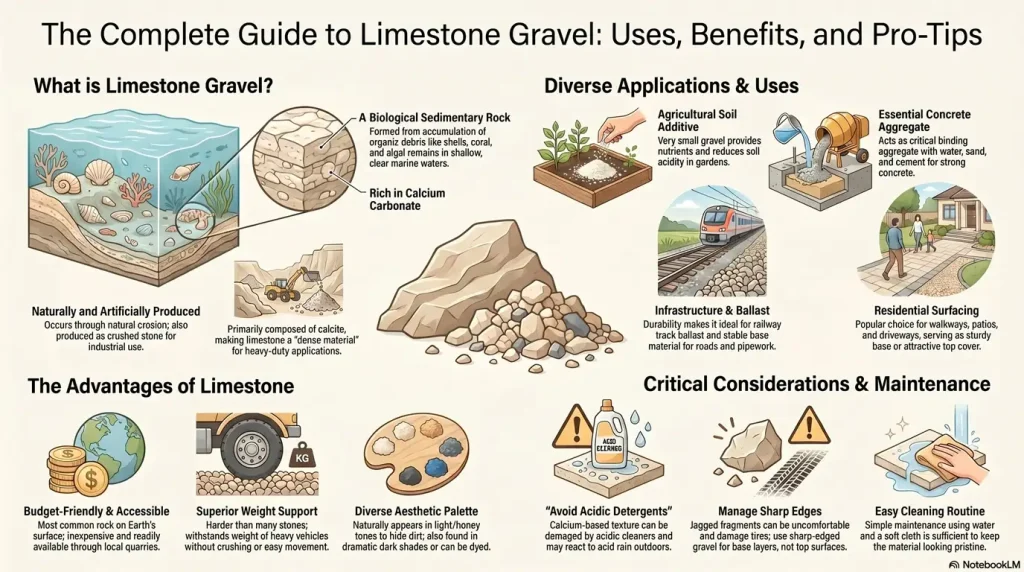
Limestone gravel is loose aggregate made from limestone, a calcium-carbonate-rich sedimentary rock. It is typically produced by crushing and screening quarried stone into nominated particle sizes. Products can range from clean, single-sized gravel to compactable blends containing fine particles.
For a broader guide to grades, performance and installation, visit our crushed limestone guide.
Five Popular Uses for Limestone Gravel
1. Garden Paths and Walkways
Limestone gravel can create an informal path with natural cream, tan or grey colouring. Excavate and level the route, build the appropriate base, install separation fabric where required, and use edging to contain the loose stone. Very angular or large particles may be uncomfortable underfoot, so choose a pedestrian-friendly grade.
2. Driveways and Access Areas
Limestone gravel can be used in a driveway system, but the base and visible surface may need different grades. Well-graded material with fines can compact firmly; clean gravel may move more under tyres. Slope, stormwater, turning movements, soil strength and traffic determine whether it is suitable.
3. Patio and Paving Bases
Specified compactable limestone may create a stable sub-base below pavers. It must be installed in controlled layers and compacted to the project requirement. For the finished surface, explore purpose-made limestone pavers and tiles rather than using loose gravel where a level entertaining surface is required.
4. Drainage and Pipe Bedding
Clean, appropriately sized limestone aggregate may be suitable for certain drainage or bedding applications. “Limestone gravel” is not automatically highly permeable: products containing fine particles can restrict water movement. Pipe, foundation and retaining-wall work should follow the applicable design and material specification.
5. Garden Borders and Decorative Ground Cover
Light limestone gravel can contrast with planting and define garden beds. Darker tones can create a more dramatic finish. Geotextile and edging can help separate the gravel from soil and reduce migration, although leaves, sediment and organic matter will still need removal.
Is Limestone Gravel Good for Driveways?
It can be a practical choice when correctly designed and installed. Its advantages may include local availability, natural colour and strong compaction in well-graded products. Its limitations include dust, tracking, rutting, loose-stone migration and maintenance. Do not select a driveway product on price alone; compare delivered cost, grading, layer depth and expected upkeep.
Limestone Gravel for Drainage: Clean Stone vs Fines
Drainage performance is controlled by the voids between particles. Clean aggregate retains interconnected voids; compactable material uses smaller particles and fines to fill those spaces. This is why a product that makes an excellent firm base may be a poor choice for a free-draining trench. Ask the supplier which function the grade was designed to perform.
Benefits of Limestone Gravel
- Available in natural colours that complement many landscapes
- Can be supplied in compactable or cleaner drainage grades
- Useful for paths, borders, bases and selected driveway systems
- Often economical when quarried and supplied locally
- Can be installed and repaired in sections
Limitations and Maintenance
Loose limestone gravel is not maintenance-free. Traffic and runoff can displace it, weeds can establish in accumulated sediment, and fine material can create dust in dry weather or soften when saturated. Remove debris, restore edges, fill low areas and regrade as necessary. Avoid acidic cleaners on finished limestone surfaces because acids can react with calcium carbonate.
How to Choose the Right Limestone Gravel
- Decide whether the area needs compaction, drainage or a decorative finish.
- Check pedestrian comfort, tyre movement and expected loads.
- Confirm the particle-size range and amount of fines.
- Plan drainage, edging, base depth and compaction before ordering.
- Compare delivered quantities and ask whether colour varies by batch.
If you are deciding between virgin limestone and recycled aggregate, read our comparison of crushed limestone vs crushed concrete.
Want a premium limestone finish rather than loose gravel? View Hunter Pavers’ limestone range, including Gohera, Ivory, Grey, Black and Ash Grey options, or contact our team for product and project guidance.
Frequently Asked Questions
What is limestone gravel best used for?
It is commonly used for garden paths, borders, decorative ground cover, compacted bases, selected driveway layers and drainage work. The grading must match the function.
Does limestone gravel compact well?
A well-graded product containing smaller particles and fines generally compacts well. Clean, single-sized gravel has more void space and does not lock together in the same way.
Is limestone gravel suitable around drains?
Clean aggregate with minimal fines may suit a designed drainage system. Compactable gravel containing fines can restrict flow, so confirm the specification and provide a working outlet.
How deep should a limestone gravel layer be?
There is no universal depth. It depends on the application, soil strength, load, particle size and base design. Driveways and structural bases require a project-specific specification.
Can limestone gravel be used as a finished patio surface?
It can suit informal areas, but loose stone may move beneath furniture and feet. Limestone pavers are usually more practical where a firm, level entertaining surface is wanted.