

Travertine is a popular natural stone for Australian patios, pool surrounds and outdoor entertaining areas. Its distinctive pores and natural colour variations give every surface character, but those openings can be treated in different ways. Understanding filled vs unfilled travertine helps you choose a product that suits your design preferences, cleaning routine and intended application.
Filled travertine has some of its natural holes filled to create a more even appearance, while unfilled travertine retains more of its original surface openings. Neither is automatically better. The right choice depends on the stone’s finish, exposure, installation requirements and how you plan to use your outdoor space.
Filled vs Unfilled Travertine: At a Glance
Before comparing individual products, here are the main differences between filled and unfilled travertine.
| Feature | Filled Travertine | Unfilled Travertine |
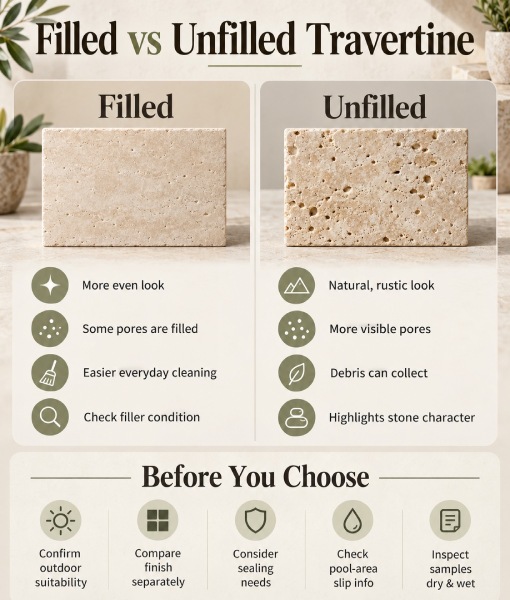
| Appearance | More even and refined | Natural, rustic appearance |
| Surface texture | Depends on filler and final finish | Visible pores create more surface variation |
| Natural pores | Some surface voids are filled | More openings remain visible |
| Cleaning | Filled cavities can be easier to clean | Open cavities may trap dirt and debris |
| Maintenance | Depends on stone, filler and exposure | Depends on stone, pores and exposure |
| Sealing considerations | May still require sealing | May also benefit from sealing |
| Cost | Varies by grade, treatment and format | Varies by grade, finish and format |
| Common applications | Interior floors and suitable exterior projects | Patios, pathways, courtyards and suitable pool areas |
These are general comparisons. Actual performance depends on the travertine product, filling material, surface finish and installation method.
For examples of available colours and finishes, explore Hunter Pavers’ travertine pavers and compare the specifications of individual products.
What Is Filled Travertine?
Filled travertine is natural travertine that has undergone a treatment to fill selected holes and cavities in its surface. Travertine forms through mineral deposits and naturally develops small openings, which vary in size and distribution.
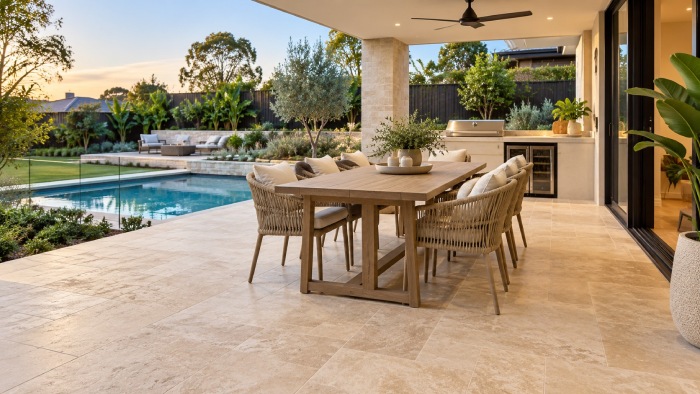
Filling reduces the visibility and depth of some openings, producing a more consistent surface. However, it does not make the stone completely non-porous or waterproof.
How Travertine Is Filled
Manufacturers commonly use suitable cement-based compounds, resins or other compatible fillers to treat travertine’s natural cavities. The material is applied to the openings and allowed to cure before further surface finishing, where required.
The resulting appearance depends on the filler colour, depth of filling and production method. Some products have closely colour-matched filling, while others retain visible contrasts between the stone and treated openings.
Benefits and Limitations
The main advantage of filled travertine is its more uniform appearance. With fewer open surface cavities, everyday sweeping and wiping may also be more straightforward.
However, fillers can wear, loosen or become damaged over time, depending on their formulation, exposure and installation. Filled travertine pavers still require appropriate cleaning and maintenance, and not every filled product is designed for outdoor use.
What Is Unfilled Travertine?
Unfilled travertine retains more of the holes and cavities that naturally occur within the stone. These openings are part of travertine’s distinctive appearance and can range from tiny pinholes to larger, more noticeable voids.
Unfilled stone is commonly selected for projects where natural variation and a less uniform appearance are desirable.
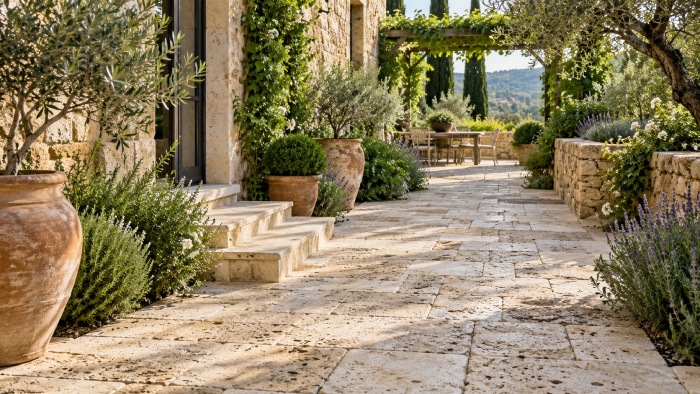
Natural Pores and Surface Texture
Unfilled travertine pavers highlight the original character of the material. Their visible cavities create depth and visual interest, particularly in outdoor settings with timber, garden planting and other natural materials.
Importantly, unfilled does not necessarily mean rough. A honed unfilled tile can have a relatively smooth surface between its openings, while a tumbled unfilled paver can have a more weathered appearance.
Benefits and Limitations
Unfilled travertine suits homeowners who appreciate natural surface character. It can be particularly attractive in Mediterranean-inspired courtyards, garden pathways and relaxed outdoor entertaining areas.
The main consideration is cleaning. Leaves, soil and other debris can settle in larger cavities, particularly in gardens and exposed locations. Some openings may also require attention as the paving ages.
Filled vs Unfilled Travertine: Key Differences
Understanding the practical differences between these two treatments makes it easier to select the right stone for your project.
Appearance and Texture
The most noticeable difference between filled travertine vs unfilled travertine is the appearance of their natural openings.
Filled stone generally creates a more visually consistent surface, making it appealing for contemporary spaces and projects with clean architectural lines. Unfilled stone shows more cavities and irregularities, often complementing traditional and natural landscape designs.
Filling and finishing are different processes. Filling treats the stone’s cavities, while honing, tumbling and brushing alter its surface appearance or texture. A product can therefore be honed and filled, honed and unfilled, or tumbled and unfilled.
When comparing travertine paver finishes, always check both descriptions rather than treating these terms as interchangeable.
Cleaning and Maintenance
Filled travertine may be easier to maintain where filling reduces the number of cavities that can collect dust or organic matter. However, its surface can still develop stains and may require specialist treatment.
Unfilled travertine can take additional effort to clean when debris settles inside open pores. Regular sweeping, gentle brushing and prompt spill removal help keep both surfaces looking their best.
Use a pH-neutral cleaner suitable for natural stone. Avoid vinegar, acidic detergents and aggressive cleaning methods, which can damage calcium-based travertine. The Natural Stone Institute also recommends selecting cleaning products specifically suited to natural stone.
For practical maintenance advice, read Hunter Pavers’ guide on how to clean travertine tiles.
Sealing Requirements
Both filled and unfilled travertine may benefit from a suitable penetrating sealer, depending on their porosity and intended use.
Sealing can help reduce the absorption of moisture and staining substances, but it does not make travertine waterproof or stain-proof. Filling visible holes is also not the same as sealing the stone.
The appropriate sealer depends on the actual stone, filler compatibility, location and expected exposure. Some treatments may also change the appearance or wet slip performance of the surface.
For further guidance, see how to seal travertine tiles, and always follow the relevant product manufacturer’s instructions.
Durability and Wear
Neither filled nor unfilled travertine is automatically more durable.
Overall performance depends on stone quality, density, thickness, cavity structure, environmental exposure and installation. Filling visible openings does not necessarily increase the structural strength of the stone.
With filled travertine, the compatibility and condition of the filler also matter. With unfilled travertine, larger cavities may require assessment or repair if they affect the walking surface.
Choose a stone specifically suitable for its intended outdoor application rather than relying on filling treatment alone.
Cost
Is filled travertine more expensive than unfilled travertine?
Not necessarily. Filling involves additional processing, but the final price also reflects stone grade, colour, dimensions, thickness, finish, availability and order quantity.
For example, comparing a thin honed filled tile with a thicker tumbled unfilled paver would not provide a meaningful assessment of filling costs.
When requesting prices, compare products of similar specifications and consider delivery, installation, sealing and ongoing maintenance alongside the initial purchase price.
Installation Considerations
Installation planning is important for both options.
Unfilled travertine requires particular care during grouting because grout can unintentionally enter surface cavities. The installer should confirm whether those openings are intended to remain visible or be filled during installation.
LATICRETE’s natural-stone grouting guidance recommends considering grout release or other suitable treatments for porous stone and testing the proposed approach first.
Both options also require an appropriate substrate, drainage, movement joints and installation materials. For exterior paving, use a qualified installer familiar with natural stone.
Is Filled or Unfilled Travertine Better Around a Pool?
Both filled and unfilled travertine may be suitable for pool surrounds when the specific product and finish meet the project’s requirements.
Unfilled, tumbled travertine is often considered for natural-looking pool decks, while filled travertine may appeal to homeowners seeking a more uniform appearance. However, neither treatment guarantees slip resistance.
Wet-area performance depends on the actual surface finish, stone characteristics, treatment and condition. In Australia, AS 4586 provides methods for classifying the slip resistance of new pedestrian surfaces. Request relevant wet-condition test information for the product you intend to install.
Also consider pool water exposure, drainage, cleaning requirements and whether matching coping pieces are available. Explore Hunter Pavers’ travertine pool coping guide before finalising your selection.
Which Is Better for Patios and Outdoor Areas?
For patios and alfresco areas, the choice often comes down to visual style, maintenance expectations and the surrounding environment.
Filled travertine can suit contemporary entertaining spaces where homeowners prefer an even-looking surface. It may also be convenient around outdoor dining furniture, provided the exact product is suitable for exterior use.
Unfilled travertine is appealing for garden pathways, rustic courtyards and relaxed patios where natural openings complement the landscape. In areas with heavy leaf litter, soil or frequent food spills, consider how much cleaning the cavities may require.
Both options can work well outdoors when their product specifications, surface finish and installation are appropriate.
How to Choose Between Filled and Unfilled Travertine
If you are still deciding between travertine filled or unfilled, use these questions to narrow your options:
- What appearance do you prefer? Choose filled stone for a more even look or unfilled stone for more visible natural cavities.
- Where will the paving be installed? Confirm exterior suitability, especially for exposed patios and pool areas.
- How much maintenance are you comfortable with? Consider whether open pores will collect debris in your location.
- What surface finish do you need? Compare honing, tumbling and other treatments separately from filling.
- What are the project specifications? Check thickness, size, slip-test information, sealing compatibility and installation requirements.
- Have you inspected actual samples? Compare pieces in natural daylight, preferably both dry and wet, before making your final decision.
Hunter Pavers lists products such as Premium Travertine with different finish options, including honed filled tiles and honed tumbled unfilled pavers. Confirm availability and suitability for your intended application before ordering.
Conclusion
Choosing between filled vs unfilled travertine is primarily about balancing appearance, surface characteristics and practical maintenance needs.
Filled travertine generally provides a more consistent appearance and can reduce debris collecting in surface cavities. Unfilled travertine preserves more of the stone’s natural character but may require additional cleaning attention.
For Australian outdoor areas, neither option should be selected based on appearance alone. Stone quality, surface finish, installation and product-specific suitability are equally important.
Explore Hunter Pavers’ travertine tiles and pavers or contact the team for help comparing colours, available finishes and products suited to your project.
Frequently Asked Questions
What Is the Difference Between Filled and Unfilled Travertine?
Filled travertine has selected natural holes treated with a suitable filling compound. Unfilled travertine retains more of its original surface openings, creating a more visibly natural appearance.
Is Filled Travertine Better Than Unfilled Travertine?
Not always. Filled travertine may suit buyers seeking a more uniform surface, while unfilled travertine suits those who prefer natural character. The better choice depends on the application and product specifications.
What Is Used to Fill Travertine Holes?
Travertine holes may be filled with compatible cement-based materials, resins or specialised stone fillers. The appropriate product depends on the stone, finish and intended environment.