


AppearanceNatural, textured, warm and variedCommon ColoursBeige, cream, tan, brown, gold and soft greyBest ForNatural, rustic and landscape-focused pool designsSurfaceTextured and available in different finishesMain AdvantageDistinctive natural appearanceMain ConsiderationPorosity and maintenanceMaintenancePeriodic cleaning and resealing may be required
What Is Sandstone Pool Coping?
Sandstone pool coping is made from natural sandstone cut and finished specifically for installation around the perimeter of a swimming pool. Like other types of pool coping, it creates a finished transition between the swimming pool structure and the surrounding paving, decking, or landscaping while also protecting the upper edge of the pool.
Sandstone is formed naturally from compacted mineral and sand particles, giving the stone its characteristic layered texture and colour variation. It is commonly used around pools with natural landscaping, traditional homes, resort-inspired outdoor areas, and designs where a softer alternative to highly polished or uniform materials is preferred.
Benefits of Sandstone Pool Coping
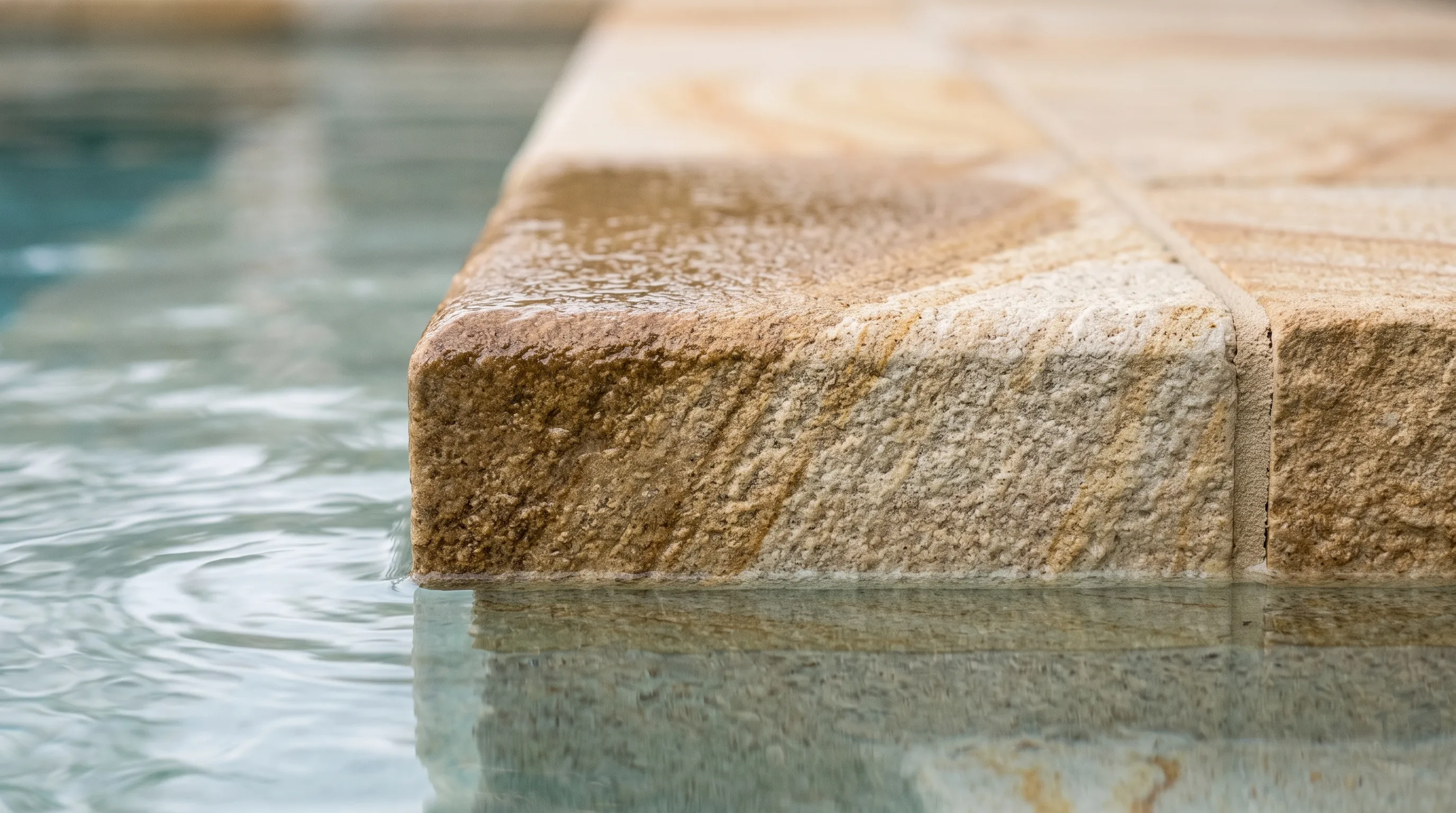
One of the main benefits of sandstone pool coping is its natural texture. Unlike manufactured coping products that can appear highly consistent, sandstone often contains subtle changes in colour, grain, and pattern. These variations can make the pool surround feel more connected to gardens, stone walls, timber features, and other natural elements within the landscape.
Sandstone is also available in a range of warm colours, including cream, beige, tan, gold, brown, and some cooler grey tones. This makes it particularly useful for homeowners who want to create an inviting outdoor area rather than a sharp or highly contemporary pool design. When the right finish is selected, sandstone can provide both visual texture and a comfortable transition between the pool and surrounding outdoor areas.
Natural Texture and Character
Every piece of sandstone has slightly different mineral patterns and tonal variations. This natural inconsistency is often considered one of its strongest design features because it prevents the pool edge from looking overly manufactured.
Textured finishes can further highlight sandstone’s natural character and make it suitable for pool areas where visual softness and an organic finish are priorities.
Warm Colour Options
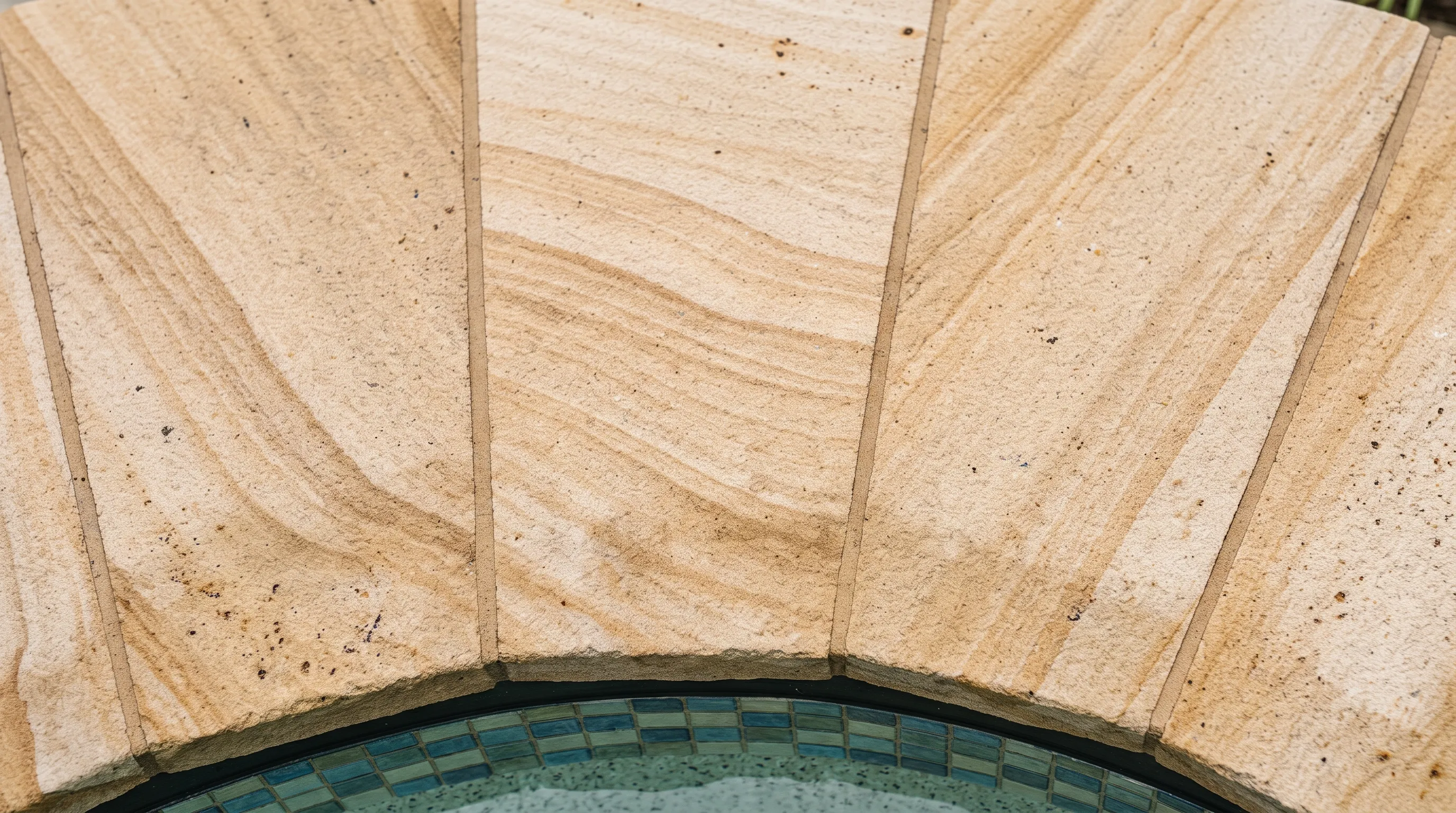
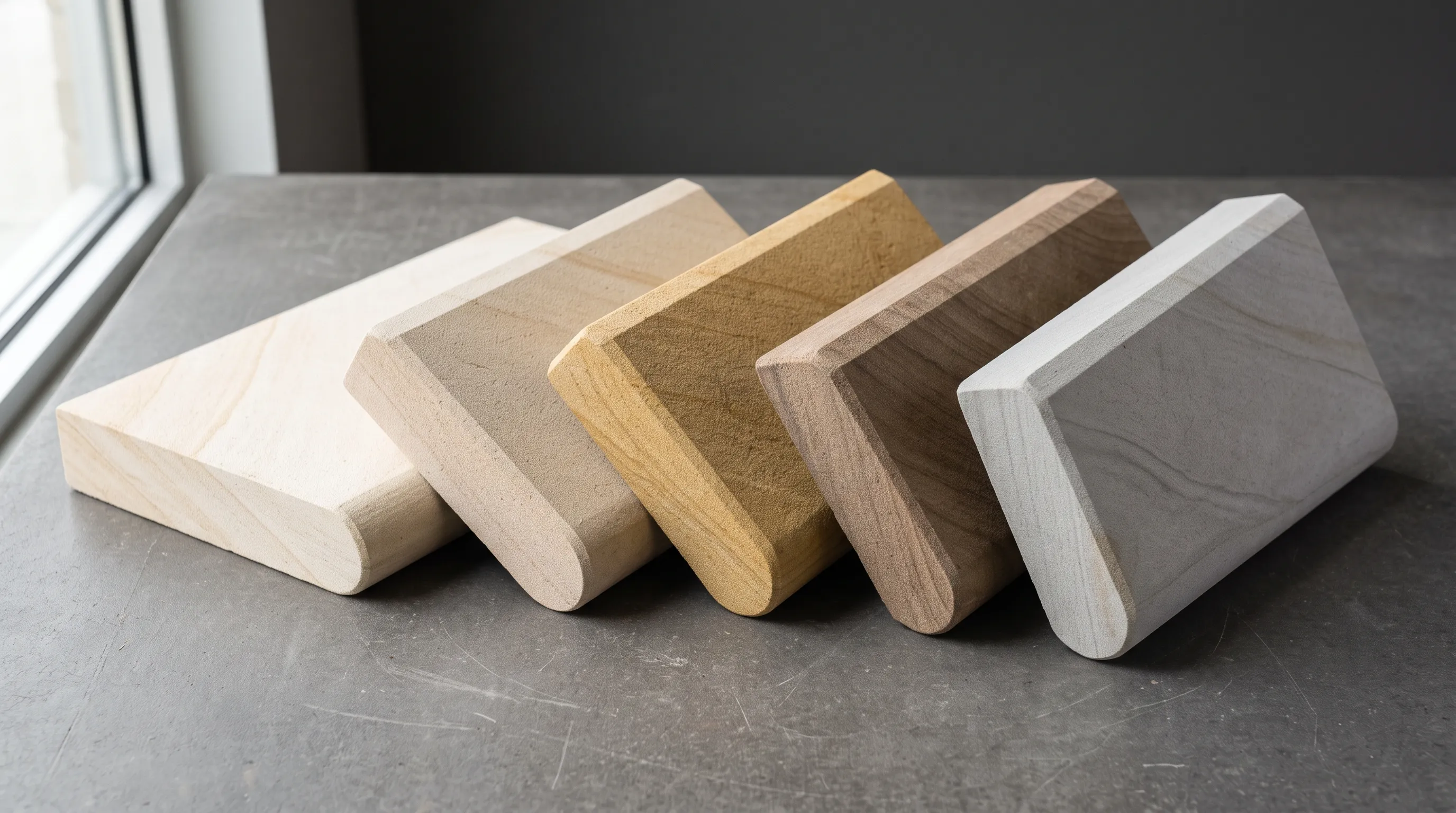
Sandstone is particularly well known for warm and neutral colours. Beige, cream, honey, buff, and light brown sandstone can complement timber decking, outdoor furniture, greenery, and other landscaping materials.
These colours also work well in Mediterranean-inspired, coastal, traditional, and relaxed contemporary outdoor designs.
Works Well With Landscaping
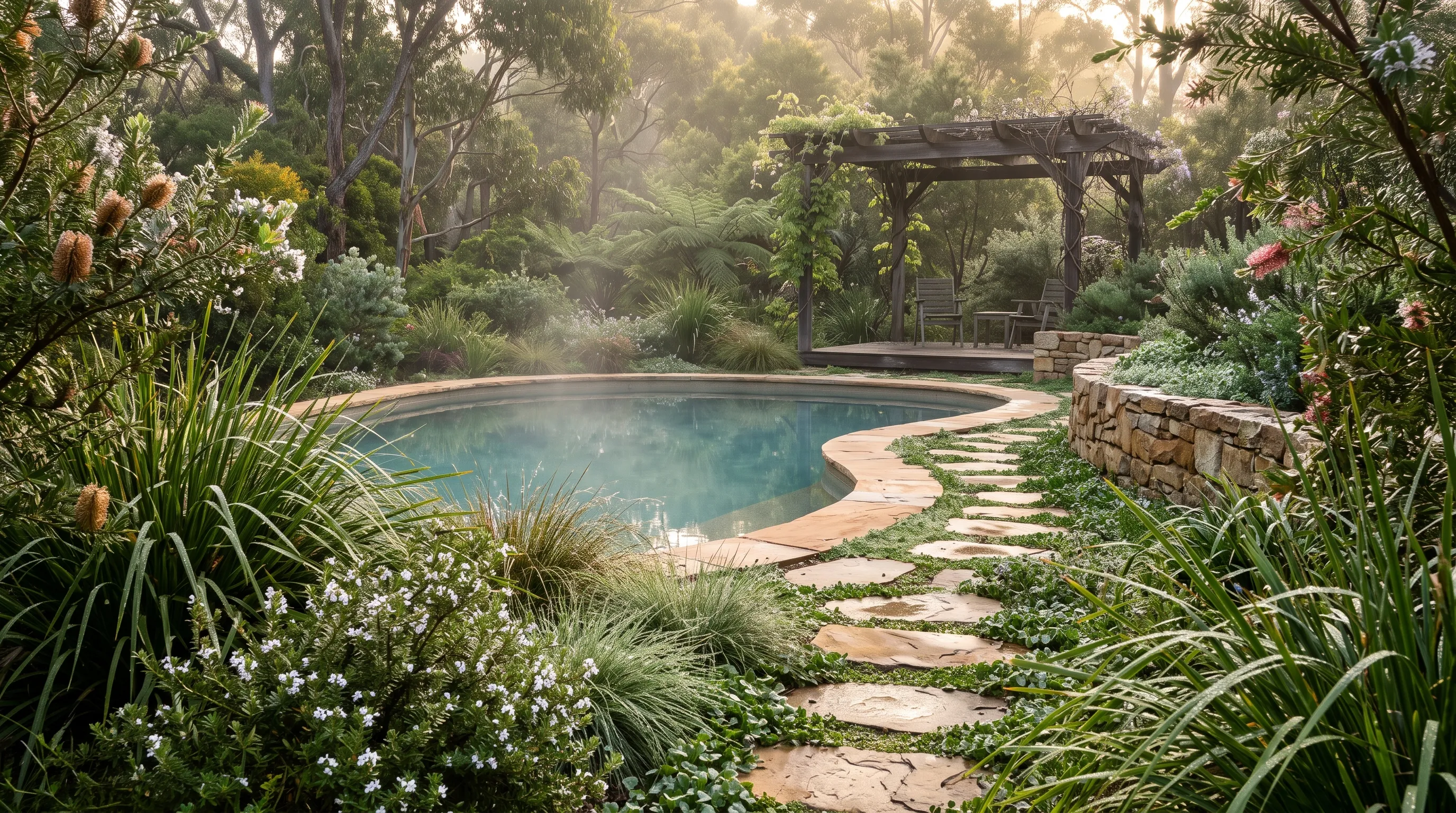
Sandstone tends to blend naturally with surrounding gardens and outdoor environments. Rather than creating a strong contrast between the pool and landscape, it can help visually connect the swimming area with lawns, plants, stone features, and paved entertainment zones.
For properties where the pool is designed as part of a larger landscaped backyard, sandstone can therefore provide a more cohesive appearance.
Limitations of Sandstone Pool Coping
The main consideration with sandstone pool coping is porosity. Sandstone can absorb moisture more readily than some denser natural stones, meaning untreated or poorly maintained coping may be more vulnerable to staining, moisture penetration, and weather-related deterioration. The exact performance will also depend on the sandstone variety and its density.
Regular maintenance is therefore more important than with some lower-maintenance pool coping materials. Appropriate sealing can help reduce water absorption and staining, but sealers gradually wear and may need to be reapplied depending on the product, exposure, climate, pool chemistry, and usage.
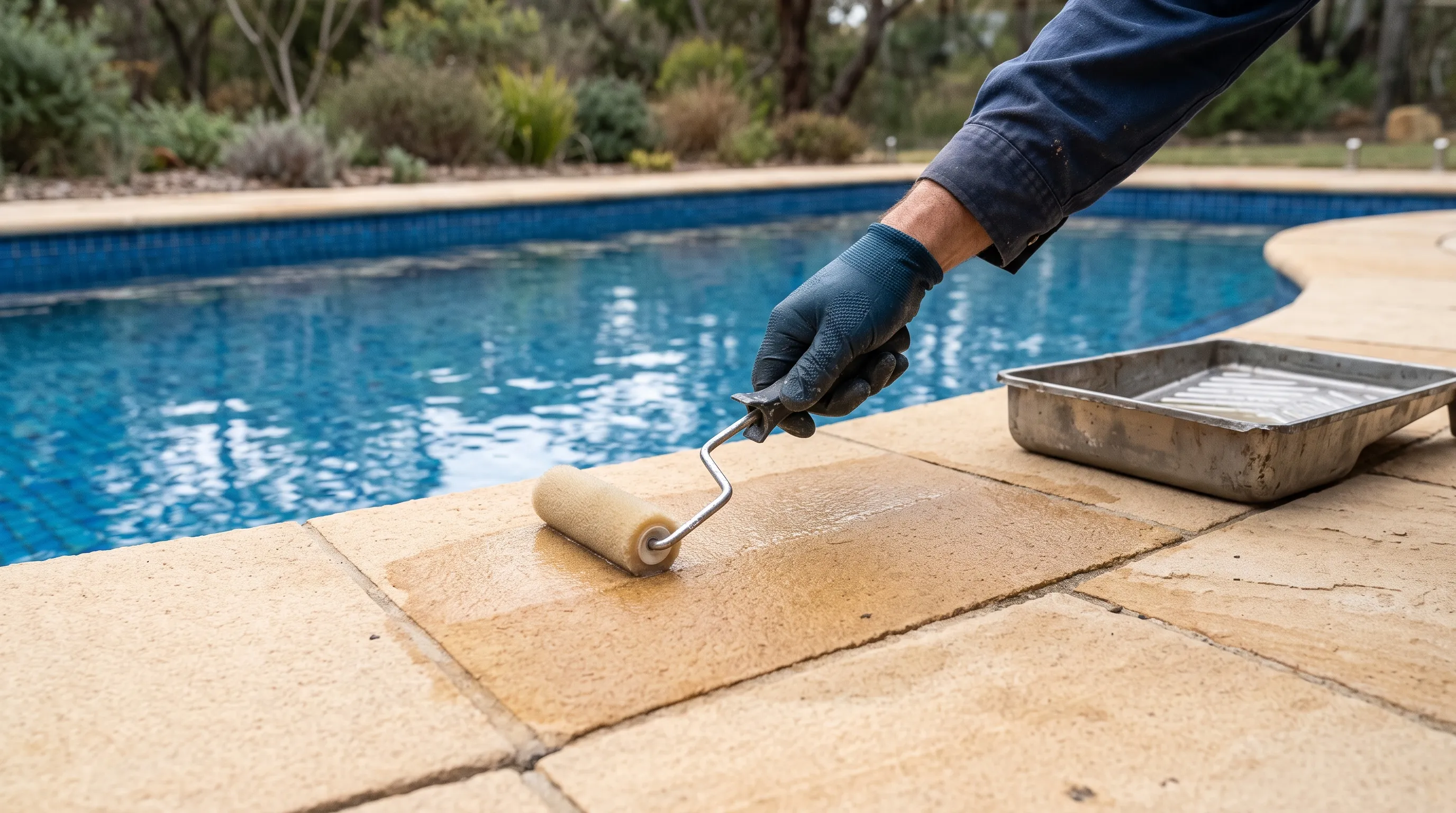
Sandstone Requires Sealing
A suitable natural-stone sealer is commonly used to help protect sandstone in pool environments. Sealing can reduce the amount of water and contaminants absorbed by the stone while making routine cleaning easier.
The selected product should be compatible with the specific sandstone and intended for swimming pool environments. Installation and sealing recommendations from the stone supplier should also be followed.
Cleaning and Maintenance
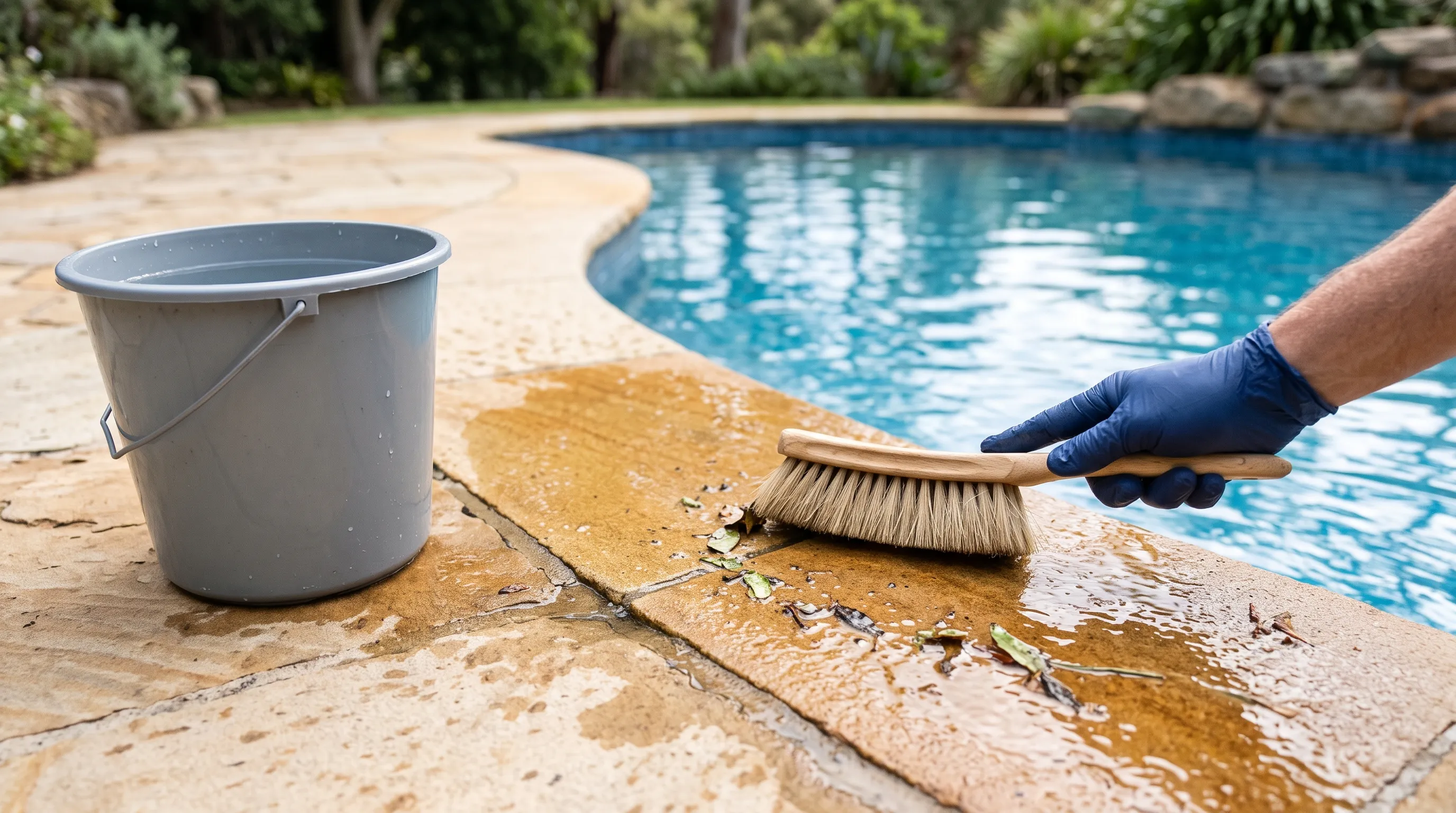
Sandstone should generally be cleaned using products suitable for natural stone rather than aggressive acidic or highly alkaline chemicals. Strong chemicals can potentially affect the stone or its finish.
Removing leaves, dirt, pool chemicals, and spills promptly can also help prevent staining and preserve the appearance of the coping over time.
Sandstone vs Other Pool Coping Materials
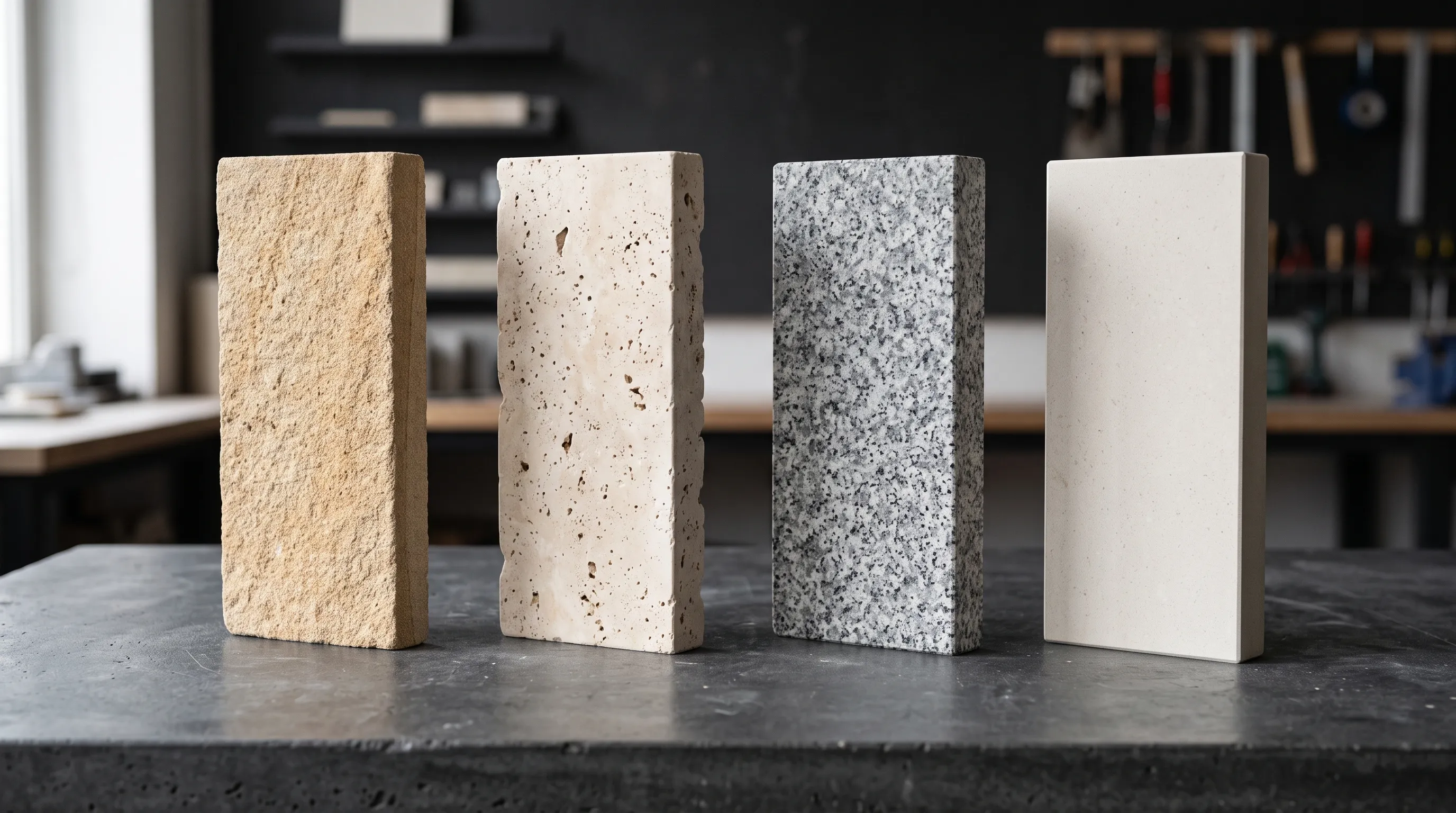
Sandstone is one of several natural stone options available for swimming pools. When comparing pool coping materials, the best choice depends on factors such as appearance, density, maintenance expectations, pool design, climate, finish, and budget.
Travertine is commonly chosen for its light tones and distinctive porous appearance, while granite offers a much denser and highly durable surface. Limestone provides a softer and often more understated appearance. Sandstone stands out mainly for its textured character and warm natural colours, making it especially attractive for landscape-focused designs.
| Material | Appearance | Key Strength | Main Consideration |
|---|---|---|---|
| Sandstone | Warm, textured and natural | Organic visual character | Requires appropriate sealing and maintenance |
| Travertine | Light, patterned and elegant | Popular around resort-style pools | Porous natural stone |
| Granite | Dense, premium and refined | High durability | Can have a harder visual appearance |
| Limestone | Soft, subtle and natural | Elegant neutral colours | Performance varies between stone types |
Sandstone vs Travertine
Both sandstone and travertine offer natural variation and work well in outdoor spaces. Travertine often creates a lighter, more resort-inspired appearance, while sandstone generally provides stronger earthy tones and a more textured visual character.
The best choice depends largely on the surrounding landscape and the desired pool design.
Sandstone vs Granite
Granite is considerably denser and is often selected where durability and lower water absorption are major priorities. Its appearance can also feel more refined or contemporary depending on the colour and finish.
Sandstone may be preferred where natural texture, warmth, and integration with landscaping are more important than achieving a highly uniform finish.
Sandstone vs Limestone
Limestone and sandstone can both provide soft, natural colours around swimming pools. Limestone often has a finer and more understated visual texture, while sandstone typically displays more obvious grain and variation.
Because both materials can vary considerably between individual stone types, technical specifications should be considered alongside appearance when selecting the best stone for pool coping.
Is Sandstone Pool Coping Right for Your Pool?
Sandstone pool coping can be an excellent option when the design goal is to create a natural, warm, and textured pool environment. It is particularly well suited to landscaped backyards, traditional or rustic architecture, and outdoor spaces that already incorporate natural materials.
However, sandstone may not be the ideal choice for homeowners looking for the lowest-maintenance stone available. Its porosity means correct stone selection, professional installation, sealing, and ongoing care are important. Comparing sandstone with other natural stones before purchasing will help determine whether its appearance and maintenance requirements suit your project.
Explore Sandstone for Your Pool Project
Compare Hunter Pavers’ sandstone colours, finishes and available coping profiles, including Teakwood, White Himalayan and Yellow Himalayan Sandstone. Confirm poolside suitability, stock and installation requirements before ordering.
FAQs About Sandstone Pool Coping
Is sandstone good for pool coping?
Yes. Sandstone can be a good pool coping material when an appropriate stone variety and finish are selected. It provides attractive natural texture, warm colours, and strong compatibility with landscaped pool areas. Proper installation, sealing, and maintenance are important because sandstone can be porous.
Does sandstone get slippery?
The slip resistance of sandstone depends largely on its surface finish and condition. Textured finishes are generally more suitable around swimming pools than highly smooth surfaces. The specific product should always be assessed for suitability in wet pool environments.
How long does sandstone pool coping last?
Quality sandstone can remain functional and attractive for many years when correctly selected, installed, sealed, and maintained. Its lifespan depends on factors including stone quality, climate, exposure to pool water and chemicals, installation quality, drainage, and ongoing maintenance.
Final Considerations
Sandstone pool coping is best suited to projects where natural texture, warm colour variation, and integration with the surrounding landscape are major design priorities. Its organic appearance can create a softer and more distinctive pool edge than many highly uniform materials.
Before choosing sandstone, compare its porosity, maintenance requirements, finish, and long-term performance with other pool coping materials. Exploring different options for pool coping and comparing the best stone for pool coping can help you select a material that balances appearance, durability, maintenance, and the overall style of your outdoor space.