


Granite is one of the most popular and durable natural stones used in residential properties. Known for its beauty, durability, and versatility, it has become the go-to choice for a wide range of applications in homes, from countertops to flooring and even exterior facades. However, like all materials, granite comes with its set of advantages and disadvantages. In this article, we will explore both the pros and cons of granite stone, so you can make an informed decision before incorporating it into your home.
Granite pavers are durable, visually distinctive and suitable for driveways, patios, paths, pool surrounds and other high-traffic outdoor areas. Their main disadvantages are higher material and installation costs, substantial weight, potential staining, and the need to select the correct thickness, finish and base for the project.
This guide focuses specifically on the pros and cons of granite pavers—not only granite countertops or indoor slabs—so you can decide whether granite paving is right for your outdoor area. To compare available products, visit the granite pavers and tiles collection.
What Are Granite Pavers?
Granite is an igneous rock formed as magma cools slowly beneath the ground. It is commonly composed of quartz, feldspar and minerals such as biotite mica or hornblende, according to Geoscience Australia. Granite blocks can be cut into outdoor pavers, tiles, coping and steps in multiple sizes, thicknesses and finishes.
One design-led option is Veincut Granite, while Sesame Grey Granite and Sesame White Granite provide versatile grey palettes for driveways and landscapes.
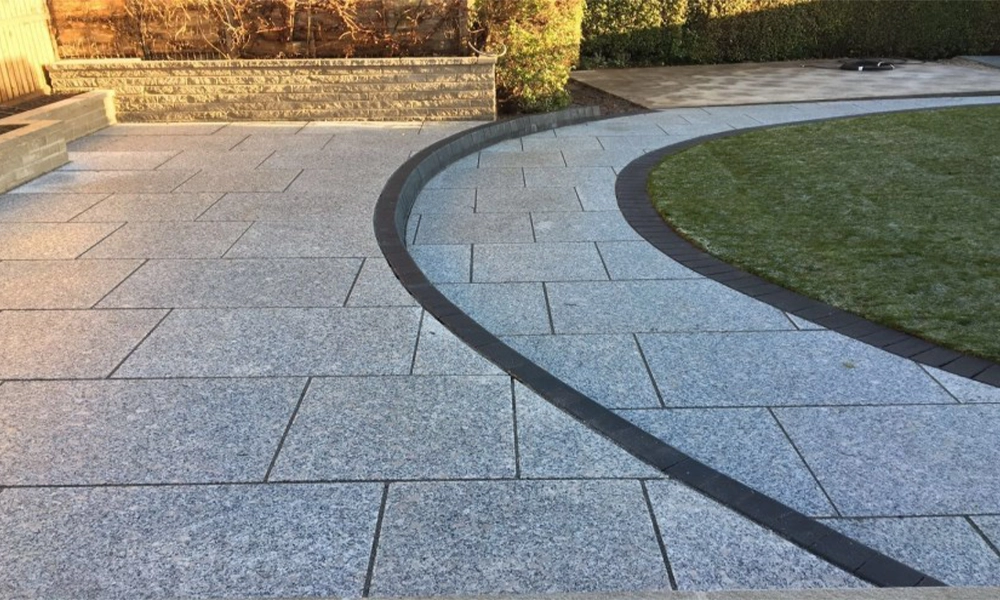
Granite Pavers: Pros and Cons at a Glance
| Factor | Advantages | Disadvantages |
|---|---|---|
| Durability | Suitable for high traffic and demanding outdoor applications when correctly specified. | Edges may chip and units may crack if the base, thickness or installation is unsuitable. |
| Appearance | Natural grain and colour variation create a distinctive surface. | Variation means the installed area may not look completely uniform. |
| Slip Performance | Textured finishes can provide grip for paths, pool areas and outdoor paving. | Polished or unsuitable finishes may be slippery when wet; performance varies by finish. |
| Maintenance | Routine cleaning can be straightforward with pH-neutral products. | Some granite benefits from sealing, and joints may require ongoing care. |
| Cost | Long service life can support strong long-term value. | Stone, transport, cutting, preparation and installation can cost more upfront. |
| Weight | Substantial units can provide a solid finished surface. | Heavy products are harder to transport, handle and install. |
Advantages of Granite Pavers
1. Durability for High-Traffic Outdoor Areas
One of granite paving’s most important advantages is durability. Correctly selected granite pavers can suit patios, entrances, garden paths, commercial pedestrian areas and other high-use surfaces. For vehicle applications, the paver thickness, unit size, foundation and laying system must be designed for the expected loads.
Granite is hard, but “hard” does not mean indestructible. Long-term performance depends on stone quality, fabrication, installation and site conditions. For major projects, request physical test data relevant to absorption, compressive strength, flexural strength and abrasion.
2. Natural Aesthetic Appeal
Every granite paver has natural grain and tonal variation. Light grey granite can brighten a landscape, mid-grey tones work with many architectural styles, and black or warm-coloured granite can create a stronger design statement. This natural variation is a benefit for buyers who want an authentic surface rather than a repeated manufactured pattern.
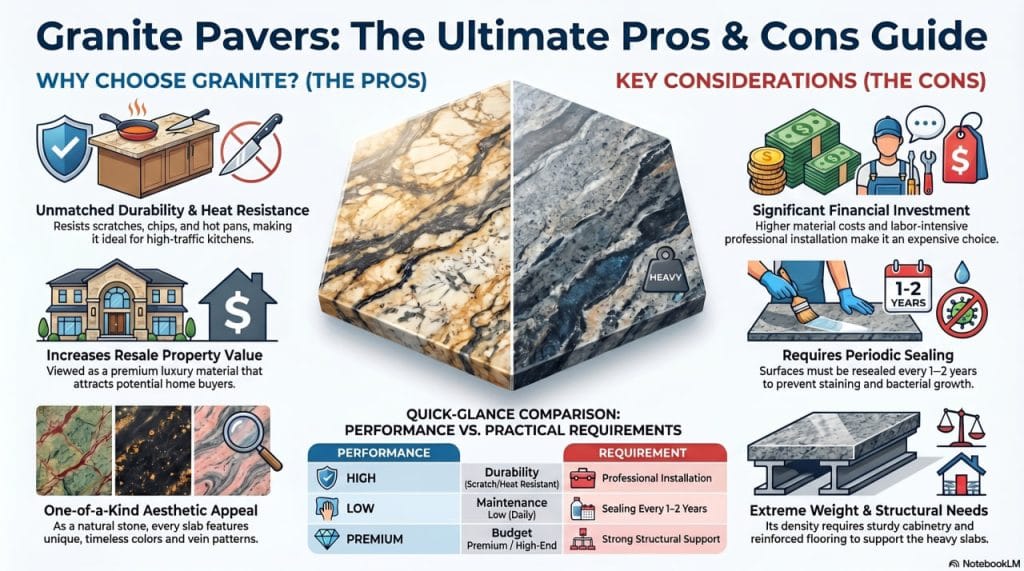
3. Finish Options for Different Applications
Granite can be flamed, sandblasted, honed or otherwise finished to change its texture and appearance. A textured finish is commonly considered for driveways, paths and wet outdoor locations, while smoother finishes may be used in sheltered or interior areas. Do not assume all granite has the same slip resistance: ask for information about the exact product and finish.
4. Suitable for Driveways, Patios and Pathways
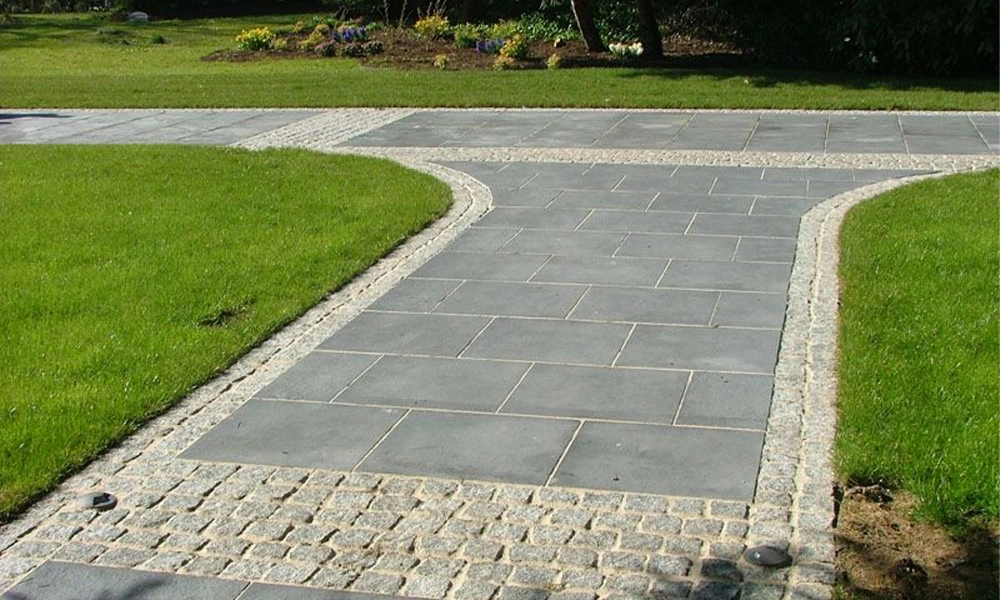
Granite pavers can be used across a landscape, allowing related colours to connect a driveway, front path, steps and entertaining area. Driveway designs benefit from adequate base preparation and edge restraint, while patio and path designs can use different paver sizes to control joint patterns and visual scale.
5. Straightforward Routine Cleaning
Routine care usually involves removing loose debris and washing with a pH-neutral stone cleaner, stone soap or mild detergent. The Natural Stone Institute recommends neutral cleaning products and explains that impregnating sealers improve stain resistance rather than making stone stain-proof.
6. Timeless Appearance and Long-Term Value
Granite works with contemporary, traditional and landscape-led designs. Its durability and natural appearance can make it a long-term investment where the product and installation suit the project. This does not guarantee a specific increase in property value, but high-quality, well-maintained paving can improve a home’s visual appeal and usability.
7. Heat and Weather Performance
Granite does not warp in the way some materials can, and suitable products can perform in exposed outdoor environments. Surface temperature, staining and weathering still vary with colour, finish, location and exposure. Dark pavers may become hotter in direct sun, so request samples and assess them in the intended setting.
Disadvantages of Granite Pavers
1. Higher Upfront Cost
Granite can cost more than concrete pavers and some porcelain options. The final price depends on colour, source, format, thickness, finish, quantity and edge profile. Delivery, site access, excavation, base preparation, cutting and professional installation also influence the installed cost.
Compare the complete project cost rather than the paver price alone. A durable product may provide good long-term value, but only when the preparation and installation are appropriate.
2. Heavy Weight and More Difficult Handling
Granite is dense and heavy. Larger or thicker pavers can require mechanical handling, additional labour and careful transport. This can increase installation time and cost, particularly where access is limited.
3. Product Selection and Installation Must Be Correct
An unsuitable thickness, weak base, poor drainage or inadequate edge restraint can lead to movement, unevenness or cracking. Granite driveway pavers must be selected differently from thin interior floor tiles. Always confirm whether a product is intended for pedestrian, poolside or vehicle use.
4. Sealing May Be Recommended
Some granite installations benefit from a compatible impregnating sealer, particularly where oil, food, organic debris or pool contaminants may cause staining. The need and resealing interval vary by stone, finish, use and sealer; a universal “every 1–2 years” rule is not accurate for every project.
5. Granite Can Still Stain, Chip or Crack
Granite is durable but not stain-proof or impact-proof. Oil, leaf tannins, rust sources and other contaminants may mark an unprotected or poorly maintained surface. Edges can chip and pavers can crack under significant impact or when unsupported by the base.
6. Wet Slip Performance Varies
Granite should not be described as automatically non-slip. Slip resistance depends on the finish, wear, contaminants, slope and maintenance. Pool surrounds, external steps and other wet areas should use a product and finish appropriate for those conditions.
7. Natural Variation Requires Layout Planning
Variation is part of granite’s appeal, but it can be a disadvantage when a perfectly uniform colour is expected. Open several crates and blend pavers during installation so natural shades and patterns are distributed across the area.
Are Granite Pavers Good for Driveways?
Yes, granite pavers can be a strong driveway choice because they combine durability with a premium natural appearance. The important qualification is that the product and installation must be designed for vehicles. Confirm paver thickness, dimensions, base depth, bedding, jointing and edge restraint with the supplier and installer.
If the main goal is a granite driveway, compare products in the granite pavers range and ask which available options are recommended for the expected vehicle traffic.
Are Granite Pavers Suitable for Patios and Pool Areas?
Granite patio pavers can provide a durable, elegant surface for outdoor entertaining. Around pools, focus on wet slip performance, edge comfort, drainage and compatibility with the pool environment. Textured pavers and purpose-made coping are generally more appropriate than polished granite for regularly wet areas.
Granite Pavers vs Porcelain Paving
| Factor | Granite Pavers | Porcelain Pavers |
|---|---|---|
| Appearance | Natural variation; every piece is different | More consistent manufactured pattern |
| Weight | Generally heavy and may be harder to handle | Depends on size and thickness, often more uniform |
| Maintenance | May benefit from sealing; use stone-safe cleaners | Generally low absorption and simple cleaning |
| Edges and Impact | Durable but can chip at vulnerable edges | Hard surface but edges can also chip |
| Best For | Authentic natural-stone paving and design variation | Consistency and low-maintenance projects |
How to Choose Granite Pavers
- Application: identify whether the project is a driveway, patio, pathway, step or pool surround.
- Thickness and format: choose units suitable for the expected load and installation method.
- Finish: consider wet and dry slip performance, appearance and cleaning.
- Technical data: for demanding projects, request relevant absorption, strength, abrasion and slip test results.
- Colour variation: inspect samples and plan to blend material during installation.
- Total cost: include delivery, preparation, cutting, waste, sealing and installation.
The Natural Stone Institute’s standards overview notes that natural stone may need testing for absorption, compressive strength, bending strength, abrasion and slip resistance depending on its application.
Explore Granite Pavers for Your Project
- Sesame White Granite — light neutral tones for bright modern landscapes.
- Sesame Grey Granite — versatile mid-grey granite for paving and driveways.
- Raven Black Granite — dark contrast for contemporary outdoor designs.
- Honey Jasper Granite — warm natural movement for distinctive pathways and features.
- Veincut Granite — linear character for design-led paving projects.
Ready to compare granite pavers? Browse the full granite collection or contact Hunter Pavers for product availability and a quote.
Conclusion: Are Granite Pavers Worth It?
Granite pavers are worth considering when durability, natural variation and a premium outdoor finish are priorities. They can work well for driveways, patios, paths and pool areas, but they are heavier and often more expensive than alternative paving materials. The best result depends on choosing the correct product, finish and thickness and investing in proper preparation and installation.
Frequently Asked Questions
What are the main advantages of granite pavers?
The main advantages are durability, natural appearance, multiple finish options and suitability for high-traffic outdoor areas when correctly specified and installed.
What are the disadvantages of granite paving?
Granite paving can have a higher upfront cost, substantial weight and more demanding installation. Some products benefit from sealing, and unsuitable finishes may be slippery when wet.
Are granite pavers suitable for driveways?
Yes, provided the paver thickness, dimensions, base and installation method are designed for the expected vehicle loads.
Do granite pavers need sealing?
Not every granite requires sealing. Some installations benefit from an impregnating sealer to improve stain resistance. Follow product-specific supplier and sealer guidance.
Are granite pavers slippery?
Slip performance depends on the finish and conditions. Textured finishes are generally more appropriate for wet outdoor areas than polished surfaces, but the exact product should be assessed.
How long do granite pavers last?
Granite paving can remain serviceable for many years when the product, base, drainage, installation and maintenance suit the application. There is no single lifespan that applies to every project.
Are granite pavers expensive?
Granite often has a higher upfront cost than concrete and some porcelain paving. Total cost varies with stone, thickness, finish, quantity, delivery, preparation and installation.
How should granite pavers be cleaned?
Remove debris regularly and use a pH-neutral stone cleaner, stone soap or mild detergent with water. Avoid unsuitable acidic or abrasive cleaners.