

Choosing the best pool coping material means balancing safety, durability, surface comfort, appearance, maintenance and total project cost. Travertine is a strong all-round choice for many residential pools, granite suits projects where maximum durability is important, marble creates a premium appearance, limestone and sandstone offer a natural look, while porcelain is popular for modern, low-maintenance pool areas.
The right option depends on your Sydney pool design, sun exposure, expected traffic and preferred level of maintenance. If you are still deciding between coping profiles or want to understand how the pool edge is constructed, start with our complete pool coping guide.
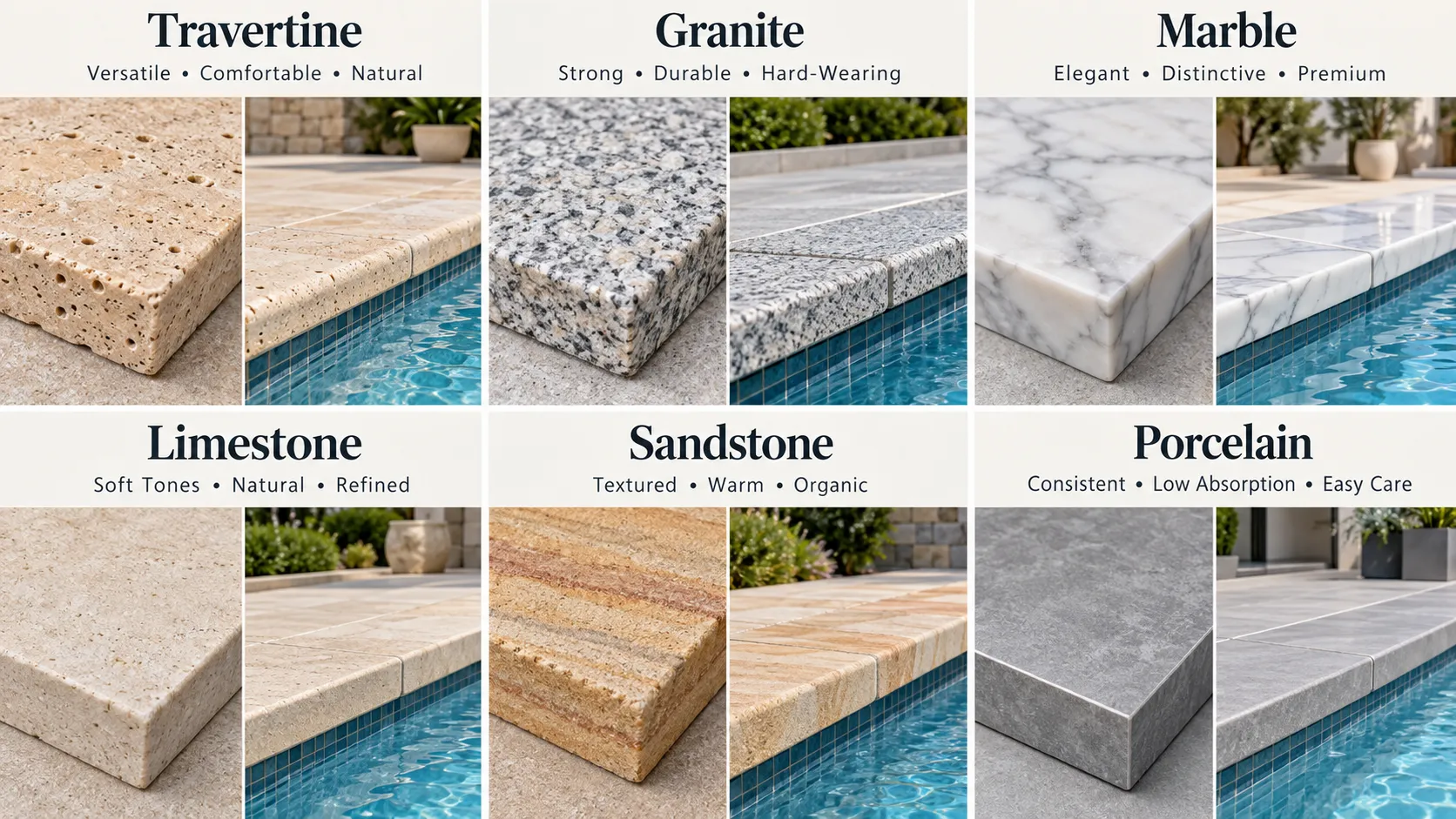
| Material | Main Advantage | Main Limitation | Best For |
|---|---|---|---|
| Travertine | Comfortable, natural and versatile | Usually requires sealing | Residential pools |
| Granite | Extremely durable | Can feel hotter in direct sun | High-traffic pool areas |
| Marble | Premium appearance | Requires careful maintenance | Luxury pool designs |
| Limestone | Soft, natural appearance | Porous and may need regular sealing | Landscape-focused pools |
| Sandstone | Textured natural character | Higher water absorption | Rustic and natural designs |
| Porcelain | Low maintenance and consistent | Installation requires suitable techniques | Modern pool areas |
Compare Current Pool Coping Options
View available colours, finishes, sizes and current prices across Hunter Pavers’ material ranges.
Travertine · Granite · Marble · Limestone · Sandstone · Porcelain
What Are Pool Coping Materials?
Pool coping materials are used to finish the upper edge of a swimming pool. The coping creates the transition between the pool shell and the surrounding deck or landscaping while providing a finished edge that people can safely grip, sit on or walk beside. Common swimming pool coping materials include natural stones such as travertine, granite, marble, limestone and sandstone, along with porcelain and other manufactured products. Each behaves differently around water, sunlight, changing temperatures and pool chemicals, which is why selection should form part of the overall pool coping design rather than being based on appearance alone.
What Makes a Good Pool Coping Material?
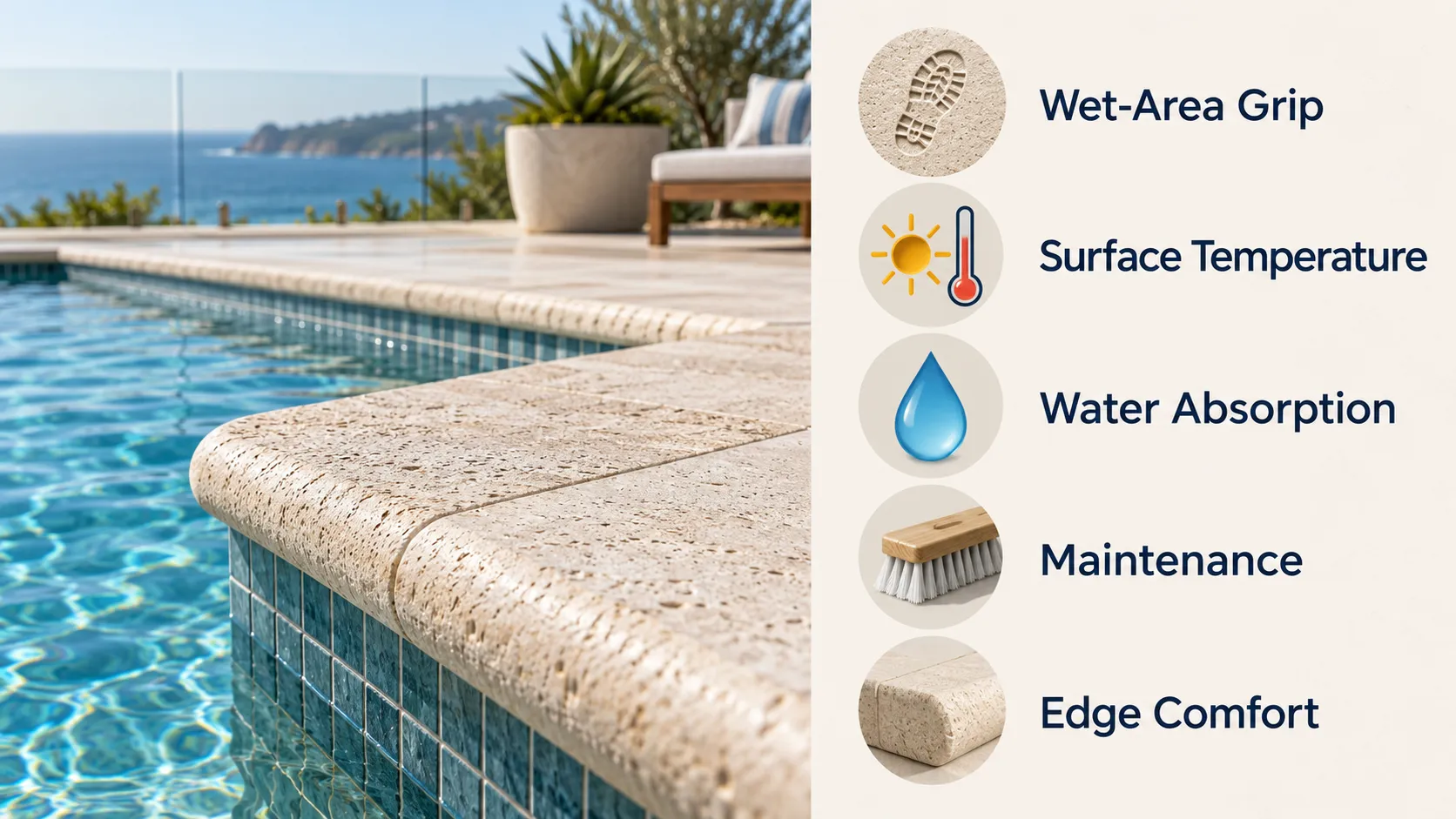
The best pool edge materials need to perform reliably in an environment exposed to water, heat, weather and frequent foot traffic. Appearance matters, but practical characteristics should normally come first.
Durability
Pool coping is continuously exposed to moisture, sunlight, cleaning products and changing temperatures. A suitable material should resist excessive wear, cracking, chipping and surface deterioration under the conditions expected around the pool. Dense stones such as granite are valued for their durability, while other natural stones can also provide excellent long-term performance when correctly selected, installed, sealed and maintained.
Slip Resistance
Traction is particularly important because coping regularly becomes wet. Smooth or highly polished surfaces can become slippery and are generally less suitable immediately beside a swimming pool. Textured, tumbled, flamed, brushed or other slip-resistant finishes can improve grip. The material itself matters, but the surface finish selected for the coping can be just as important.
“Sets out means of classifying pedestrian surface materials according to their frictional characteristics.”
This means buyers should request the supplier’s relevant slip-test information for the exact product and finish being considered. A material name alone does not establish how a finished coping surface will perform when wet.
Heat Resistance
Coping exposed to direct sunlight can become uncomfortable under bare feet or when someone sits on the pool edge. Surface temperature varies according to the material, colour, density, finish, climate and amount of direct sunlight. Light-coloured travertine is often selected for warm pool areas because it can remain relatively comfortable compared with some darker, denser surfaces. However, any material exposed to intense sunlight can become warm.
Maintenance Requirements
Natural stone may require periodic sealing to reduce water absorption and staining. The frequency depends on the stone, sealer, exposure conditions and how the pool area is used. Porcelain generally requires less routine maintenance because it has very low water absorption. As a useful technical benchmark, ISO 13006 classifies dry-pressed ceramic tiles in Group BIa at water absorption Eb ≤ 0.5%. Always confirm the specification of the exact porcelain product rather than assuming every product is identical.
Homeowners who want minimum ongoing care may therefore prefer porcelain, while buyers prioritising natural character may accept the additional maintenance associated with stone.
Best Pool Coping Materials Compared
There is no single best pool coping material for every project. Each option provides a different balance between appearance, durability, maintenance and performance.
| Material | Advantages | Disadvantages | Best For |
|---|---|---|---|
| Travertine | Natural appearance, relatively comfortable underfoot, good textured finishes | Porous and usually needs sealing | Residential and resort-style pools |
| Granite | Very durable, hard-wearing, premium finish | Heavy, harder to fabricate, some colours become warm | High-traffic and premium pools |
| Marble | Elegant appearance, distinctive veining, premium character | Maintenance-sensitive and finish selection is important | Luxury pools |
| Limestone | Soft colours, natural appearance, integrates well with landscaping | Porous and may stain without proper care | Traditional and natural landscapes |
| Sandstone | Textured character, natural variation, good visual warmth | Higher porosity and weathering considerations | Rustic and landscape-driven pools |
| Porcelain | Low water absorption, low maintenance, consistent appearance | Less natural variation and requires correct installation | Contemporary pools |
Travertine Pool Coping
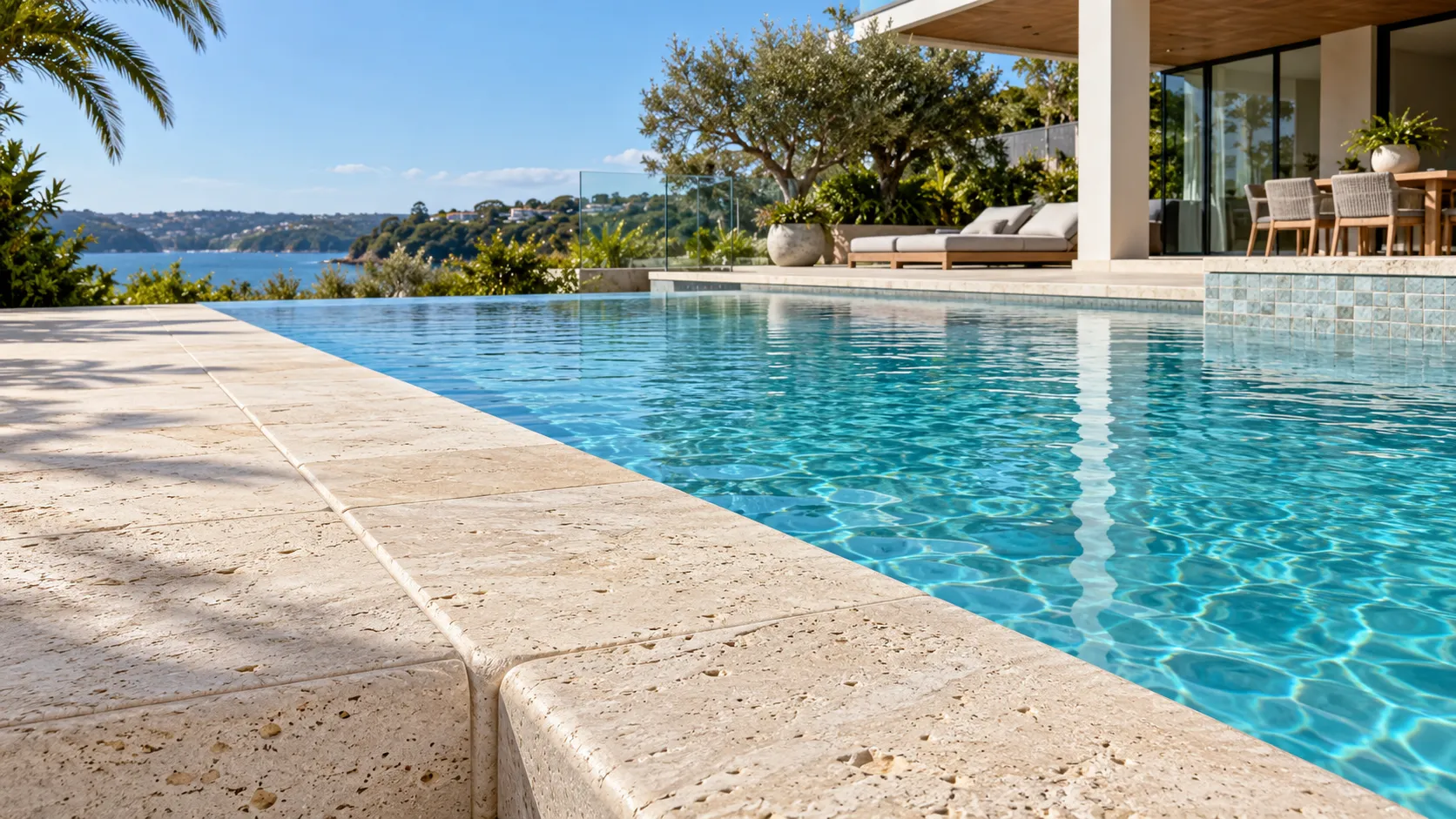
Travertine pool coping is one of the most versatile choices for residential swimming pools. Its warm natural colouring works with many landscaping styles, while suitable tumbled or textured finishes can provide useful traction around wet areas. Travertine is naturally porous, so sealing and appropriate cleaning are usually recommended. Quality and density can also vary between products, making stone selection important. For homeowners looking for a balance of appearance, comfort and practicality, travertine remains a strong all-round option.
For a light-coloured product with bullnose and drop-edge formats listed, review Ivory Travertine. You can also compare heat performance in our guide explaining whether travertine gets hot in the sun.
Granite Pool Coping
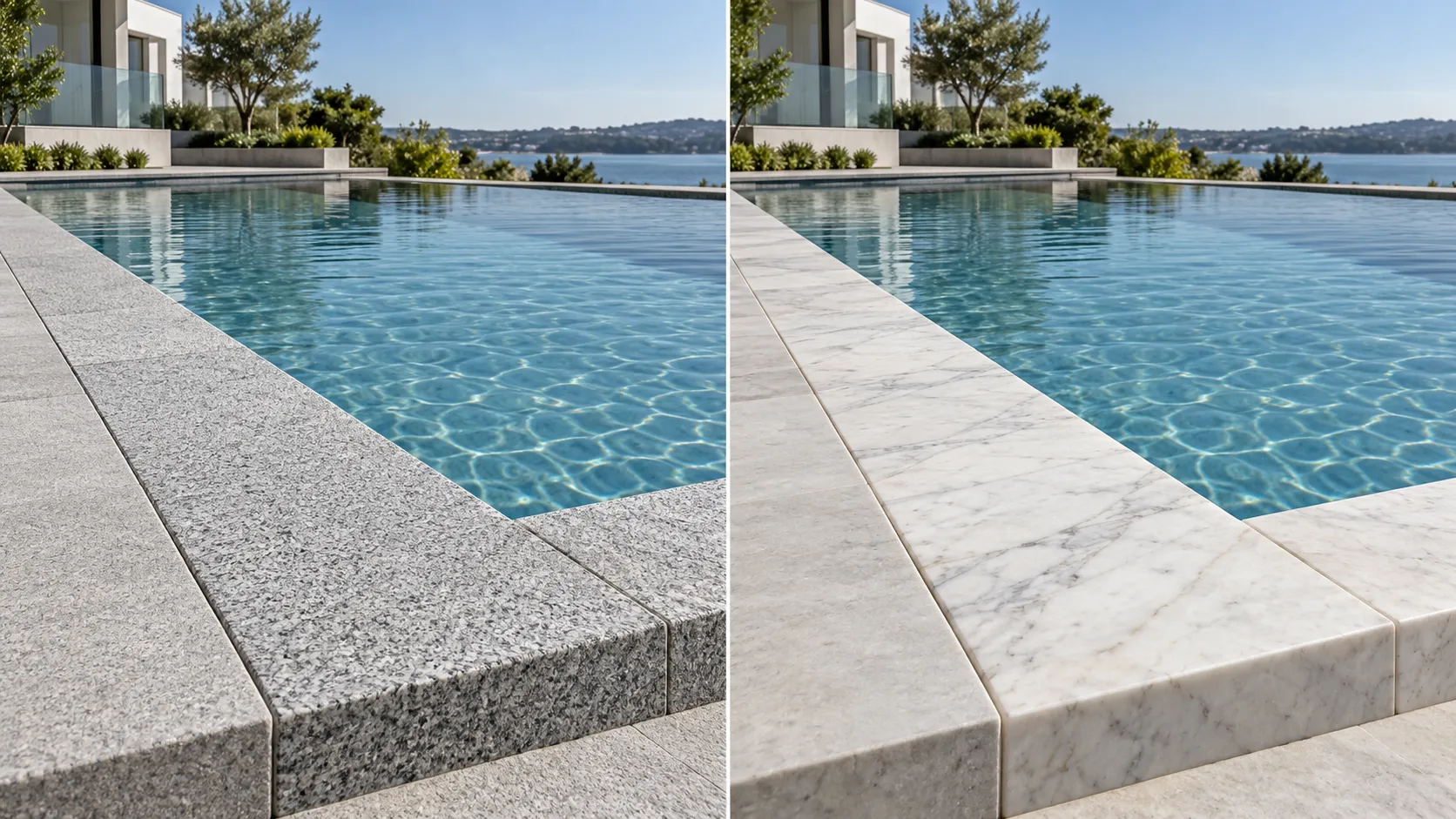
Granite pool coping is particularly suitable where durability and wear resistance are priorities. Granite is dense and hard, making it well suited to busy pool areas, commercial-style environments and projects where the coping needs to withstand significant use. Its density can make fabrication and installation more demanding than some softer stones, and darker varieties may become warm in strong sunlight. Using an appropriate textured finish is also important to improve slip resistance around wet areas.
Sesame White Granite lists flamed, bullnose and drop-edge options and gives buyers a lighter granite product to assess. For wider application guidance, see the common uses of granite stone.
Marble Pool Coping
Marble pool coping is primarily selected for its elegant appearance, distinctive natural veining and ability to create a high-end pool design. It works particularly well where the pool forms part of a premium architectural or landscape project. Marble requires more careful material and finish selection than some alternatives. Highly polished surfaces should generally be avoided beside wet pool areas, while appropriate sealing and cleaning can help protect the stone from staining and surface changes over time.
Explore the Pietra Gray Marble product page for available formats, then confirm that the selected finish and edge are suitable for the intended wet-area application.
Limestone Pool Coping
Limestone pool coping has a softer visual character than granite and is available in neutral colours that integrate naturally with gardens, rendered homes and traditional architecture. Its porosity varies between different limestone varieties. Proper sealing and maintenance may therefore be required to reduce staining and moisture absorption. Suitability should also be considered alongside the local climate, particularly in areas with significant temperature changes.
Buyers looking for a neutral beige option can inspect Gohera Limestone and confirm current coping sizes, finishes and stock with Hunter Pavers.
Sandstone Pool Coping
Sandstone pool coping is a good option for projects aiming for a relaxed, organic or rustic appearance. Its natural texture and colour variation can complement landscaped gardens and pool surrounds particularly well. However, sandstone is generally porous and can absorb more moisture than denser stones. Appropriate sealing, drainage and installation are therefore important. The specific type of sandstone should also be selected according to local climate and exposure conditions.
For a warm linear look, review Teakwood Sandstone. The comparison of limestone vs sandstone can also help clarify their visual and performance differences.
Porcelain Pool Coping
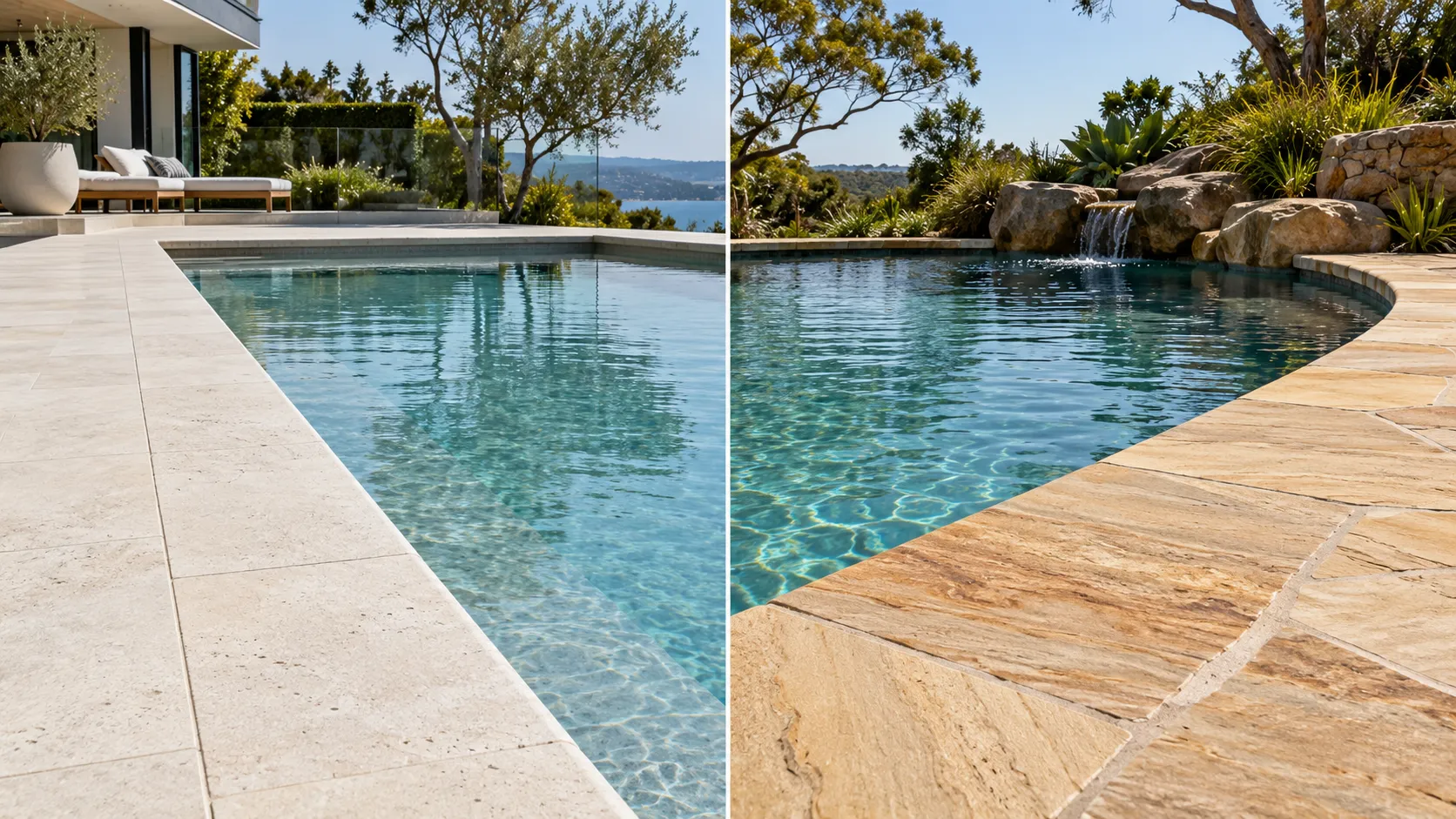
Porcelain pool coping provides a more engineered alternative to natural stone. It is available in a broad range of colours, textures and stone-look finishes, making it particularly useful for contemporary pools where consistency is important. Its low water absorption helps simplify maintenance and improves resistance to many common stains. Porcelain can be harder to cut and fabricate than some natural stones, however, so installation should be handled using suitable equipment, adhesives and edge details.
Review the stone-look Ardesia porcelain range and compare travertine vs porcelain before deciding between natural variation and manufactured consistency.
Shortlist Products Before You Order
Check product pages for current prices, available dimensions and finishes, then ask Hunter Pavers to confirm whether the selected format is appropriate for your pool edge and installation method.
Ivory Travertine · Sesame White Granite · Pietra Gray Marble · Gohera Limestone · Teakwood Sandstone · Ardesia Porcelain
Natural Stone vs Porcelain Pool Coping: Which Is Better?
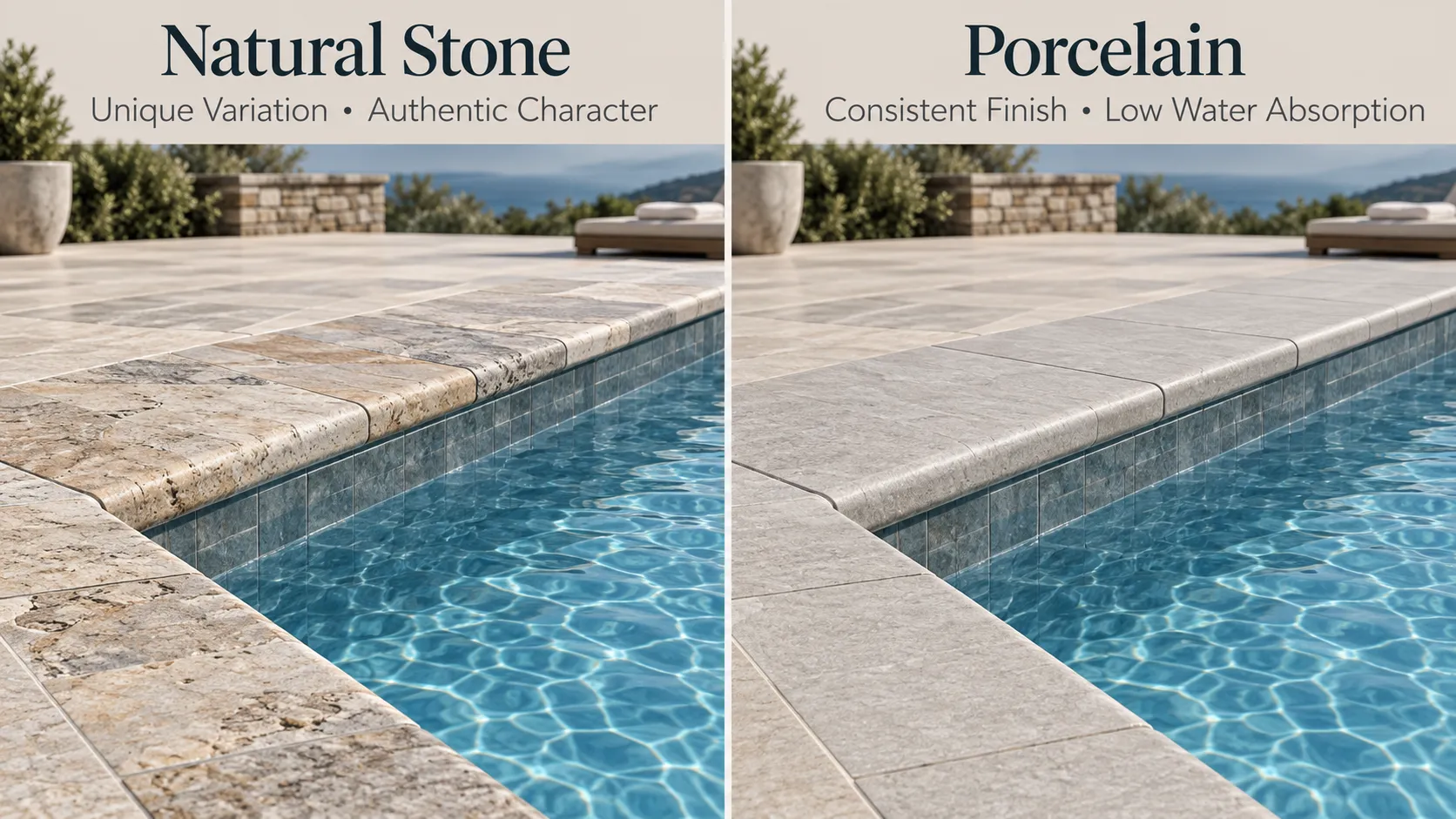
The choice between natural stone pool coping and porcelain generally comes down to whether you value natural variation or engineered consistency. Natural stone provides unique colour, texture and pattern variation, meaning no two pieces are completely identical. Porcelain provides greater consistency between pieces and normally requires less maintenance.
| Factor | Natural Stone | Porcelain |
|---|---|---|
| Appearance | Unique natural variation | Consistent, engineered appearance |
| Maintenance | Often requires sealing | Generally low maintenance |
| Water Absorption | Varies by stone | Very low |
| Design Options | Authentic natural character | Wide range of colours and stone effects |
| Installation | Depends on stone type | Requires appropriate cutting and installation techniques |
| Repairs | Individual pieces can usually be replaced | Matching older batches may sometimes be difficult |
| Best For | Natural and premium designs | Modern, low-maintenance projects |
Neither option is universally better. Natural stone is often preferred where authenticity and landscape integration matter most, while porcelain is attractive for homeowners wanting predictable performance and lower maintenance.
How to Choose the Right Pool Coping Material
Choosing between different pool coping options becomes easier when the project is assessed according to climate, design, budget and maintenance expectations rather than appearance alone.
Climate
In hot, exposed areas, lighter materials and finishes can help reduce heat absorption around the pool. Travertine and lighter limestone colours are commonly considered where surface comfort is important. In colder areas with freeze-thaw conditions, material density, water absorption and installation become especially important. Water entering porous materials can create problems when repeated freezing and thawing occur, so the specific stone should be evaluated for local conditions.
Pool Style
Contemporary pools often work well with porcelain, granite or clean-cut natural stone because these materials can create precise lines and consistent finishes. Travertine, limestone and sandstone suit natural or Mediterranean-inspired landscaping, while marble can be used to create a more luxurious architectural finish.
Budget
The cost of pool coping extends beyond the purchase price of the material. Cutting, edge profiles, installation, substrate preparation, sealing and future maintenance can all influence total project expenditure. A less expensive material may not always create the lowest long-term cost if it requires more complicated installation or frequent maintenance.
Maintenance Preference
If minimum ongoing maintenance is the priority, porcelain is one of the strongest options because of its low water absorption and straightforward cleaning requirements. Natural stone offers character that manufactured surfaces cannot fully reproduce, but homeowners should be comfortable with appropriate sealing, cleaning and periodic maintenance where required.
Best Pool Coping Material for Different Pool Projects
Different projects benefit from different materials. Rather than selecting one universal winner, match the coping to the priorities of the pool:
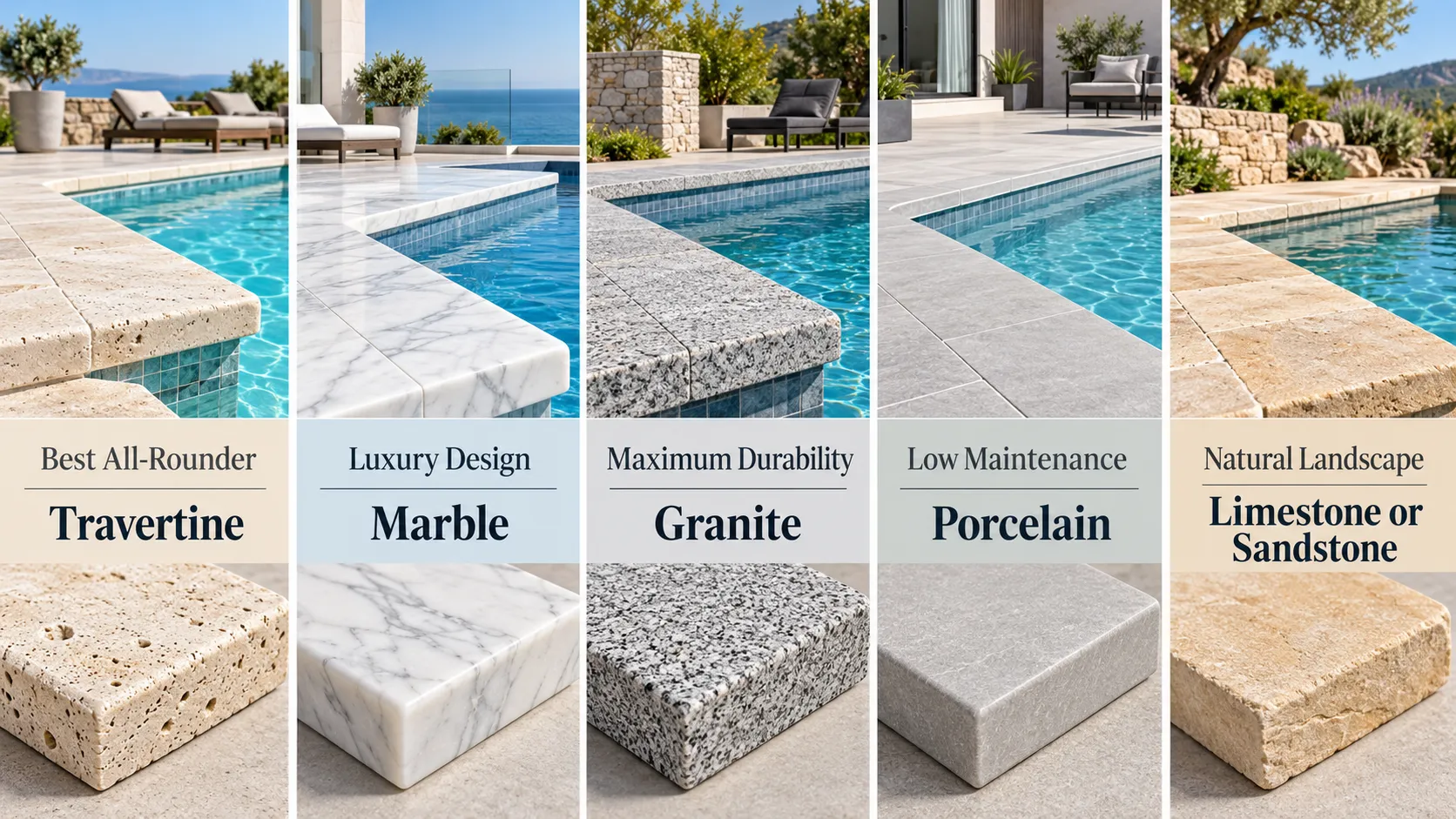
- Best overall choice — Travertine: A useful combination of natural appearance, lighter colour options, suitable textured finishes and broad design flexibility for residential pools.
- Best for luxury designs — Marble: Distinctive veining and premium visual character for architecture-led pool projects.
- Best for maximum durability — Granite: High hardness and wear resistance for busy residential or commercial-style environments.
- Best low-maintenance option — Porcelain: Low water absorption, consistent colours and straightforward routine cleaning.
- Best landscape-focused appearance — Limestone or Sandstone: Limestone creates a softer refined look, while sandstone provides stronger texture and rustic character.
Buyer Checklist Before Ordering Pool Coping
A strong product choice can still create problems if the wrong size, finish or quantity is ordered. Before purchasing pool coping, confirm:
- Pool perimeter and quantities: Measure the full perimeter and include a suitable allowance for cuts, breakage and future replacement pieces.
- Thickness and dimensions: Confirm that the coping size suits the pool beam, substrate and surrounding paving build-up.
- Edge profile: Choose bullnose, square edge, drop edge or another available profile according to comfort, appearance and construction details.
- Wet-area finish: Request relevant slip-test information for the exact finish rather than relying only on the material name.
- Colour and batch variation: Review samples in natural outdoor light and understand expected variation before ordering natural stone.
- Sealing and care: Ask whether the selected material should be sealed and which cleaning products are suitable.
- Installation requirements: Confirm compatible adhesives, joints, drainage falls, movement allowances and cutting requirements with the installer.
- Availability and delivery: Check current stock, lead time and delivery access before scheduling installation.
For profiles, installation stages and replacement considerations, refer back to the complete guide to pool coping.
Pool Coping Material Cost Considerations
Pool coping cost depends on more than the type of material selected. Stone grade, colour, thickness, piece size, edge profile and surface finish can all affect material and fabrication costs. Installation should also be included when comparing options. Curved pools, custom corners, unusual edge profiles and complex layouts generally require more cutting and labour than straightforward rectangular designs. Additional expenses can include substrate preparation, adhesives, grout, sealing and delivery. For this reason, comparing complete project costs is more useful than comparing the price of individual coping pieces. A low-maintenance material may cost more initially but require less ongoing care, while some natural stones may offer excellent long-term value when installed and maintained correctly.
Check Current Prices and Availability
Send Hunter Pavers your approximate pool perimeter, preferred material, edge profile and delivery location for project-specific product guidance. Current product pages show available price ranges, but the final requirement depends on size, finish, quantity and fabrication.
Frequently Asked Questions
What Is the Best Material for Pool Coping?
There is no universal best material. Travertine is a strong all-round option for many residential pools, granite is excellent for durability, marble suits luxury designs and porcelain works particularly well where low maintenance is important. Climate, design, surface finish, budget and maintenance expectations should all be considered before making a final decision.
Is Travertine Good for Pool Coping?
Yes. Travertine is widely suited to pool coping because it combines natural appearance with several practical finish options that can provide useful grip around wet areas. It can also feel relatively comfortable in sunny conditions, particularly in lighter colours. Because travertine is porous, appropriate sealing and maintenance should still be considered.
What Is the Most Durable Pool Coping Material?
Granite is one of the most durable natural stone options because of its density, hardness and strong resistance to wear. Porcelain is also highly resistant to moisture and staining, although the overall durability of any coping installation depends on product quality, substrate preparation and correct installation.
What Pool Coping Material Stays Coolest?
Light-coloured travertine is commonly chosen when surface comfort in direct sunlight is a priority and can remain relatively comfortable compared with darker, dense materials. However, surface temperature is influenced by colour, sunlight intensity, climate and finish, so no coping material remains completely cool under all conditions.
Is Natural Stone Better Than Porcelain for Pool Coping?
Natural stone is better when authentic texture, natural variation and landscape integration are priorities. Porcelain may be better when consistent appearance, low water absorption and reduced maintenance are more important. Both can perform well when the product and finish are appropriate for poolside use.
How Long Do Pool Coping Materials Last?
Quality pool coping can remain functional for many years when correctly installed and maintained. Actual service life depends on the material, installation quality, climate, pool chemistry, usage and maintenance. Natural stone may require periodic sealing and occasional repairs, while porcelain generally requires less ongoing surface maintenance.
Should Pool Coping Match the Surrounding Pavers?
Pool coping does not need to be identical to the surrounding pavers. Matching materials can create a seamless appearance, while a contrasting colour or edge profile can define the pool perimeter. The two surfaces should still coordinate in thickness, finish, installation height and wet-area performance.
What Should I Ask Before Buying Pool Coping?
Ask about current stock, dimensions, thickness, edge profiles, wet-area slip-test information, expected colour variation, sealing requirements, compatible installation products and delivery. Providing the pool perimeter and construction details helps the supplier recommend more relevant options.
Choose Pool Coping Materials That Suit Your Project
The right pool coping materials should complement the pool visually while providing the durability, grip, comfort and maintenance level your project requires. Travertine, granite, marble, limestone, sandstone and porcelain can all be excellent choices when matched to suitable applications.
Find the Best Pool Coping Material for Your Project
Compare available products online, then contact Hunter Pavers for help checking material, colour, finish, dimensions, edge profile and current availability for your Sydney pool project.