

Travertine flooring has quietly maintained its place as one of the most recognizable natural stone surfaces in residential design. Unlike trend-driven materials, it appeals to homeowners who value warmth, texture, and longevity over fleeting styles. Still, choosing travertine flooring is not just about aesthetics—it’s about understanding how the stone behaves in real homes, under real conditions
This guide walks you through the essential considerations, benefits, limitations, and practical use cases so you can decide with confidence whether travertine flooring is right for your space.
Travertine Flooring at a Glance: Is This Stone Right for Your Home?
Travertine is a form of limestone created by mineral deposits from natural springs. Its signature pores, soft veining, and earthy tones give it a character that manufactured materials struggle to replicate.
Where travertine flooring performs best (and where it quietly disappoints)
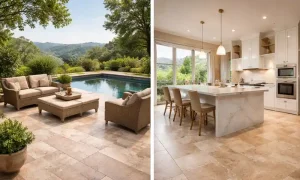
Travertine flooring performs best in spaces where visual continuity, moderate traffic, and controlled maintenance intersect. Open living areas, primary bathrooms, and transitional indoor-outdoor zones benefit most from its organic appearance.
However, it can disappoint in homes where maintenance expectations are unrealistic. Households that rely on harsh cleaners, rarely reseal surfaces, or expect a “set it and forget it” floor may find travertine demanding.
What “porous stone” really means for daily life, not just specs
Is Travertine Porous! Porosity does not mean fragility, but it does mean responsiveness. Liquids can absorb if the surface is not sealed properly. Acids—such as citrus juice or vinegar—can etch the stone rather than stain it, altering the surface texture instead of the color.
The finish factor: how surface texture changes everything
The finish applied to travertine flooring dramatically affects traction, sheen, and maintenance. A polished surface reflects light and feels elegant, while honed or tumbled finishes reduce slip risk and hide wear more effectively.
- Travertine flooring suits homeowners who value natural materials and are comfortable with light routine maintenance
- It rewards thoughtful placement, sealing discipline, and realistic expectations
- The right finish choice often matters more than the travertine stone color itself
- When matched to lifestyle, travertine flooring ages gracefully rather than wearing out
Travertine Flooring Pros and Cons
Understanding travertine flooring requires balancing emotional appeal with practical realities.
Why people love travertine flooring
Travertine flooring offers visual warmth that feels grounded rather than flashy. Its natural variation prevents spaces from feeling sterile, and it pairs effortlessly with wood, plaster, metal, and neutral color palettes. Many homeowners also appreciate that travertine never looks “printed” or artificial.
The downsides of travertine flooring
Travertine is not maintenance-free. Sealing must be repeated, cleaning requires restraint, and surface damage shows differently than on synthetic floors. Chips and etches are possible, especially in high-traffic zones.
The real-life durability story
Durability depends less on hardness and more on care. Travertine flooring handles foot traffic well, but grit, neglect, and poor installation shorten its lifespan faster than the stone itself ever would.
Travertine Flooring Colors and Styles That Sell Homes
Travertine flooring colors and styles play a powerful role in shaping how a home feels the moment someone walks inside. Buyers are often drawn to materials that look natural, timeless, and easy to imagine in their own lives—and this is where travertine truly shines. Soft, neutral tones such as ivory, beige, light walnut, and warm silver create a calm backdrop that works with almost any interior style, from modern minimal to classic Mediterranean.
What makes travertine flooring especially appealing is its natural variation. Subtle veins and gentle color shifts add depth without overwhelming the space, helping rooms feel warm rather than staged. Homes with lighter travertine floors often appear brighter and more spacious, while mid-tone shades add a sense of comfort and balance that many buyers find reassuring.
Style choices matter just as much as color. Large-format tiles with a honed or lightly textured finish feel contemporary and clean, while tumbled or chiseled edges add character and a relaxed, lived-in charm. Simple layouts tend to photograph better and age more gracefully, which is a key factor for resale. When chosen thoughtfully, travertine flooring doesn’t just decorate a home—it quietly increases its desirability and perceived value.
Best Places to Use Travertine Flooring
Bathrooms travertine flooring
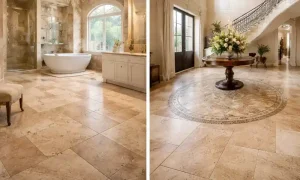
Bathrooms benefit from honed or tumbled finishes, such as Silver Travertine for Bathrooms, that improve traction. Steam and moisture require consistent sealing, but the spa-like aesthetic of Silver Travertine is difficult to replicate with other materials.
Kitchens travertine flooring
Travertine works in kitchens when homeowners accept that spills must be wiped promptly. Oil and acidic foods demand awareness, not fear—habits matter more than perfection.
Entryways and hallways
Mat placement and grit control are critical. A matte finish minimizes visible wear and keeps the surface looking intentional rather than distressed.
Outdoor patios
Outdoor travertine flooring performs well in warm climates. Thickness, slip resistance, and drainage planning are more important than color outdoors.
Travertine Flooring vs Porcelain Lookalike Tile
- Visual realism vs natural character: Porcelain lookalikes offer consistency; travertine flooring offers authenticity. The difference is subtle at first glance but obvious over time.
- Durability and maintenance: Porcelain resists stains and acids effortlessly. Travertine requires care but develops character rather than uniform wear.
- Cost comparison: Upfront costs may appear similar, but travertine demands more long-term involvement, while porcelain trades character for convenience.
Sealing Travertine Flooring
Sealing travertine flooring is one of the most important steps in protecting its natural beauty and extending its lifespan. Because travertine is a porous stone, it can absorb moisture, oils, and everyday spills if left unsealed, leading to stains and surface damage over time. A proper sealer acts as an invisible barrier, slowing absorption and giving homeowners valuable time to clean up messes before they leave a mark.
Sealing does not change the character of travertine flooring or make it maintenance-free. Instead, it supports the stone by preserving its texture and color while allowing it to breathe naturally. High-traffic areas such as kitchens, entryways, and bathrooms benefit the most from regular sealing, as constant exposure to water and foot traffic gradually wears down the protective layer.
Most homes need resealing every one to three years, depending on use and cleaning habits. A simple water-drop test can reveal when it’s time: if water darkens the surface instead of beading, the seal is no longer effective. When applied correctly, sealing keeps travertine flooring looking rich, clean, and well cared for—without taking away the organic charm that makes this stone so appealing.
Installing Travertine Flooring: What to Expect (DIY vs Pro)
Installing travertine flooring is a process where preparation matters just as much as the stone itself. Because travertine is heavier and less forgiving than ceramic or porcelain, even small mistakes can affect the final look and long-term durability. Some experienced homeowners choose a DIY approach to save on labor, but many rely on professional installers to ensure accuracy, especially in large or high-visibility spaces. Understanding what the installation involves helps set realistic expectations, regardless of who does the work.
Subfloor requirements
A strong, flat subfloor is essential for travertine flooring. Natural stone requires more rigidity than standard tile, as movement or flexing can lead to cracks over time. The surface must be clean, level, and structurally sound before installation begins. In many cases, additional underlayment or reinforcement is needed to meet stone installation standards and provide long-term stability.
Layout planning
Thoughtful layout planning prevents a patchy or unbalanced appearance. Travertine tiles often vary slightly in tone and pattern, so dry-laying tiles before installation allows for better blending and visual flow. Planning also includes deciding tile direction, joint spacing, and transitions to adjacent flooring, all of which influence how cohesive the final floor feels.
The make-or-break steps
Successful installation depends on precise mortar coverage, consistent leveling, and careful handling of each tile. Uneven setting, rushed spacing, or inadequate bonding can cause lippage and hollow spots that are difficult to fix later. Allowing proper curing time before grouting and sealing is equally critical to protect the stone.
Grout selection
Grout choice affects both appearance and maintenance. Neutral grout colors typically complement travertine flooring best and help disguise natural variation. Slightly wider joints accommodate subtle size differences between tiles, while high-quality grout reduces staining and enhances the floor’s overall durability.