


HunterPavers offers a range of high-quality travertine stone in various colors. Known for its natural texture and durability, travertine is a versatile material often used in both indoor and outdoor projects. Whether you’re working on a traditional or modern design, you’ll find that travertine can add a timeless, understated elegance to your space. Hunter provides this stone in different shades to suit a variety of design preferences.
Travertine is a genuine natural stone valued for its warm colour variation, distinctive texture and versatility across indoor and outdoor projects. Before choosing travertine tiles and pavers, consider the finish, porosity, sealing requirements and where the stone will be installed.
What Is Travertine Stone?
Travertine is a type of natural sedimentary limestone, formed when mineral-rich water deposits calcium carbonate over time. It is commonly associated with springs, caves and geothermal environments. As the water changes and minerals settle, layers of stone develop with the pores, movement and colour variation that make travertine recognisable.
Because it is quarried from natural deposits rather than manufactured in a factory, every travertine tile or paver has its own pattern and tonal variation. It can be used for flooring, wall cladding, patios, pathways and selected pool-surround applications when the correct product, finish and installation system are chosen.
Is Travertine a Natural Stone?
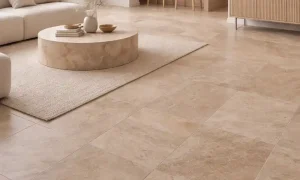
Yes. Travertine is 100% natural stone, not a manufactured tile. It is a calcium-carbonate stone created by geological processes over thousands of years. Its natural holes, veins and colour shifts are part of its formation, rather than a printed or repeated design.
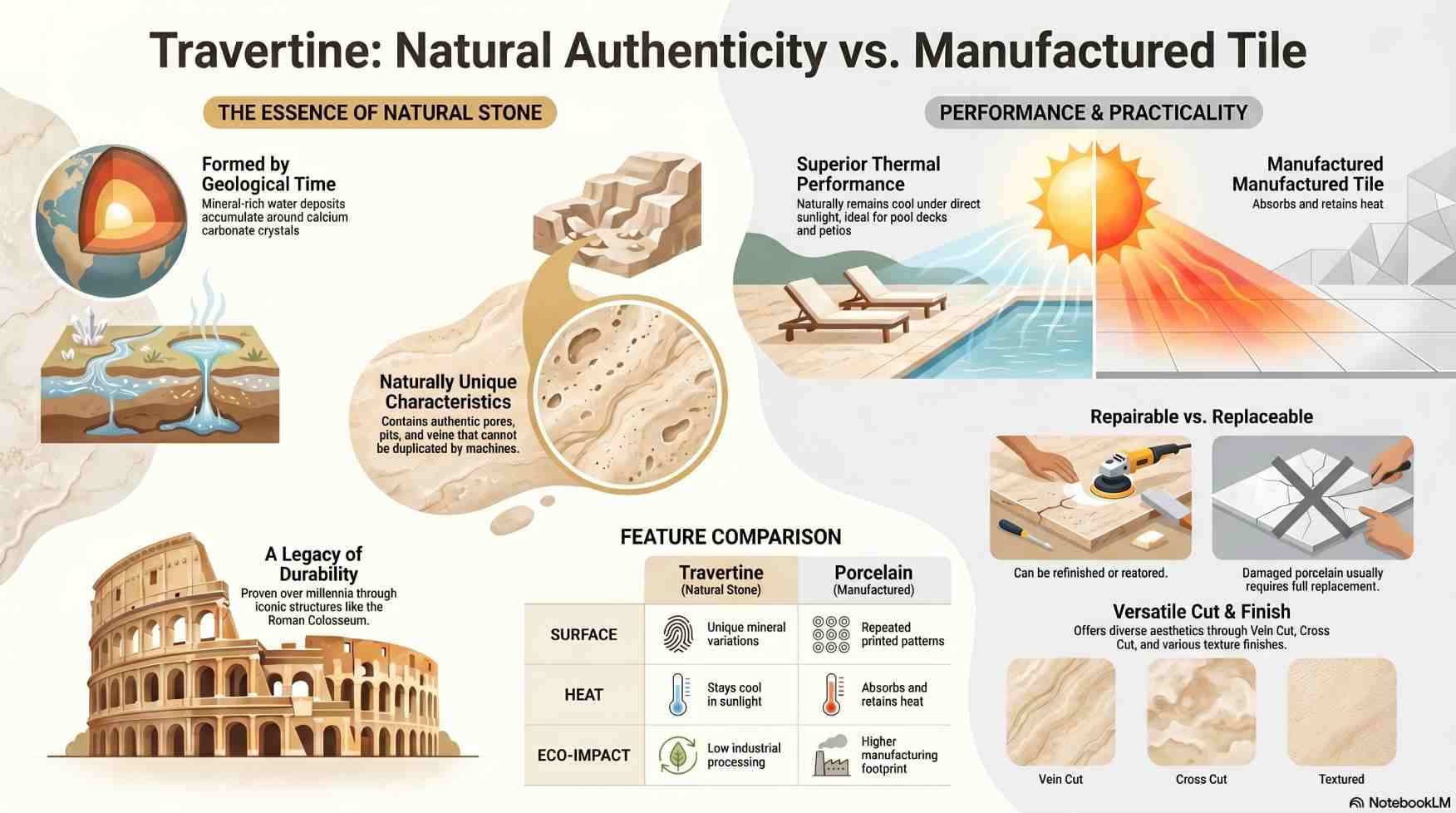
This makes travertine different from porcelain and other factory-made surfaces. Manufactured materials can offer a uniform appearance and lower routine maintenance, while travertine offers natural variation, a tactile surface and a timeless architectural character.
Travertine vs Manufactured Tile or Porcelain
| Feature | Travertine | Manufactured Tile / Porcelain |
|---|---|---|
| Material type | Natural stone formed through geological processes | Factory-made material |
| Appearance | Natural pores, veins and variation from piece to piece | More uniform and repeated surface patterns |
| Maintenance | Needs suitable care and, where appropriate, sealing | Generally lower maintenance |
| Surface selection | Finish should match the location and intended use | Texture and coating influence performance |
| Typical appeal | Warm, organic and timeless natural-stone character | Uniform contemporary appearance |
For a fuller material-by-material comparison, see Travertine vs Porcelain.
Why Does Travertine Have Holes and Pits?
Travertine’s pores and cavities are a natural result of its formation. Gas bubbles and organic material can leave voids as calcium-carbonate deposits build up. Depending on the product and finish, those pores may remain visible, be filled, or be finished differently for a particular look and application.
Its porous nature is not a defect, but it does mean the stone needs appropriate product selection, installation and care. Learn more in our guide: Is Travertine Porous?
Travertine Colours, Cuts and Natural Variation
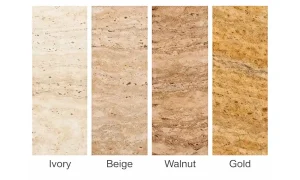
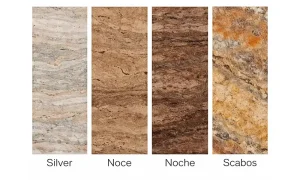
Travertine can range from ivory, cream and beige to walnut, gold, silver and warmer rust-toned variations. Minerals within the stone influence its colour and movement, so samples are the best way to assess the expected variation for a project.
Vein Cut vs Cross Cut Travertine
Vein-cut travertine is cut to reveal linear, directional veins and suits a more contemporary look. Cross-cut travertine exposes softer, cloud-like patterns for a more organic and traditional appearance. Neither is inherently better; the right option depends on the design direction of the space.
Travertine Finishes: Which One Suits Your Project?
| Finish | Appearance | Common considerations |
|---|---|---|
| Honed | Smooth, matte to low-sheen | Often selected for refined indoor flooring and architectural spaces |
| Tumbled | Textured, softened edges and aged character | Popular for outdoor and traditional-style designs |
| Brushed | Tactile, naturally textured surface | Suited to projects seeking a rustic or weathered appearance |
| Polished | Smooth and reflective | Best assessed carefully for the intended location, especially wet areas |
For actual finish, size and colour availability, browse the Hunter Pavers Travertine collection.
Where Can Travertine Be Used?
Travertine is used in a wide range of residential, landscaping and commercial settings. The appropriate product thickness, finish, base preparation and installation method depend on the project.
Common Indoor Uses
- Flooring and feature areas
- Wall cladding and architectural details
- Bathrooms and selected wet-area applications with a suitable finish and installation system
Common Outdoor Uses
- Patios, terraces and outdoor entertaining spaces
- Courtyards, pathways and landscape features
- Pool surrounds when the selected product is suitable for wet outdoor conditions
Read our dedicated guides on travertine flooring, using travertine outdoors and travertine for pool decks before making a final selection.
Travertine Compared with Other Natural Stones
Travertine, marble and limestone are all calcium-carbonate stones, but their formation and visual character differ. Travertine is known for its open pores and natural movement; limestone is often more even in appearance; marble is generally denser and more crystalline. Granite is a denser igneous stone with different performance and visual qualities.
Benefits and Limitations of Travertine
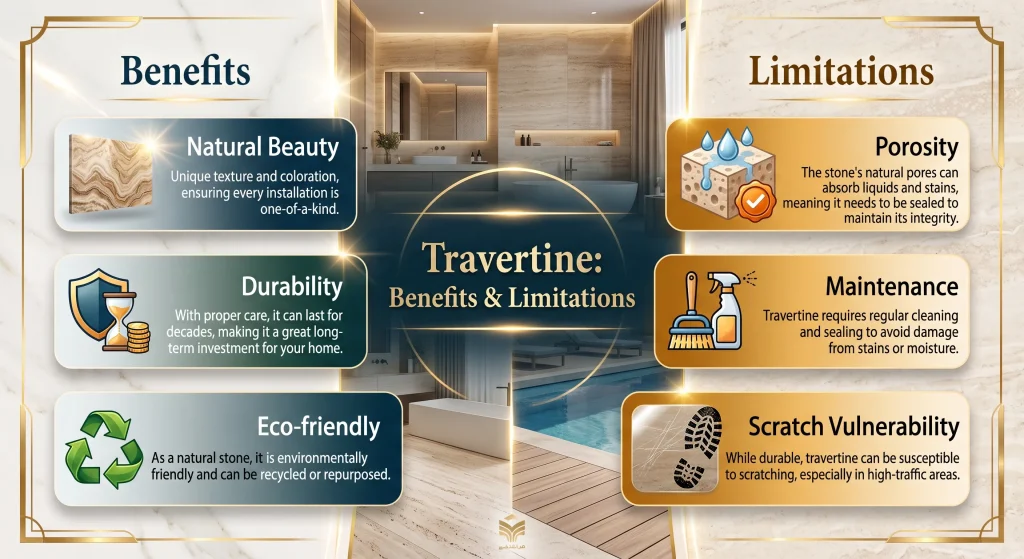
Benefits
- Natural beauty: Every installation has individual colour, texture and movement.
- Design versatility: Available in a variety of colours, cuts, sizes and finishes.
- Long-term material: With a suitable specification, installation and care plan, natural stone can provide lasting architectural value.
Considerations
- Porosity: Travertine can absorb moisture and spills if it is not protected appropriately.
- Maintenance: It should be cleaned with pH-neutral products and protected from acidic cleaners.
- Natural variation: Colour and texture differences are expected and should be reviewed through samples before ordering.
How to Choose Travertine Stone
- Match the finish to the location. Consider texture, visual preference and exposure to moisture.
- Confirm thickness and format. Tiles and pavers are specified differently according to base, installation method and expected traffic.
- Choose filled or unfilled material. This affects appearance, texture and maintenance.
- Review samples. Natural colour and movement can vary between pieces and batches.
- Plan for care. Choose suitable sealing and cleaning products for the selected finish and application.
How Much Does Travertine Cost?
Travertine cost varies with grade, colour, finish, size, thickness, source, quantity and installation requirements. Rare colours, specialised finishes and thicker paving formats can affect the final budget. For a more detailed cost breakdown, read Is Travertine Expensive? Costs, Benefits and Alternatives.
Travertine Care and Maintenance
- Use pH-neutral products formulated for natural stone.
- Do not use vinegar, lemon-based cleaners or other acidic products, which can etch calcium-carbonate stone.
- Clean spills promptly to reduce the chance of staining.
- Follow appropriate sealing guidance for the specific product and application.
For more detailed care guidance, read Does Travertine Stain? and Can You Pressure Wash Travertine?.
Explore Travertine Tiles and Pavers
Compare the available colours, finishes, sizes and product specifications before selecting stone for your project. Hunter Pavers offers a range of travertine options for indoor, outdoor and landscaping applications.
Shop Travertine Tiles & Pavers | Contact Hunter Pavers
Frequently Asked Questions About Travertine Stone
What is travertine stone made of?
Travertine is a natural sedimentary limestone composed primarily of calcium carbonate. Other minerals can influence its colour, veining and overall appearance.
Is travertine a natural stone?
Yes. Travertine forms naturally through mineral deposition. Its pores, veins and colour variation are natural characteristics of the stone.
Can travertine be used outdoors?
Travertine is commonly used for patios, courtyards, pathways and selected pool surrounds. Choose the correct product, thickness, finish and installation system for the specific location.
Does travertine need to be sealed?
Because travertine is naturally porous, sealing is commonly used to reduce moisture and stain absorption. The right schedule depends on the product, finish, environment and sealer used.
What is the difference between honed and tumbled travertine?
Honed travertine has a smoother, matte appearance. Tumbled travertine has a more textured, weathered look with softened edges.
How do you clean travertine?
Use pH-neutral natural-stone cleaner and avoid acidic products such as vinegar and lemon-based cleaners, which can etch the surface.