

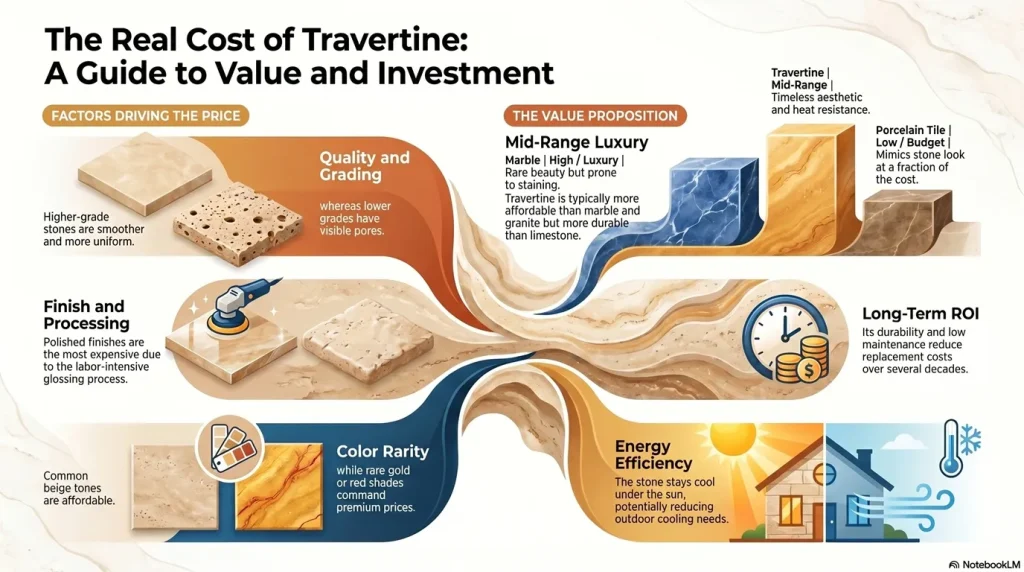
Is travertine expensive? While travertine is a premium natural stone, it is often a more budget-friendly alternative to luxury materials like marble and granite. The cost typically falls in the mid-range of natural stones, influenced by factors such as its grade, finish (honed vs. polished), and rarity of color. Although the initial investment—including professional installation and sealing—might be higher than synthetic options like concrete or porcelain, travertine’s exceptional durability, low maintenance, and energy-efficient cooling properties make it a highly cost-effective choice and a valuable long-term investment for any home.
Is travertine expensive? It is usually a mid-range natural stone choice, but the answer depends on the specific tile or paver and the total installed cost. Basic concrete paving may cost less upfront; selected marble or complex custom stonework may cost more. Travertine prices change with grade, size, thickness, finish, supply and installation. For a useful comparison, request quotes for the same area and scope rather than comparing two product labels.
If you are choosing travertine for a patio, pool surround or indoor floor in Australia, this guide shows what to include in a quote, how travertine compares with marble and other options, and where a cheaper material may make better sense.
Travertine Cost at a Glance
| Question | Practical answer |
|---|---|
| Is travertine a budget material? | Generally no. It is a natural stone with product, installation and care costs to allow for. |
| Is travertine cheaper than marble? | Often for comparable standard products, but premium travertine can cost more than an entry-level marble selection. Compare actual quotes. |
| What raises the final price most? | Stone selection, thickness and format; substrate preparation, site access, cutting, drainage and labour. |
| What is the best price comparison? | Use the same square metres, installation method, edge details, waste allowance, delivery and tax treatment. |
| Can travertine be worth the cost? | Yes, if its natural appearance suits your project and the planned installation and maintenance fit your budget. |
How Much Does Travertine Cost in Australia?
There is no single price for all travertine tiles and pavers. As one published product example, Hunter Pavers lists Premium Travertine with a product-specific guide of $36–$110 per m², depending on the selected format and finish. Treat that as an example from one listing, not a guaranteed price for all travertine or a complete installed quote. Check the current product variation, unit, availability and quote before ordering.
Product pages may show a broad price range because tiles, thick outdoor pavers, French pattern packs and coping pieces have different sizes or sales units. Ask the supplier to confirm the price per square metre for your exact selection, plus freight and any required edge pieces. Pool coping may be quoted by piece or linear metre rather than by square metre.
Calculate the full project cost
Estimated project total = stone for the measured area + an agreed allowance for cuts and breakage + delivery + substrate and drainage work + installation materials and labour + sealing or finishing, if required. The waste allowance depends on the layout, formats and number of cuts; ask your installer to set it for the job rather than using a universal percentage.
For example, a 30 m² patio usually needs more than 30 m² of stone once cuts are allowed for. A quote that covers the pavers only cannot be compared fairly with one that includes excavation, base preparation, laying, grouting, drainage and sealing.
Why Is Travertine Expensive in Some Projects?
Travertine is a quarried and processed natural limestone. Differences in stone selection, fabrication and project requirements explain why two travertine quotes may be far apart.
| Cost factor | What changes the quote | What to ask |
|---|---|---|
| Stone selection | Colour consistency, vein pattern, grading and availability vary by batch. | Can I see samples or the actual batch, and what variation is expected? |
| Tile vs paver | Thickness and intended application affect material volume and installation. | Is this an indoor tile or an outdoor paver suited to my base? |
| Finish and format | Honed, tumbled, filled, unfilled, large-format and patterned selections involve different processing or laying requirements. | What is the exact finish, size and unit price? |
| Edges and cuts | Steps, pool coping, corners, curves and narrow strips add fabrication and labour. | Are edge profiles, cuts and matching coping included? |
| Site preparation | Removing old paving, fixing falls, waterproofing or building a suitable base can materially change installed cost. | What substrate, drainage and preparation are included? |
| Delivery and access | Heavy materials, distance and restricted site access may raise handling costs. | Are freight, unloading and site access included? |
A polished finish is not automatically the most expensive option, and a tumbled paver is not automatically cheaper. Prices depend on the specific product and batch. Choose a finish for its intended location first, particularly where wet-area traction matters.
Travertine vs Marble Cost
For many ordinary product selections, travertine costs less than marble, but there is no fixed price gap. A premium travertine paver with specialist pool edges can cost more as a finished project than a basic marble tile supplied for an uncomplicated indoor floor. Marble prices also vary widely by variety, grade, thickness and finish.
| Compare | Travertine | Marble |
|---|---|---|
| Material price | Frequently a mid-range natural stone; premium varieties cost more. | Often positioned higher, especially for selected decorative varieties. |
| Best budget check | Match tile/paver thickness, finish and square metre coverage. | Match variety, finish, format and wastage to the same project. |
| Installation | Base, cuts, drainage and coping detail can dominate an outdoor quote. | Handling, finish and custom fabrication can increase costs. |
| Ongoing care | Plan for appropriate sealing and pH-neutral cleaning. | Also needs suitable stone care; polished surfaces can show etching. |
Both are calcium-based stones and can be affected by acidic products. For appearance and application differences, see travertine vs marble. If the question is specifically a pool edge, compare profile and installation as well as the stone price.
Is Travertine Expensive for Outdoor Paving?
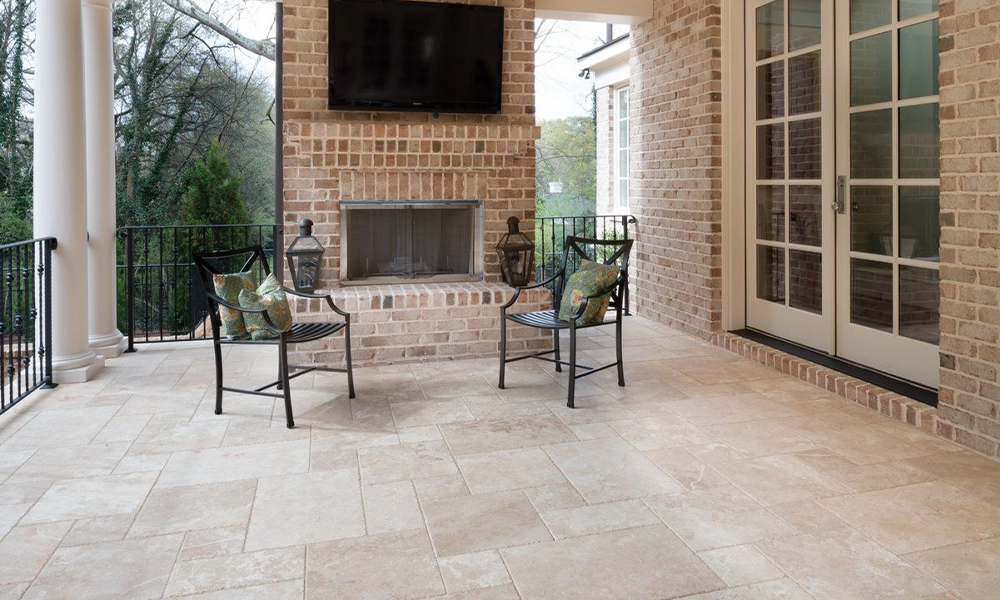
Outdoor travertine can be a worthwhile option for patios and pool surrounds when the chosen product, finish and installation suit the site. A paver quote may include a thicker unit than an indoor tile, plus excavation, a suitable base, drainage, cutting and edge details. That is why an outdoor installation can cost substantially more than the stone’s advertised supply price.
Do not assume every travertine finish is safe in every wet area. Check the exact product’s intended application and relevant slip performance with the supplier and installer. Likewise, light-coloured travertine can feel comfortable in some sunny settings, but it can still become hot in direct sun; see whether travertine gets hot in the sun.
For pool projects, ask whether the quote includes coping, corners, drainage, sealing and the surrounding paving. Our pool coping cost guide explains how edge details change the budget.
Does Travertine Flooring Cost More Than Outdoor Paving?
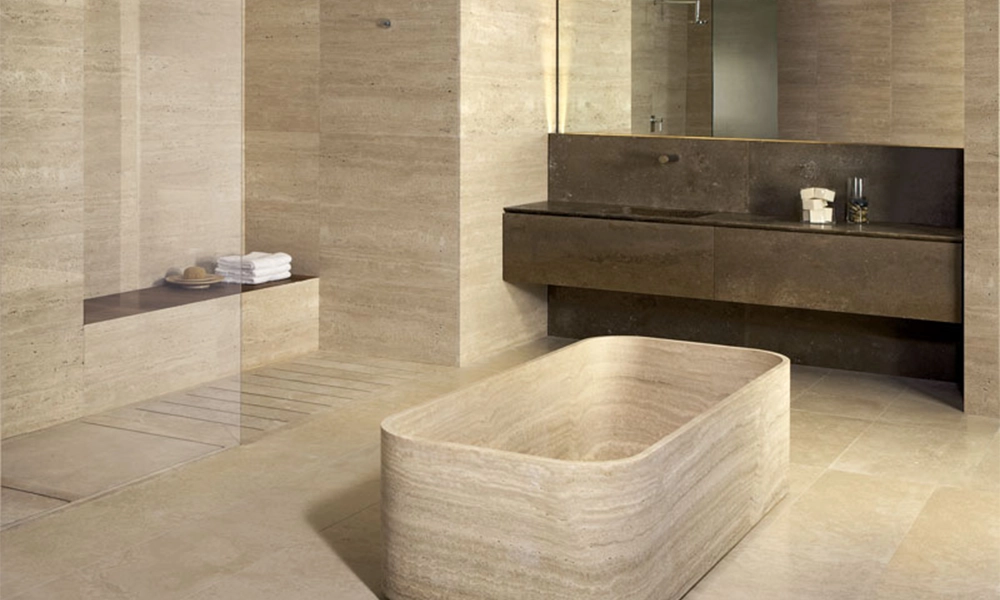
Not necessarily. An indoor travertine floor often uses a thinner tile on a suitable prepared substrate, while outdoor paving may need thicker units and more groundworks. However, indoor waterproofing, levelling, removal of existing finishes, detailed patterns or difficult access can increase the flooring quote. Ask for separate material and installation lines so the difference is clear.
Travertine vs Porcelain, Concrete and Limestone: Which Is Cheaper?
| Alternative | Upfront cost comparison | Trade-off to consider |
|---|---|---|
| Porcelain | Basic products can cost less; premium outdoor porcelain may match or exceed some travertine. | Usually easier surface care, but suitable substrate and specialist cutting still matter. |
| Concrete pavers | Standard formats are often more budget-friendly. | Check the finish, fade characteristics and long-term appearance of the specific product. |
| Limestone | Ranges overlap with travertine; neither is always cheaper. | Porosity, finish and maintenance vary between stone varieties. |
| Marble | Often higher for a comparable selection, with exceptions. | Veining and finish can appeal indoors; outdoor suitability is product-specific. |
If low maintenance is your priority, compare an appropriate porcelain option alongside travertine. If you want a natural stone look at a lower initial price, compare actual limestone and travertine products rather than assuming one category is always cheaper.
Long-Term Costs: Sealing, Cleaning and Repairs
Travertine is durable when correctly specified, installed and cared for, but low maintenance does not mean no maintenance. Allow for a suitable sealer where recommended, stone-safe cleaning and possible resealing according to the sealer instructions and surface performance. Acidic cleaners can etch the stone; unaddressed spills may stain it. A poorly prepared base can lead to movement or damage regardless of the tile price.
There is no reliable universal number of years between sealing jobs. Use the actual product instructions and site conditions. See travertine porosity for more on moisture and stone care. Avoid assuming travertine always costs less over its lifetime than concrete or porcelain: that depends on the products, installation quality, usage and care.
How to Save Money on Travertine Without Choosing the Wrong Product
- Measure accurately: provide a dimensioned plan and ask an installer to estimate cuts and waste.
- Compare the same specification: obtain quotes for matching thickness, finish, format and intended use.
- Keep the layout practical: a simpler pattern and fewer unusual cuts may reduce installation time.
- Ask about available stock: check current batches and matching coping before committing to a colour.
- Get an itemised installed quote: clarify site preparation, delivery, tax, edges, sealing and exclusions.
- Use the correct material: a cheaper indoor tile is no bargain if the project requires an outdoor paver.
Is Travertine Worth the Price?
Travertine is worth considering when you value genuine natural variation, can use a product suitable for the space and are comfortable with stone-specific care. It may be less attractive if your budget is tight, the site needs extensive preparation, or you want the simplest possible cleaning routine. The right choice depends on the full installed quote and your intended use, not an isolated per-metre product price.
Browse Hunter Pavers’ travertine range, then request a project-specific quote with your dimensions, location, finish and installation details. Ask for a sample of the actual stone you plan to use.
Frequently Asked Questions
Is travertine expensive compared with other tiles?
It can cost more than basic ceramic or concrete products, but the price ranges overlap with premium porcelain and other natural stones. Compare matching specifications and the full installed cost.
Why is travertine so expensive?
It is quarried and processed natural stone. Grade, colour, finish, thickness, freight, site preparation, complex cuts and skilled installation can all increase the final price.
Is travertine cheaper than marble?
Often for comparable standard products, but individual ranges overlap. A fair travertine vs marble cost comparison uses the same area, finish, thickness and installation scope.
How much do travertine tiles cost per square metre?
There is no universal rate. One Hunter Pavers Premium Travertine product guide lists $36–$110 per m² across selections; check the current variant and unit, then obtain a separate installed quote.
Are travertine pavers more expensive than travertine tiles?
They can be because outdoor pavers often use a thicker stone and need a suitable base. However, price depends on the exact products and site; an intricate indoor installation can also cost more.
Does travertine need sealing?
Sealing is commonly recommended to help manage absorption and staining, but the product, location and maintenance plan determine the appropriate treatment. Ask your supplier and installer for guidance.
What is a cheaper alternative to travertine?
Standard concrete pavers or basic ceramic tiles may have a lower upfront price. Porcelain and limestone may be cheaper or dearer depending on the chosen range, format and installation.
Is travertine worth the extra cost around a pool?
It may be if you want natural stone and select a suitable outdoor finish, coping profile and installation. Compare complete quotes and confirm wet-area suitability and care requirements.